By Kayla Alaniz
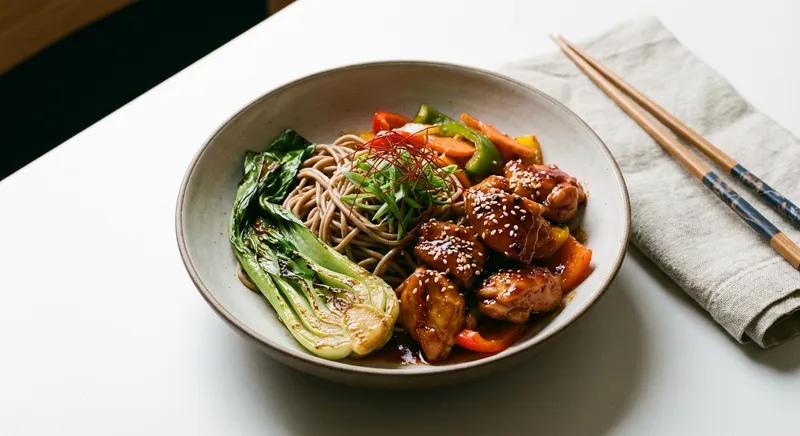
A bold, restaurant-quality stir-fry that balances fiery-sweet gochujang with toasty sesame and umami soy, coating tender, thin-sliced chicken and nutty soba noodles. Crisp-tender baby bok choy brings freshness and crunch while the glossy sauce clings to every strand — vibrant, quick, and deeply satisfying.
Prepare and season the chicken: Pat the thinly sliced chicken dry with paper towels (this helps the meat brown rather than steam). Toss with 1/2 tsp kosher salt and 1/4 tsp freshly ground black pepper. Let rest at room temperature for 10 minutes so the seasoning penetrates and the chicken takes on room temperature for more even cooking.
Mix the sauce: In a bowl combine 4 tbsp gochujang, 4 tbsp soy sauce, 4 tsp rice vinegar, and 4 tsp sesame oil. Stir until smooth. This creates a balanced sauce — gochujang supplies heat and sweetness, soy adds umami and salt, rice vinegar brightens, and sesame oil gives aromatics and body.
Cook the soba noodles: Bring a large pot of salted water to a boil and cook the 320 g dried soba according to package directions minus 30 seconds (usually 4-6 minutes). Undercooking slightly prevents the noodles from going mushy when tossed in the hot pan; they'll finish cooking with the sauce. Drain and rinse under cold water to stop cooking and remove surface starch that makes them gummy. Toss with 1 tsp neutral oil to keep strands separate and set aside.
Preheat the skillet or wok: Heat a large heavy skillet or wok over medium-high heat until shimmering (about 2 minutes). Add 2 tbsp neutral oil. A hot pan is essential for quick searing — it creates Maillard browning on the chicken for flavor and prevents sticking.
Sear the chicken in batches: Working in one or two quick batches so you don't crowd the pan, spread the chicken pieces in a single layer and let them sear undisturbed for 60–90 seconds, then stir and cook until just cooked through (about 2–3 minutes total per batch). Remove each batch to a plate. Searing in batches ensures caramelization and keeps pieces juicy; overcrowding traps steam and yields pale, dry meat.
Aromatics and bok choy: Wipe the pan if it has charred bits that risk burning; return to medium-high heat and add a small splash of oil if needed. Add the minced garlic and ginger and cook for 20–30 seconds, stirring — this blooms their fragrant oils without burning. Add the halved baby bok choy cut-side down and cook 1–2 minutes until the cut surfaces pick up color, then toss and cook another 30–60 seconds until stalks are crisp-tender. Browning the cut surface concentrates sweetness and yields a pleasant contrast of tender leaves and crunchy stalks.
Recombine chicken and deglaze: Return the seared chicken to the pan with the bok choy. Pour in the gochujang-soy sauce mixture and 2–3 tbsp of the reserved noodle-cooking water (or plain water) to loosen and thin the sauce. Scrape the pan bottom to lift any fond — those browned bits are concentrated flavor. Bring to a simmer so the sauce warms and coats the protein.
Finish with noodles: Add the cooked soba noodles to the pan and toss thoroughly for 60–90 seconds until noodles are heated through and every strand is glossy with sauce. If the sauce seems thick, add another tablespoon of water at a time. Tossing the noodles in the hot pan lets the sauce cling to them and slightly finish the noodles' texture.
Adjust seasoning and rest: Taste and adjust — if you want more saltiness add a splash of soy, for brightness a squeeze of rice vinegar, or for sweetness 1 tsp honey. Remove from heat and fold in sliced scallions and toasted sesame seeds; the residual heat will soften the scallion and release the sesame aroma without wilting them.
Serve: Divide between 4 bowls and garnish with an extra pinch of toasted sesame seeds and a drizzle of sesame oil if desired. Serve immediately so noodles remain glossy and bok choy stays crisp-tender.
690
Calories
60g
Protein
68g
Carbs
20g
Fat
6g
Fiber
How did this recipe turn out? Let others know!
to rate this recipe
By Kayla Alaniz
A bold, restaurant-quality stir-fry that balances fiery-sweet gochujang with toasty sesame and umami soy, coating tender, thin-sliced chicken and nutty soba noodles. Crisp-tender baby bok choy brings freshness and crunch while the glossy sauce clings to every strand — vibrant, quick, and deeply satisfying.
Prepare and season the chicken: Pat the thinly sliced chicken dry with paper towels (this helps the meat brown rather than steam). Toss with 1/2 tsp kosher salt and 1/4 tsp freshly ground black pepper. Let rest at room temperature for 10 minutes so the seasoning penetrates and the chicken takes on room temperature for more even cooking.
Mix the sauce: In a bowl combine 4 tbsp gochujang, 4 tbsp soy sauce, 4 tsp rice vinegar, and 4 tsp sesame oil. Stir until smooth. This creates a balanced sauce — gochujang supplies heat and sweetness, soy adds umami and salt, rice vinegar brightens, and sesame oil gives aromatics and body.
Cook the soba noodles: Bring a large pot of salted water to a boil and cook the 320 g dried soba according to package directions minus 30 seconds (usually 4-6 minutes). Undercooking slightly prevents the noodles from going mushy when tossed in the hot pan; they'll finish cooking with the sauce. Drain and rinse under cold water to stop cooking and remove surface starch that makes them gummy. Toss with 1 tsp neutral oil to keep strands separate and set aside.
Preheat the skillet or wok: Heat a large heavy skillet or wok over medium-high heat until shimmering (about 2 minutes). Add 2 tbsp neutral oil. A hot pan is essential for quick searing — it creates Maillard browning on the chicken for flavor and prevents sticking.
Sear the chicken in batches: Working in one or two quick batches so you don't crowd the pan, spread the chicken pieces in a single layer and let them sear undisturbed for 60–90 seconds, then stir and cook until just cooked through (about 2–3 minutes total per batch). Remove each batch to a plate. Searing in batches ensures caramelization and keeps pieces juicy; overcrowding traps steam and yields pale, dry meat.
Aromatics and bok choy: Wipe the pan if it has charred bits that risk burning; return to medium-high heat and add a small splash of oil if needed. Add the minced garlic and ginger and cook for 20–30 seconds, stirring — this blooms their fragrant oils without burning. Add the halved baby bok choy cut-side down and cook 1–2 minutes until the cut surfaces pick up color, then toss and cook another 30–60 seconds until stalks are crisp-tender. Browning the cut surface concentrates sweetness and yields a pleasant contrast of tender leaves and crunchy stalks.
Recombine chicken and deglaze: Return the seared chicken to the pan with the bok choy. Pour in the gochujang-soy sauce mixture and 2–3 tbsp of the reserved noodle-cooking water (or plain water) to loosen and thin the sauce. Scrape the pan bottom to lift any fond — those browned bits are concentrated flavor. Bring to a simmer so the sauce warms and coats the protein.
Finish with noodles: Add the cooked soba noodles to the pan and toss thoroughly for 60–90 seconds until noodles are heated through and every strand is glossy with sauce. If the sauce seems thick, add another tablespoon of water at a time. Tossing the noodles in the hot pan lets the sauce cling to them and slightly finish the noodles' texture.
Adjust seasoning and rest: Taste and adjust — if you want more saltiness add a splash of soy, for brightness a squeeze of rice vinegar, or for sweetness 1 tsp honey. Remove from heat and fold in sliced scallions and toasted sesame seeds; the residual heat will soften the scallion and release the sesame aroma without wilting them.
Serve: Divide between 4 bowls and garnish with an extra pinch of toasted sesame seeds and a drizzle of sesame oil if desired. Serve immediately so noodles remain glossy and bok choy stays crisp-tender.
690
Calories
60g
Protein
68g
Carbs
20g
Fat
6g
Fiber
Your Rating:
