By emensah m
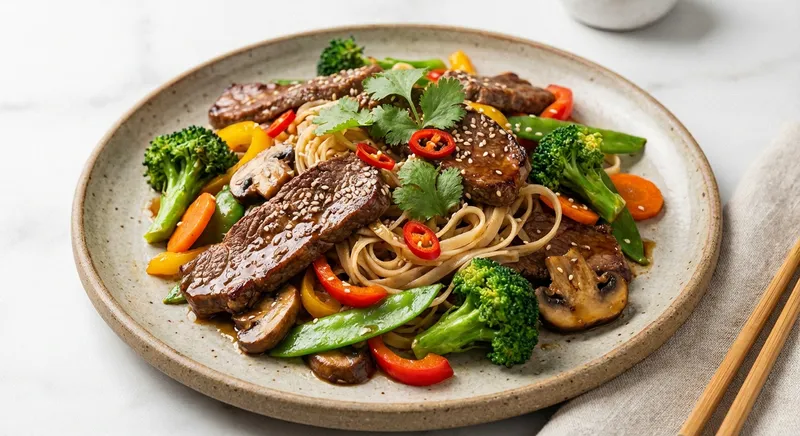
A glossy, wok‑hot stir‑fry of thinly sliced sirloin and crisp garden vegetables tossed with silky rice noodles and a savory-sesame soy sauce. Bright ginger, garlic and a squeeze of lime lift the rich beef and toasted sesame oil, creating a restaurant-quality dish that’s fast enough for weeknights but special enough for guests.
Bring a large pot of water to a boil. Cook the rice noodles according to package directions but stop 1 minute before they reach al dente — they will finish cooking in the wok. Rinse briefly under cold water to stop cooking and prevent sticking; toss with a few drops of oil to keep separate. (Why: rice noodles are fragile and will turn gummy if overcooked. Par-cooking ensures perfect texture after stir-frying.)
Slice the beef thinly against the grain into 3–4 mm slices. Pat the slices dry with paper towel. Toss the beef with 1 teaspoon cornstarch, 1/2 tablespoon soy sauce, and a pinch of black pepper; let sit for 5–10 minutes. (Why: cutting against the grain shortens muscle fibers for tenderness. The cornstarch creates a thin protective coating that seals juices and helps the sauce cling to the meat.)
Mix the sauce in a small bowl: remaining 1.5 tbsp soy sauce, 1 tbsp oyster or hoisin sauce (if using), 1 tsp sugar, 1 tbsp grated ginger, the minced garlic, and 1 tablespoon water. Taste and adjust — it should be balanced salty-sweet with a fresh gingery aromatics. (Why: pre-mixing the sauce keeps the cooking fast and ensures even seasoning when added at the end.)
Heat a wok or large heavy skillet over high heat until very hot (just shy of smoking). Add 1 teaspoon neutral oil (or 1 tsp of the sesame if you prefer) and swirl. Add half the beef in a single layer and sear without moving for 30–45 seconds, then toss and sear another 15–30 seconds until browned but still medium-rare; remove to a plate. Repeat with remaining beef. (Why: high heat sears quickly to develop a caramelized crust (Maillard reaction) that adds flavor; working in batches prevents steaming and ensures browning.)
Wipe the wok quickly with a paper towel if there’s burnt residue. Add the remaining 2 tbsp sesame oil to the hot wok. Add the sliced red bell pepper and snap peas first and stir-fry for 1–2 minutes until they start to blister but remain bright and crisp. (Why: cook denser vegetables first so textures finish together; quick, intense heat keeps them crisp-tender.)
Add the zucchini and cook 45 seconds to 1 minute until just tender and with slight browning. Push the vegetables up the sides of the wok to create a well. (Why: giving the vegetables a moment in direct heat builds flavor and color without over-softening.)
Return the seared beef and any accumulated juices to the wok. Give the sauce a final stir and pour it over the beef and vegetables. Toss quickly to combine and bring to a boil; this will only take 30–60 seconds. (Why: adding the sauce at the end coats everything and the hot pan activates the cornstarch already on the beef, producing a glossy finish.)
Add the drained rice noodles to the wok and use tongs or two spatulas to toss gently but decisively so the noodles pick up sauce and color. If the mixture seems dry, splash up to 2 tablespoons of hot water and toss — you want the sauce to cling, not pool. (Why: tossing integrates flavor and finishes the noodle texture; a small splash of water adjusts consistency without diluting taste.)
Turn off the heat. Stir in the sliced spring onion and a squeeze of lime juice (if using). Taste and adjust seasoning with salt or a touch more soy if needed. Serve immediately with extra lime wedges on the side. (Why: finishing with aromatics and acid brightens the dish and lifts the savory-sesame flavors.)
To plate like a restaurant: twirl a handful of noodles with tongs to make a neat nest in each bowl, arrange slices of beef and vegetables on top, then drizzle any remaining glossy sauce. Garnish with more sliced spring onion, sesame seeds (optional), and lime wedges. (Why: presentation makes the meal feel elevated and concentrates sauce where it will first hit the palate.)
920
Calories
51g
Protein
100g
Carbs
34g
Fat
6g
Fiber
How did this recipe turn out? Let others know!
to rate this recipe
By emensah m
A glossy, wok‑hot stir‑fry of thinly sliced sirloin and crisp garden vegetables tossed with silky rice noodles and a savory-sesame soy sauce. Bright ginger, garlic and a squeeze of lime lift the rich beef and toasted sesame oil, creating a restaurant-quality dish that’s fast enough for weeknights but special enough for guests.
Bring a large pot of water to a boil. Cook the rice noodles according to package directions but stop 1 minute before they reach al dente — they will finish cooking in the wok. Rinse briefly under cold water to stop cooking and prevent sticking; toss with a few drops of oil to keep separate. (Why: rice noodles are fragile and will turn gummy if overcooked. Par-cooking ensures perfect texture after stir-frying.)
Slice the beef thinly against the grain into 3–4 mm slices. Pat the slices dry with paper towel. Toss the beef with 1 teaspoon cornstarch, 1/2 tablespoon soy sauce, and a pinch of black pepper; let sit for 5–10 minutes. (Why: cutting against the grain shortens muscle fibers for tenderness. The cornstarch creates a thin protective coating that seals juices and helps the sauce cling to the meat.)
Mix the sauce in a small bowl: remaining 1.5 tbsp soy sauce, 1 tbsp oyster or hoisin sauce (if using), 1 tsp sugar, 1 tbsp grated ginger, the minced garlic, and 1 tablespoon water. Taste and adjust — it should be balanced salty-sweet with a fresh gingery aromatics. (Why: pre-mixing the sauce keeps the cooking fast and ensures even seasoning when added at the end.)
Heat a wok or large heavy skillet over high heat until very hot (just shy of smoking). Add 1 teaspoon neutral oil (or 1 tsp of the sesame if you prefer) and swirl. Add half the beef in a single layer and sear without moving for 30–45 seconds, then toss and sear another 15–30 seconds until browned but still medium-rare; remove to a plate. Repeat with remaining beef. (Why: high heat sears quickly to develop a caramelized crust (Maillard reaction) that adds flavor; working in batches prevents steaming and ensures browning.)
Wipe the wok quickly with a paper towel if there’s burnt residue. Add the remaining 2 tbsp sesame oil to the hot wok. Add the sliced red bell pepper and snap peas first and stir-fry for 1–2 minutes until they start to blister but remain bright and crisp. (Why: cook denser vegetables first so textures finish together; quick, intense heat keeps them crisp-tender.)
Add the zucchini and cook 45 seconds to 1 minute until just tender and with slight browning. Push the vegetables up the sides of the wok to create a well. (Why: giving the vegetables a moment in direct heat builds flavor and color without over-softening.)
Return the seared beef and any accumulated juices to the wok. Give the sauce a final stir and pour it over the beef and vegetables. Toss quickly to combine and bring to a boil; this will only take 30–60 seconds. (Why: adding the sauce at the end coats everything and the hot pan activates the cornstarch already on the beef, producing a glossy finish.)
Add the drained rice noodles to the wok and use tongs or two spatulas to toss gently but decisively so the noodles pick up sauce and color. If the mixture seems dry, splash up to 2 tablespoons of hot water and toss — you want the sauce to cling, not pool. (Why: tossing integrates flavor and finishes the noodle texture; a small splash of water adjusts consistency without diluting taste.)
Turn off the heat. Stir in the sliced spring onion and a squeeze of lime juice (if using). Taste and adjust seasoning with salt or a touch more soy if needed. Serve immediately with extra lime wedges on the side. (Why: finishing with aromatics and acid brightens the dish and lifts the savory-sesame flavors.)
To plate like a restaurant: twirl a handful of noodles with tongs to make a neat nest in each bowl, arrange slices of beef and vegetables on top, then drizzle any remaining glossy sauce. Garnish with more sliced spring onion, sesame seeds (optional), and lime wedges. (Why: presentation makes the meal feel elevated and concentrates sauce where it will first hit the palate.)
920
Calories
51g
Protein
100g
Carbs
34g
Fat
6g
Fiber
Your Rating:
