By emensah m
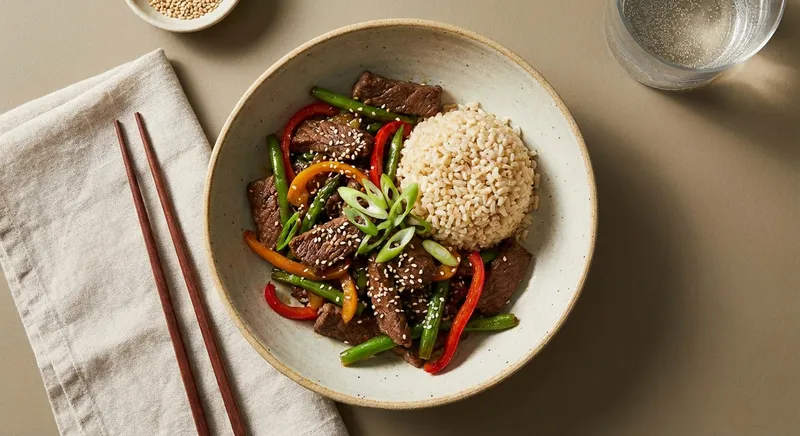
A bright, restaurant‑style stir‑fry: tender, thinly sliced sirloin seared at high heat and tossed with crisp‑tender mixed vegetables in a savory, tangy sauce over nutty brown rice. The dish balances caramelized beef edges, the crunch of peppers and snap peas, and a glossy, slightly thickened sauce flavored with ginger, garlic and sesame — an easy weeknight dinner that tastes elevated.
Start the brown rice first (it takes the longest). Rinse 1 cup dry brown rice under cold water until water runs mostly clear — rinsing removes excess surface starch and prevents gummy rice. Combine the rinsed rice and 2 1/4 cups water in a medium saucepan, bring to a boil uncovered, then reduce to a gentle simmer, cover, and cook for 40–45 minutes until tender and water is absorbed. Turn off heat and let rest, covered, for 10 minutes to steam — this yields separate, fluffy grains.
While the rice cooks, prep the beef and aromatics. Pat the beef dry with paper towels (dry surface = better sear). Slice across the grain into thin strips about 1/8–1/4 inch thick — cutting against the grain shortens the muscle fibers and makes each bite more tender. Season the slices lightly with 1/4 tsp kosher salt and a few grinds of black pepper.
Make the sauce: in a small bowl whisk together 2 tbsp low-sodium soy sauce (or tamari), 1 tbsp rice vinegar, and 1 tbsp sesame oil. If you want a touch of sweetness to balance the vinegar (optional), add 1/2 tsp honey or brown sugar. Set aside. If you plan to use the cornstarch, mix 1 tsp cornstarch with 2 tbsp cold water to make a slurry and keep near the stove — adding it later will thicken and gloss the sauce.
Heat a large wok or heavy skillet over high heat until very hot (a drop of water should sizzle and evaporate). Add 1 tbsp neutral oil and swirl. High, dry heat is essential to quickly sear the beef and vegetables — you want color (Maillard reaction) without long cooking that makes the beef tough or vegetables soggy.
Sear the beef in one or two quick batches so the pan isn't crowded. Spread the strips in a single layer and let them cook undisturbed for 30–45 seconds to develop a brown crust, then toss and flip until mostly cooked but still slightly pink in the thickest parts (about 1–1.5 minutes total per batch). Transfer seared beef to a plate and tent loosely with foil to rest — resting prevents the juices from immediately escaping and keeps the meat juicy.
Reduce heat to medium-high and, if needed, add a teaspoon more oil. Add the sliced onion and stir-fry 1–2 minutes until it begins to soften and edges turn translucent — this releases its natural sugars and deepens flavor. Add the grated garlic and ginger and stir for 20–30 seconds just until fragrant; do not brown (garlic burns quickly and turns bitter).
Add the mixed vegetables and stir-fry on high for 2–4 minutes until they are crisp‑tender — you want them bright in color with a little bite. Staggering vegetables by cooking harder ones (broccoli, carrot) slightly longer than soft ones (bell pepper, snap peas) preserves texture and prevents overcooking.
Return the beef and any accumulated juices to the pan. Pour the prepared sauce over everything and toss to combine so the sauce starts to warm and coat the ingredients. The soy provides umami and salt, rice vinegar brightens, and sesame oil adds nutty aroma — adding them here lets the flavors marry without overcooking the meat.
If you want a glossy, clingy sauce, stir the cornstarch slurry again (it settles) and pour it into the pan while stirring. Cook for 30–60 seconds until sauce thickens and becomes shiny — cornstarch gelatinizes with heat, concentrating the sauce and helping it cling to beef and veg. If sauce gets too thick, add 1–2 tbsp water to loosen.
Finish and rest: taste and adjust — more soy for salt, a splash of rice vinegar for brightness, or a pinch of sugar to balance. Remove from heat and drizzle a few drops of extra sesame oil if you like a stronger toasted sesame note. Spoon the hot stir‑fry over steamed brown rice and garnish with scallions or sesame seeds if using.
Serve immediately. High heat, quick tosses, and short cook times are what keep this dish vivid and restaurant-quality at home.
853
Calories
48g
Protein
82g
Carbs
38g
Fat
8g
Fiber
How did this recipe turn out? Let others know!
to rate this recipe
By emensah m
A bright, restaurant‑style stir‑fry: tender, thinly sliced sirloin seared at high heat and tossed with crisp‑tender mixed vegetables in a savory, tangy sauce over nutty brown rice. The dish balances caramelized beef edges, the crunch of peppers and snap peas, and a glossy, slightly thickened sauce flavored with ginger, garlic and sesame — an easy weeknight dinner that tastes elevated.
Start the brown rice first (it takes the longest). Rinse 1 cup dry brown rice under cold water until water runs mostly clear — rinsing removes excess surface starch and prevents gummy rice. Combine the rinsed rice and 2 1/4 cups water in a medium saucepan, bring to a boil uncovered, then reduce to a gentle simmer, cover, and cook for 40–45 minutes until tender and water is absorbed. Turn off heat and let rest, covered, for 10 minutes to steam — this yields separate, fluffy grains.
While the rice cooks, prep the beef and aromatics. Pat the beef dry with paper towels (dry surface = better sear). Slice across the grain into thin strips about 1/8–1/4 inch thick — cutting against the grain shortens the muscle fibers and makes each bite more tender. Season the slices lightly with 1/4 tsp kosher salt and a few grinds of black pepper.
Make the sauce: in a small bowl whisk together 2 tbsp low-sodium soy sauce (or tamari), 1 tbsp rice vinegar, and 1 tbsp sesame oil. If you want a touch of sweetness to balance the vinegar (optional), add 1/2 tsp honey or brown sugar. Set aside. If you plan to use the cornstarch, mix 1 tsp cornstarch with 2 tbsp cold water to make a slurry and keep near the stove — adding it later will thicken and gloss the sauce.
Heat a large wok or heavy skillet over high heat until very hot (a drop of water should sizzle and evaporate). Add 1 tbsp neutral oil and swirl. High, dry heat is essential to quickly sear the beef and vegetables — you want color (Maillard reaction) without long cooking that makes the beef tough or vegetables soggy.
Sear the beef in one or two quick batches so the pan isn't crowded. Spread the strips in a single layer and let them cook undisturbed for 30–45 seconds to develop a brown crust, then toss and flip until mostly cooked but still slightly pink in the thickest parts (about 1–1.5 minutes total per batch). Transfer seared beef to a plate and tent loosely with foil to rest — resting prevents the juices from immediately escaping and keeps the meat juicy.
Reduce heat to medium-high and, if needed, add a teaspoon more oil. Add the sliced onion and stir-fry 1–2 minutes until it begins to soften and edges turn translucent — this releases its natural sugars and deepens flavor. Add the grated garlic and ginger and stir for 20–30 seconds just until fragrant; do not brown (garlic burns quickly and turns bitter).
Add the mixed vegetables and stir-fry on high for 2–4 minutes until they are crisp‑tender — you want them bright in color with a little bite. Staggering vegetables by cooking harder ones (broccoli, carrot) slightly longer than soft ones (bell pepper, snap peas) preserves texture and prevents overcooking.
Return the beef and any accumulated juices to the pan. Pour the prepared sauce over everything and toss to combine so the sauce starts to warm and coat the ingredients. The soy provides umami and salt, rice vinegar brightens, and sesame oil adds nutty aroma — adding them here lets the flavors marry without overcooking the meat.
If you want a glossy, clingy sauce, stir the cornstarch slurry again (it settles) and pour it into the pan while stirring. Cook for 30–60 seconds until sauce thickens and becomes shiny — cornstarch gelatinizes with heat, concentrating the sauce and helping it cling to beef and veg. If sauce gets too thick, add 1–2 tbsp water to loosen.
Finish and rest: taste and adjust — more soy for salt, a splash of rice vinegar for brightness, or a pinch of sugar to balance. Remove from heat and drizzle a few drops of extra sesame oil if you like a stronger toasted sesame note. Spoon the hot stir‑fry over steamed brown rice and garnish with scallions or sesame seeds if using.
Serve immediately. High heat, quick tosses, and short cook times are what keep this dish vivid and restaurant-quality at home.
853
Calories
48g
Protein
82g
Carbs
38g
Fat
8g
Fiber
Your Rating:
