By emensah m
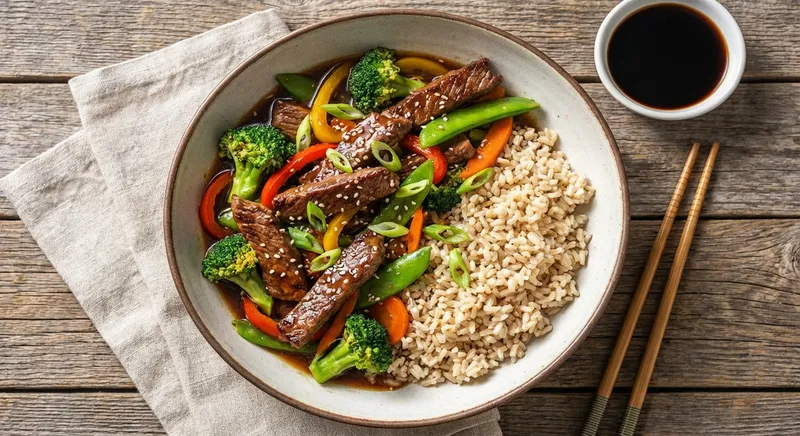
A restaurant‑style, fast weekday stir‑fry: tender, thinly sliced flank steak tossed with crunchy broccoli, red pepper, carrots and snap peas in a glossy soy‑ginger sesame sauce, served over nutty brown rice. Bright rice vinegar and ginger cut the richness of the sesame and olive oils while a touch of cornstarch gives a silky coating that clings to the beef and vegetables — comforting, balanced, and texturally lively.
Rinse the brown rice under cold water until the water runs clearer — this removes excess surface starch so the cooked rice stays distinct and not gummy. Combine 1 cup rinsed brown rice with 2 cups water and a pinch of salt in a small saucepan, bring to a simmer, then reduce heat to low, cover and cook 40–45 minutes (or according to package). Rest, covered, for 10 minutes then fluff with a fork. Why: slow, covered cooking and resting allows the rice to hydrate evenly and keeps kernels separate for a pleasant texture under the stir‑fry.
While the rice cooks, prepare the steak: pat the beef dry and slice the 12 oz flank steak thinly against the grain (about 1⁄8–1⁄4 inch thick). Dry meat sears better; slicing against the grain shortens the muscle fibers so each bite is tender. Toss the slices lightly with a pinch of salt and 1⁄2 tsp black pepper.
Make the sauce: in a small bowl whisk together 3 tbsp low‑sodium soy sauce, 1 tbsp rice vinegar, 1 tbsp sesame oil, 1 tbsp olive oil, minced garlic and grated ginger. If you like a silkier sauce, whisk 1 tsp cornstarch with 1 tbsp cold water to a slurry and set aside. Why: combining the sauce ahead lets flavors marry and cornstarch sit cold so it thickens instantly when added to hot pan rather than clumping.
Heat a large wok or 12‑inch skillet over medium‑high to high heat until very hot (it should shimmer when oil is added). Add 1 tbsp neutral oil (or use the olive oil in the sauce if preferred) and swirl to coat. Why: a very hot pan produces quick searing and caramelization on the beef and vegetables without stewing them — fast high heat preserves crispness and flavor.
Working quickly in a single layer, add half the steak slices to the hot pan and spread so they touch the surface; leave them undisturbed for 30–45 seconds to develop a brown crust, then toss and sear another 15–30 seconds until just cooked through. Remove to a plate and repeat with the remaining steak. Why: searing in batches prevents crowding, which would steam the meat and prevent browning — the fond (browned bits) left behind adds deep flavor to the sauce.
Wipe out (or briefly deglaze) the pan if there is a large amount of fat. Return the pan to high heat, add a touch more oil if needed, then add the denser vegetables first — broccoli florets and carrots — and stir‑fry 2–3 minutes until they begin to color. Why: cooking denser vegetables first ensures they become tender without overcooking the quicker ones like snap peas and red pepper.
Add the remaining vegetables (red pepper, snap peas) and the minced garlic; stir‑fry an additional 1–2 minutes until vegetables are bright, slightly blistered and just tender‑crisp. Why: high heat and short cooking keep vibrant color, crunch and nutrients in the vegetables.
Return the seared beef and any accumulated juices to the pan. Give the prepared sauce a final whisk; pour it into the wok. If using the cornstarch slurry, whisk and pour it in now. Stir everything constantly for 30–60 seconds until the sauce becomes glossy and starts to cling to the beef and vegetables. Why: returning the beef briefly warms it through without overcooking and the cornstarch/heat helps the sauce emulsify into a silky coating.
Taste and adjust: add a small pinch of salt or a splash more soy sauce if needed, a squeeze of rice vinegar for brightness, or a few drops of toasted sesame oil for aroma. Remove from heat. Why: final adjustments balance salty, sour and aromatic notes so the finished dish is lively and layered.
Divide the warm rice between two bowls, spoon the beef and vegetables over the rice, and garnish with sliced green onions and toasted sesame seeds. Serve immediately. Why: serving hot keeps the sauce glossy and the textures contrasting — tender beef, crisp vegetables and chewy brown rice.
895
Calories
58g
Protein
88g
Carbs
34g
Fat
8g
Fiber
How did this recipe turn out? Let others know!
to rate this recipe
By emensah m
A restaurant‑style, fast weekday stir‑fry: tender, thinly sliced flank steak tossed with crunchy broccoli, red pepper, carrots and snap peas in a glossy soy‑ginger sesame sauce, served over nutty brown rice. Bright rice vinegar and ginger cut the richness of the sesame and olive oils while a touch of cornstarch gives a silky coating that clings to the beef and vegetables — comforting, balanced, and texturally lively.
Rinse the brown rice under cold water until the water runs clearer — this removes excess surface starch so the cooked rice stays distinct and not gummy. Combine 1 cup rinsed brown rice with 2 cups water and a pinch of salt in a small saucepan, bring to a simmer, then reduce heat to low, cover and cook 40–45 minutes (or according to package). Rest, covered, for 10 minutes then fluff with a fork. Why: slow, covered cooking and resting allows the rice to hydrate evenly and keeps kernels separate for a pleasant texture under the stir‑fry.
While the rice cooks, prepare the steak: pat the beef dry and slice the 12 oz flank steak thinly against the grain (about 1⁄8–1⁄4 inch thick). Dry meat sears better; slicing against the grain shortens the muscle fibers so each bite is tender. Toss the slices lightly with a pinch of salt and 1⁄2 tsp black pepper.
Make the sauce: in a small bowl whisk together 3 tbsp low‑sodium soy sauce, 1 tbsp rice vinegar, 1 tbsp sesame oil, 1 tbsp olive oil, minced garlic and grated ginger. If you like a silkier sauce, whisk 1 tsp cornstarch with 1 tbsp cold water to a slurry and set aside. Why: combining the sauce ahead lets flavors marry and cornstarch sit cold so it thickens instantly when added to hot pan rather than clumping.
Heat a large wok or 12‑inch skillet over medium‑high to high heat until very hot (it should shimmer when oil is added). Add 1 tbsp neutral oil (or use the olive oil in the sauce if preferred) and swirl to coat. Why: a very hot pan produces quick searing and caramelization on the beef and vegetables without stewing them — fast high heat preserves crispness and flavor.
Working quickly in a single layer, add half the steak slices to the hot pan and spread so they touch the surface; leave them undisturbed for 30–45 seconds to develop a brown crust, then toss and sear another 15–30 seconds until just cooked through. Remove to a plate and repeat with the remaining steak. Why: searing in batches prevents crowding, which would steam the meat and prevent browning — the fond (browned bits) left behind adds deep flavor to the sauce.
Wipe out (or briefly deglaze) the pan if there is a large amount of fat. Return the pan to high heat, add a touch more oil if needed, then add the denser vegetables first — broccoli florets and carrots — and stir‑fry 2–3 minutes until they begin to color. Why: cooking denser vegetables first ensures they become tender without overcooking the quicker ones like snap peas and red pepper.
Add the remaining vegetables (red pepper, snap peas) and the minced garlic; stir‑fry an additional 1–2 minutes until vegetables are bright, slightly blistered and just tender‑crisp. Why: high heat and short cooking keep vibrant color, crunch and nutrients in the vegetables.
Return the seared beef and any accumulated juices to the pan. Give the prepared sauce a final whisk; pour it into the wok. If using the cornstarch slurry, whisk and pour it in now. Stir everything constantly for 30–60 seconds until the sauce becomes glossy and starts to cling to the beef and vegetables. Why: returning the beef briefly warms it through without overcooking and the cornstarch/heat helps the sauce emulsify into a silky coating.
Taste and adjust: add a small pinch of salt or a splash more soy sauce if needed, a squeeze of rice vinegar for brightness, or a few drops of toasted sesame oil for aroma. Remove from heat. Why: final adjustments balance salty, sour and aromatic notes so the finished dish is lively and layered.
Divide the warm rice between two bowls, spoon the beef and vegetables over the rice, and garnish with sliced green onions and toasted sesame seeds. Serve immediately. Why: serving hot keeps the sauce glossy and the textures contrasting — tender beef, crisp vegetables and chewy brown rice.
895
Calories
58g
Protein
88g
Carbs
34g
Fat
8g
Fiber
Your Rating:
