By Jodi Chila
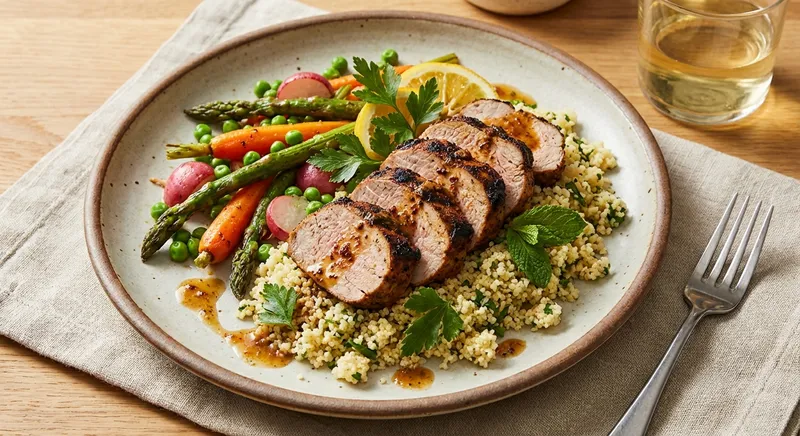
Juicy, citrus‑bright pork tenderloin rubbed with toasted cumin and smoky paprika, paired with a buttery lemon‑parsley Israeli couscous and a medley of honey‑glazed roasted potatoes, asparagus, carrots and peppery radishes. The contrast of bright lemon, warm cumin, smoky paprika and sweet roasted vegetables turns humble ingredients into a restaurant‑quality, springtime main that’s both vibrant and comforting.
Trim and butterfly/tie the pork if needed. Pat the 680 g pork tenderloin dry with paper towels—drying the surface is crucial so the marinade sticks and you get a good sear. If the tenderloin is uneven in thickness, lightly trim or tie it to an even cylinder so it cooks uniformly.
Make the citrus‑cumin marinade: combine 2 tsp ground cumin, 1 tsp smoked paprika, 4 tsp olive oil, 4 cloves minced garlic, 2 tsp lemon zest, 2 tbsp lemon juice, 1 tsp salt and 1/2 tsp black pepper in a small bowl. Mix well. Toasting note: before mixing, you can bloom the cumin and paprika by warming them for 20–30 seconds in 1 tsp hot oil in a small skillet; this intensifies their aroma and deepens the spice flavors.
Marinate the pork: rub the marinade all over the pork (or each medallion). Let rest for 15–30 minutes at room temperature or up to 2 hours in the fridge. Why: salt and acid begin to season and tenderize the meat. Room‑temperature meat cooks more evenly; if refrigerated, bring back to room temperature 20–30 minutes before cooking.
Preheat oven and prepare vegetables: preheat oven to 220°C/425°F. On a rimmed baking sheet toss 480 g halved baby potatoes with 1 tbsp (half) of the roasting olive oil and a pinch of salt and pepper. On a second sheet (or arranged on the same sheet with space) toss 360 g asparagus, 240 g halved baby carrots and 120 g halved radishes with the remaining 1 tbsp olive oil and a small pinch of salt. Drizzle 2 tsp honey over the potatoes (and a light brush over carrots if you like). Why: high oven heat caramelizes and concentrates the natural sugars in the vegetables for color and flavor; separating potatoes from delicate asparagus makes sure each vegetable gets the right doneness.
Roast the vegetables: place the potatoes in the oven for 20 minutes. After 10 minutes, add the carrots and radishes to roast alongside the potatoes; after the potatoes are golden and tender (another ~10–15 minutes, total 20–25 minutes), add asparagus for the final 8–10 minutes so it stays bright and slightly crisp. Roast timing rationale: potatoes need the longest time to become fork tender and caramelized; asparagus cooks quickly and benefits from a short time at high heat to stay vibrant.
Bring stock to a simmer and toast the couscous: while veggies roast, bring 360 ml low‑sodium chicken stock (or water) to a gentle simmer in a medium saucepan. Heat the 240 g Israeli couscous—if using regular couscous reduce stock slightly per package directions. Add the couscous to the simmering liquid, stir once, cover and simmer for 8–10 minutes (Israeli) until tender but still springy. Why: toasting couscous briefly in a dry pan before adding liquid develops a nutty flavor, but with Israeli couscous a short simmer until al dente produces the best texture.
Finish the couscous: once cooked, remove from heat and fluff with a fork; stir in 4 tsp extra‑virgin olive oil, 4 tbsp finely chopped parsley, the reserved 1 tsp lemon zest and 1 tbsp lemon juice (reserve remaining lemon for the pork finish), and season with salt and pepper. If using the optional 60 g baby arugula, toss it in now so it wilts slightly into the warm couscous. Why: finishing with oil and fresh herbs adds silkiness and brightness; adding arugula at the end preserves its peppery snap while letting it integrate.
Grill or sear the pork: heat a grill pan or heavy skillet over medium‑high heat until shimmering. Sear the pork 2–3 minutes per side until a deep golden crust forms—searing develops Maillard browning which creates savory depth. For the tenderloin, once seared, transfer to a 200°C/400°F oven and roast 8–12 minutes until an instant‑read thermometer reads 63°C/145°F for medium‑rare to medium (pork safe at 145°F); for medallions, cook to 63°C/145°F internal. Why: finishing in the oven after a high‑heat sear ensures even doneness without burning the exterior.
Rest and slice the pork: transfer the pork to a cutting board and tent loosely with foil for 5–10 minutes. Resting lets juices redistribute so slices remain juicy rather than leaking onto the board. Slice pork into 1–1.5 cm medallions or thin slices against the grain.
Plate and finish: mound warm lemon‑parsley couscous on each plate (or family‑style). Arrange roasted potatoes and vegetables alongside. Fan sliced pork over the couscous and finish with a final drizzle of the reserved 1 tbsp lemon juice, a light scatter of fresh parsley, and a crack of black pepper. Why: finishing lemon brightens the dish and balances the richness of pork and toasted couscous.
Serve immediately: encourage diners to squeeze additional lemon on their pork if desired. Leftovers: store pork and couscous separately in airtight containers for up to 3 days; reheat pork gently in a 160°C/325°F oven covered to avoid drying.
782
Calories
52g
Protein
84g
Carbs
27g
Fat
12g
Fiber
How did this recipe turn out? Let others know!
to rate this recipe
By Jodi Chila
Juicy, citrus‑bright pork tenderloin rubbed with toasted cumin and smoky paprika, paired with a buttery lemon‑parsley Israeli couscous and a medley of honey‑glazed roasted potatoes, asparagus, carrots and peppery radishes. The contrast of bright lemon, warm cumin, smoky paprika and sweet roasted vegetables turns humble ingredients into a restaurant‑quality, springtime main that’s both vibrant and comforting.
Trim and butterfly/tie the pork if needed. Pat the 680 g pork tenderloin dry with paper towels—drying the surface is crucial so the marinade sticks and you get a good sear. If the tenderloin is uneven in thickness, lightly trim or tie it to an even cylinder so it cooks uniformly.
Make the citrus‑cumin marinade: combine 2 tsp ground cumin, 1 tsp smoked paprika, 4 tsp olive oil, 4 cloves minced garlic, 2 tsp lemon zest, 2 tbsp lemon juice, 1 tsp salt and 1/2 tsp black pepper in a small bowl. Mix well. Toasting note: before mixing, you can bloom the cumin and paprika by warming them for 20–30 seconds in 1 tsp hot oil in a small skillet; this intensifies their aroma and deepens the spice flavors.
Marinate the pork: rub the marinade all over the pork (or each medallion). Let rest for 15–30 minutes at room temperature or up to 2 hours in the fridge. Why: salt and acid begin to season and tenderize the meat. Room‑temperature meat cooks more evenly; if refrigerated, bring back to room temperature 20–30 minutes before cooking.
Preheat oven and prepare vegetables: preheat oven to 220°C/425°F. On a rimmed baking sheet toss 480 g halved baby potatoes with 1 tbsp (half) of the roasting olive oil and a pinch of salt and pepper. On a second sheet (or arranged on the same sheet with space) toss 360 g asparagus, 240 g halved baby carrots and 120 g halved radishes with the remaining 1 tbsp olive oil and a small pinch of salt. Drizzle 2 tsp honey over the potatoes (and a light brush over carrots if you like). Why: high oven heat caramelizes and concentrates the natural sugars in the vegetables for color and flavor; separating potatoes from delicate asparagus makes sure each vegetable gets the right doneness.
Roast the vegetables: place the potatoes in the oven for 20 minutes. After 10 minutes, add the carrots and radishes to roast alongside the potatoes; after the potatoes are golden and tender (another ~10–15 minutes, total 20–25 minutes), add asparagus for the final 8–10 minutes so it stays bright and slightly crisp. Roast timing rationale: potatoes need the longest time to become fork tender and caramelized; asparagus cooks quickly and benefits from a short time at high heat to stay vibrant.
Bring stock to a simmer and toast the couscous: while veggies roast, bring 360 ml low‑sodium chicken stock (or water) to a gentle simmer in a medium saucepan. Heat the 240 g Israeli couscous—if using regular couscous reduce stock slightly per package directions. Add the couscous to the simmering liquid, stir once, cover and simmer for 8–10 minutes (Israeli) until tender but still springy. Why: toasting couscous briefly in a dry pan before adding liquid develops a nutty flavor, but with Israeli couscous a short simmer until al dente produces the best texture.
Finish the couscous: once cooked, remove from heat and fluff with a fork; stir in 4 tsp extra‑virgin olive oil, 4 tbsp finely chopped parsley, the reserved 1 tsp lemon zest and 1 tbsp lemon juice (reserve remaining lemon for the pork finish), and season with salt and pepper. If using the optional 60 g baby arugula, toss it in now so it wilts slightly into the warm couscous. Why: finishing with oil and fresh herbs adds silkiness and brightness; adding arugula at the end preserves its peppery snap while letting it integrate.
Grill or sear the pork: heat a grill pan or heavy skillet over medium‑high heat until shimmering. Sear the pork 2–3 minutes per side until a deep golden crust forms—searing develops Maillard browning which creates savory depth. For the tenderloin, once seared, transfer to a 200°C/400°F oven and roast 8–12 minutes until an instant‑read thermometer reads 63°C/145°F for medium‑rare to medium (pork safe at 145°F); for medallions, cook to 63°C/145°F internal. Why: finishing in the oven after a high‑heat sear ensures even doneness without burning the exterior.
Rest and slice the pork: transfer the pork to a cutting board and tent loosely with foil for 5–10 minutes. Resting lets juices redistribute so slices remain juicy rather than leaking onto the board. Slice pork into 1–1.5 cm medallions or thin slices against the grain.
Plate and finish: mound warm lemon‑parsley couscous on each plate (or family‑style). Arrange roasted potatoes and vegetables alongside. Fan sliced pork over the couscous and finish with a final drizzle of the reserved 1 tbsp lemon juice, a light scatter of fresh parsley, and a crack of black pepper. Why: finishing lemon brightens the dish and balances the richness of pork and toasted couscous.
Serve immediately: encourage diners to squeeze additional lemon on their pork if desired. Leftovers: store pork and couscous separately in airtight containers for up to 3 days; reheat pork gently in a 160°C/325°F oven covered to avoid drying.
782
Calories
52g
Protein
84g
Carbs
27g
Fat
12g
Fiber
Your Rating:
