By emensah m
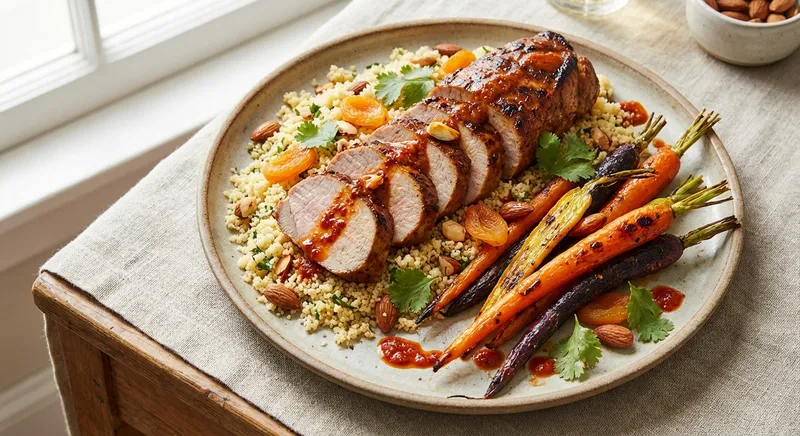
Juicy pork tenderloin is rubbed with bright, smoky harissa and studded with sweet, plump apricots, then roasted to a caramelized exterior and tender interior. Paired with fluffy toasted‑almond couscous and honey‑glazed charred baby carrots, this North African‑inspired plate balances heat, sweetness and crunchy texture for a restaurant‑quality meal that’s easy enough for weeknights.
Preheat and prep: Preheat the oven to 425°F (220°C). This high initial temperature helps the pork develop a caramelized exterior quickly without overcooking the center. Line a rimmed sheet pan with foil for easy cleanup.
Soak and chop the apricots: Place the finely chopped dried apricots (120 g) in a small bowl and cover with 60–80 ml hot water for 5–8 minutes to plump them; drain, reserving about 1 tbsp of the soaking liquid. Rehydrating concentrates the apricot’s chewiness and prevents it from drawing moisture from the pork while roasting.
Make the harissa‑apricot paste: In a small bowl, combine 4 tbsp harissa paste, the softened apricots, 1 tbsp of the reserved soaking liquid, the optional minced garlic, 1/2 tsp kosher salt and 1/4 tsp black pepper. Stir until a slightly chunky paste forms. The apricots add sweetness and body to the harissa, mellowing heat and creating a glaze when roasted.
Trim and score the pork: Pat the 680 g pork tenderloin dry with paper towels—dry meat sears better. Trim any silver skin and excess fat. Lightly score the top every 1 inch (don’t cut through). Scoring creates more surface for the harissa‑apricot paste to cling to and improves surface caramelization.
Season and coat: Rub 1 tbsp olive oil over the pork, then spread the harissa‑apricot paste all over, pressing it into the scores. The oil helps the paste adhere and encourages even browning; the paste forms a flavorful crust during roasting.
Sear for color: Heat a large ovenproof skillet (cast‑iron preferred) over medium‑high heat until shimmering. Add 1 tbsp olive oil and sear the pork 1–2 minutes per side until deeply browned on the long sides—this Maillard reaction builds flavor and color. If you don’t have an ovenproof skillet, transfer to the sheet pan after searing.
Roast the pork: Transfer the skillet or place the sheet pan in the preheated oven and roast at 425°F (220°C) until an instant‑read thermometer inserted into the thickest part reads 135°F (57°C) for medium (usually 12–18 minutes depending on thickness). The high heat finish quickly sets the crust while keeping the interior juicy. Remove and tent loosely with foil for 10 minutes—carryover cooking will bring the temperature up to about 140°F (60°C). Resting concentrates juices and makes slicing easier.
Prepare the couscous while the pork rests: Measure the 240 g (1 1/3 cups) dry couscous into a heatproof bowl. Heat 320 ml (1 1/3 cups) water to a rolling simmer and stir in 1/2 tsp salt and 1 tbsp olive oil to help grains separate. Pour the hot water over the couscous, cover tightly with a plate or plastic wrap and let sit undisturbed for 5 minutes—steaming hydrates the grains evenly. Fluff with a fork to separate.
Finish the couscous: Fold the toasted sliced almonds (8 tbsp), chopped parsley (4 tbsp), 1/2 tbsp honey (this is from the total 2 tbsp: reserve 1.5 tbsp for carrots’ glaze), and 1/2 tsp ground coriander into the fluffed couscous. Season with salt and pepper. The almonds add toasted crunch and the honey + coriander echo the flavors on the pork for cohesion.
Char the carrots: Heat a large sauté pan over medium‑high heat. Add 1 tbsp olive oil and arrange the 480 g halved baby carrots cut‑side down (work in batches if necessary). Let them cook undisturbed 3–4 minutes to develop an attractive char—browning concentrates sweetness. Reduce heat to medium, add the remaining 1.5 tbsp honey, 1/2 tsp ground coriander (from the total 1 tsp), a pinch of salt and 1 tbsp water, and continue to cook, tossing, until carrots are tender and glazed, about another 6–8 minutes.
Slice and plate: Slice the rested pork into 1/2‑inch medallions against the grain (this shortens muscle fibers for maximum tenderness). Spoon a bed of almond couscous onto each plate, fan pork medallions across it, and arrange the charred honey carrots alongside. Spoon any pan juices over the pork for added gloss and flavor.
Garnish and serve: Scatter a few extra toasted almonds and a tablespoon of chopped parsley per plate for freshness and crunch. Serve immediately while warm—the contrast of spicy, sweet and nutty textures is at its best fresh from the oven.
843
Calories
48g
Protein
91g
Carbs
33g
Fat
11g
Fiber
How did this recipe turn out? Let others know!
to rate this recipe
By emensah m
Juicy pork tenderloin is rubbed with bright, smoky harissa and studded with sweet, plump apricots, then roasted to a caramelized exterior and tender interior. Paired with fluffy toasted‑almond couscous and honey‑glazed charred baby carrots, this North African‑inspired plate balances heat, sweetness and crunchy texture for a restaurant‑quality meal that’s easy enough for weeknights.
Preheat and prep: Preheat the oven to 425°F (220°C). This high initial temperature helps the pork develop a caramelized exterior quickly without overcooking the center. Line a rimmed sheet pan with foil for easy cleanup.
Soak and chop the apricots: Place the finely chopped dried apricots (120 g) in a small bowl and cover with 60–80 ml hot water for 5–8 minutes to plump them; drain, reserving about 1 tbsp of the soaking liquid. Rehydrating concentrates the apricot’s chewiness and prevents it from drawing moisture from the pork while roasting.
Make the harissa‑apricot paste: In a small bowl, combine 4 tbsp harissa paste, the softened apricots, 1 tbsp of the reserved soaking liquid, the optional minced garlic, 1/2 tsp kosher salt and 1/4 tsp black pepper. Stir until a slightly chunky paste forms. The apricots add sweetness and body to the harissa, mellowing heat and creating a glaze when roasted.
Trim and score the pork: Pat the 680 g pork tenderloin dry with paper towels—dry meat sears better. Trim any silver skin and excess fat. Lightly score the top every 1 inch (don’t cut through). Scoring creates more surface for the harissa‑apricot paste to cling to and improves surface caramelization.
Season and coat: Rub 1 tbsp olive oil over the pork, then spread the harissa‑apricot paste all over, pressing it into the scores. The oil helps the paste adhere and encourages even browning; the paste forms a flavorful crust during roasting.
Sear for color: Heat a large ovenproof skillet (cast‑iron preferred) over medium‑high heat until shimmering. Add 1 tbsp olive oil and sear the pork 1–2 minutes per side until deeply browned on the long sides—this Maillard reaction builds flavor and color. If you don’t have an ovenproof skillet, transfer to the sheet pan after searing.
Roast the pork: Transfer the skillet or place the sheet pan in the preheated oven and roast at 425°F (220°C) until an instant‑read thermometer inserted into the thickest part reads 135°F (57°C) for medium (usually 12–18 minutes depending on thickness). The high heat finish quickly sets the crust while keeping the interior juicy. Remove and tent loosely with foil for 10 minutes—carryover cooking will bring the temperature up to about 140°F (60°C). Resting concentrates juices and makes slicing easier.
Prepare the couscous while the pork rests: Measure the 240 g (1 1/3 cups) dry couscous into a heatproof bowl. Heat 320 ml (1 1/3 cups) water to a rolling simmer and stir in 1/2 tsp salt and 1 tbsp olive oil to help grains separate. Pour the hot water over the couscous, cover tightly with a plate or plastic wrap and let sit undisturbed for 5 minutes—steaming hydrates the grains evenly. Fluff with a fork to separate.
Finish the couscous: Fold the toasted sliced almonds (8 tbsp), chopped parsley (4 tbsp), 1/2 tbsp honey (this is from the total 2 tbsp: reserve 1.5 tbsp for carrots’ glaze), and 1/2 tsp ground coriander into the fluffed couscous. Season with salt and pepper. The almonds add toasted crunch and the honey + coriander echo the flavors on the pork for cohesion.
Char the carrots: Heat a large sauté pan over medium‑high heat. Add 1 tbsp olive oil and arrange the 480 g halved baby carrots cut‑side down (work in batches if necessary). Let them cook undisturbed 3–4 minutes to develop an attractive char—browning concentrates sweetness. Reduce heat to medium, add the remaining 1.5 tbsp honey, 1/2 tsp ground coriander (from the total 1 tsp), a pinch of salt and 1 tbsp water, and continue to cook, tossing, until carrots are tender and glazed, about another 6–8 minutes.
Slice and plate: Slice the rested pork into 1/2‑inch medallions against the grain (this shortens muscle fibers for maximum tenderness). Spoon a bed of almond couscous onto each plate, fan pork medallions across it, and arrange the charred honey carrots alongside. Spoon any pan juices over the pork for added gloss and flavor.
Garnish and serve: Scatter a few extra toasted almonds and a tablespoon of chopped parsley per plate for freshness and crunch. Serve immediately while warm—the contrast of spicy, sweet and nutty textures is at its best fresh from the oven.
843
Calories
48g
Protein
91g
Carbs
33g
Fat
11g
Fiber
Your Rating:
