By emensah m
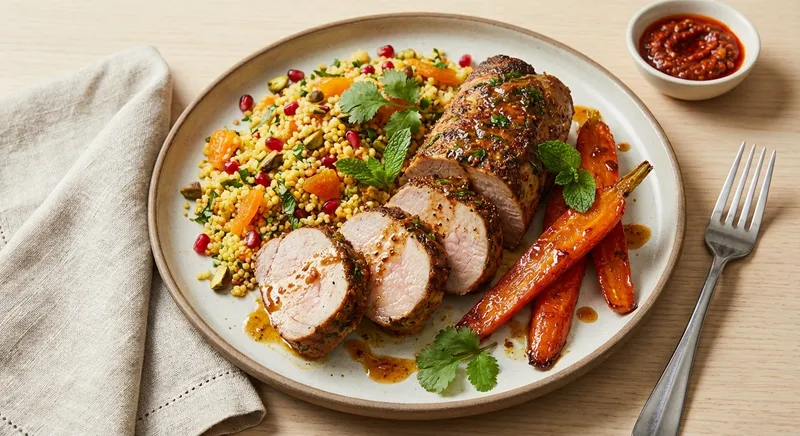
A warm, North African–inspired feast: tender, spice‑crusted pork roasted until juicy and golden, served over glossy Israeli couscous studded with preserved lemon and sweet apricots, with honey‑glazed carrots for bright, caramelized crunch. The ras el hanout rub, toasted nuts and preserved lemon create layered citrusy, savory and sweet flavors that make this feel restaurant‑level yet perfectly doable at home.
Preheat and rest the pork: Preheat the oven to 200°C / 400°F (convection 190°C / 375°F). Remove the pork from the fridge at least 15 minutes before cooking so it approaches room temperature — this helps it cook more evenly and stay juicy.
Dry and season the pork: Pat the 720 g pork tenderloin very dry with paper towels (moisture prevents a good crust). Season all over with 1½ tsp salt and a good grinding of black pepper, then rub the 4 tsp ras el hanout evenly over the surface. The spice rub will toast in the initial sear and the oven, releasing the blend’s complex aromas.
Sear the pork for color: Heat 1 tbsp neutral oil in a heavy ovenproof skillet (cast iron preferred) over medium-high heat until shimmering. Sear the tenderloin 1–2 minutes per side, turning so all faces are golden-brown. Searing creates the Maillard crust which concentrates flavor — don’t move it too early or it will stick and not brown.
Roast to just-done: Brush or drizzle 1 tbsp olive oil over the seared pork, then transfer the skillet to the preheated oven. Roast 12–18 minutes, or until an instant-read thermometer reads 60–63°C (140–145°F) for a slightly pink, juicy interior. Cooking to this temperature allows carryover to reach about 63–66°C as it rests.
Rest the pork: Remove the pork from the oven, tent loosely with foil and rest 8–10 minutes. Resting re-distributes juices so slices stay moist; if you slice immediately juices spill out and the meat will dry.
Prepare the carrots while the pork roasts: Toss 480 g halved carrots with 1 tsp salt, cracked pepper and 2 tbsp olive oil in a roasting tray (or on a sheet tray). Roast on the same oven rack as the pork for 18–22 minutes (or until tender and slightly caramelized). Three minutes before they’re done, brush with the 4 tsp honey or date syrup and return to roast — glazing at the end prevents burning while still producing a glossy caramel finish.
Soak and chop apricots: Place 80 g chopped dried apricots in 80–100 ml warm water for 10 minutes to plump. Reserve the soaking liquid — it’s lightly flavored and can be added to the couscous cooking liquid for extra apricot sweetness and to prevent waste.
Cook the couscous base: In a medium saucepan, melt 2 tbsp butter over medium heat. Add 1 medium diced onion and 2 cloves minced garlic; sauté 4–5 minutes until translucent and slightly golden. This softening mellows raw onion/garlic sharpness and builds a savory base.
Toast the couscous: Add the 280 g Israeli couscous to the pan and toast, stirring, 1–2 minutes until a few pearls take on a light golden edge—this toasting blooms the grain’s flavor and helps keep the final couscous plump and separate.
Simmer with stock and flavorings: Pour in 480 ml hot stock plus the reserved apricot soaking liquid (if any), stir in the 20 g finely chopped preserved lemon and the softened apricots. Bring to a gentle simmer, cover, and cook per package instructions about 8–10 minutes, until the pearls are tender but still hold their shape. Cooking in simmering stock (not boiling hard) lets the couscous absorb flavor evenly and avoid bursting.
Finish the couscous: Remove from heat, fluff with a fork, then stir in 1 tbsp olive oil, 4 tbsp chopped herbs (cilantro or parsley), and 4 tbsp toasted slivered almonds or pistachios; season to taste with salt and pepper. The finishing fat and herbs add silkiness and freshness while nuts provide texture contrast.
Slice and assemble: Thinly slice the rested pork on a slight diagonal into 1 cm slices; brush lightly with the remaining 1 tbsp olive oil or the pan juices for sheen and flavor. Plate a generous scoop of apricot‑preserved lemon couscous, fan pork slices over it, add a portion of honey‑glazed carrots, and scatter extra herbs and nuts over the top.
Optional pan sauce: If you want a sauce, return the skillet used for searing to medium heat, add 60 ml stock and scrape browned bits, reduce slightly, stir in 1 tsp honey and a squeeze of lemon juice (or ½ tsp preserved lemon paste) and finish with 1 tsp butter. Spoon over sliced pork — the pan reduction captures concentrated roast flavors.
Serve: Serve immediately while pork is warm and couscous is glossy. Offer lemon wedges and extra chopped herbs at the table for brightness.
860
Calories
53g
Protein
86g
Carbs
34g
Fat
9g
Fiber
How did this recipe turn out? Let others know!
to rate this recipe
By emensah m
A warm, North African–inspired feast: tender, spice‑crusted pork roasted until juicy and golden, served over glossy Israeli couscous studded with preserved lemon and sweet apricots, with honey‑glazed carrots for bright, caramelized crunch. The ras el hanout rub, toasted nuts and preserved lemon create layered citrusy, savory and sweet flavors that make this feel restaurant‑level yet perfectly doable at home.
Preheat and rest the pork: Preheat the oven to 200°C / 400°F (convection 190°C / 375°F). Remove the pork from the fridge at least 15 minutes before cooking so it approaches room temperature — this helps it cook more evenly and stay juicy.
Dry and season the pork: Pat the 720 g pork tenderloin very dry with paper towels (moisture prevents a good crust). Season all over with 1½ tsp salt and a good grinding of black pepper, then rub the 4 tsp ras el hanout evenly over the surface. The spice rub will toast in the initial sear and the oven, releasing the blend’s complex aromas.
Sear the pork for color: Heat 1 tbsp neutral oil in a heavy ovenproof skillet (cast iron preferred) over medium-high heat until shimmering. Sear the tenderloin 1–2 minutes per side, turning so all faces are golden-brown. Searing creates the Maillard crust which concentrates flavor — don’t move it too early or it will stick and not brown.
Roast to just-done: Brush or drizzle 1 tbsp olive oil over the seared pork, then transfer the skillet to the preheated oven. Roast 12–18 minutes, or until an instant-read thermometer reads 60–63°C (140–145°F) for a slightly pink, juicy interior. Cooking to this temperature allows carryover to reach about 63–66°C as it rests.
Rest the pork: Remove the pork from the oven, tent loosely with foil and rest 8–10 minutes. Resting re-distributes juices so slices stay moist; if you slice immediately juices spill out and the meat will dry.
Prepare the carrots while the pork roasts: Toss 480 g halved carrots with 1 tsp salt, cracked pepper and 2 tbsp olive oil in a roasting tray (or on a sheet tray). Roast on the same oven rack as the pork for 18–22 minutes (or until tender and slightly caramelized). Three minutes before they’re done, brush with the 4 tsp honey or date syrup and return to roast — glazing at the end prevents burning while still producing a glossy caramel finish.
Soak and chop apricots: Place 80 g chopped dried apricots in 80–100 ml warm water for 10 minutes to plump. Reserve the soaking liquid — it’s lightly flavored and can be added to the couscous cooking liquid for extra apricot sweetness and to prevent waste.
Cook the couscous base: In a medium saucepan, melt 2 tbsp butter over medium heat. Add 1 medium diced onion and 2 cloves minced garlic; sauté 4–5 minutes until translucent and slightly golden. This softening mellows raw onion/garlic sharpness and builds a savory base.
Toast the couscous: Add the 280 g Israeli couscous to the pan and toast, stirring, 1–2 minutes until a few pearls take on a light golden edge—this toasting blooms the grain’s flavor and helps keep the final couscous plump and separate.
Simmer with stock and flavorings: Pour in 480 ml hot stock plus the reserved apricot soaking liquid (if any), stir in the 20 g finely chopped preserved lemon and the softened apricots. Bring to a gentle simmer, cover, and cook per package instructions about 8–10 minutes, until the pearls are tender but still hold their shape. Cooking in simmering stock (not boiling hard) lets the couscous absorb flavor evenly and avoid bursting.
Finish the couscous: Remove from heat, fluff with a fork, then stir in 1 tbsp olive oil, 4 tbsp chopped herbs (cilantro or parsley), and 4 tbsp toasted slivered almonds or pistachios; season to taste with salt and pepper. The finishing fat and herbs add silkiness and freshness while nuts provide texture contrast.
Slice and assemble: Thinly slice the rested pork on a slight diagonal into 1 cm slices; brush lightly with the remaining 1 tbsp olive oil or the pan juices for sheen and flavor. Plate a generous scoop of apricot‑preserved lemon couscous, fan pork slices over it, add a portion of honey‑glazed carrots, and scatter extra herbs and nuts over the top.
Optional pan sauce: If you want a sauce, return the skillet used for searing to medium heat, add 60 ml stock and scrape browned bits, reduce slightly, stir in 1 tsp honey and a squeeze of lemon juice (or ½ tsp preserved lemon paste) and finish with 1 tsp butter. Spoon over sliced pork — the pan reduction captures concentrated roast flavors.
Serve: Serve immediately while pork is warm and couscous is glossy. Offer lemon wedges and extra chopped herbs at the table for brightness.
860
Calories
53g
Protein
86g
Carbs
34g
Fat
9g
Fiber
Your Rating:
