By emensah m
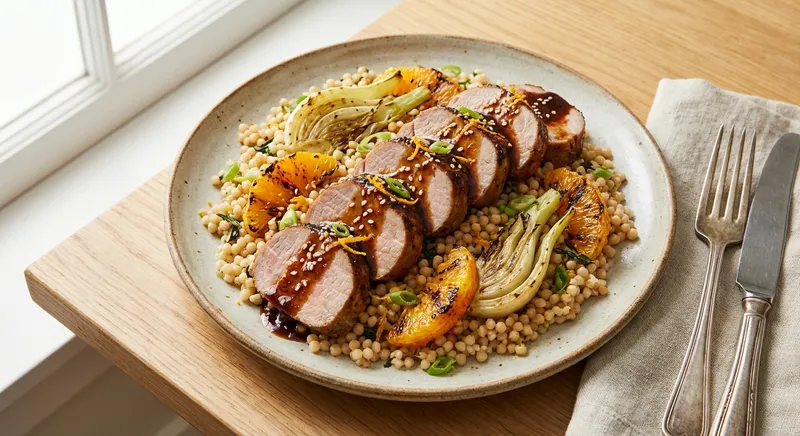
An elegant, fast weeknight main: succulent miso-glazed pork tenderloin with a glossy caramelized crust, served over warm Israeli (pearl) couscous tossed with sweet-roasted fennel and bright orange segments. The savory-salty miso and sesame finish balances the citrus brightness while the couscous soaks up the glaze—restaurant flavors that come together in about 30 minutes.
Prepare the miso glaze: In a small bowl whisk together 1 tablespoon white miso paste and 1 teaspoon mirin (or 1/2 teaspoon honey + a splash of water). This creates a slightly sweet, umami-rich glaze. The mirin/honey thins the miso so it will brush and caramelize evenly on the pork; miso is salty, so no extra salt is needed in the glaze.
Score and season the pork: Pat the 140 g pork tenderloin medallion dry with paper towels — removing surface moisture ensures a proper sear. Lightly score the fat or surface (if present) and season both sides with a small pinch of salt and freshly ground black pepper. The salt is minimal because the miso glaze adds saltiness later.
Preheat oven and pan: Position an oven rack near the center and preheat the oven to 200°C/400°F. Place a heavy ovenproof skillet (cast-iron is ideal) on the stove over medium-high heat. Preheating the pan ensures the pork will sear immediately on contact, producing a flavorful brown crust via the Maillard reaction.
Sear the pork: Add 1 teaspoon neutral oil to the hot skillet and sear the pork medallion 1–1½ minutes per side until deeply golden (use tongs to hold the edges for 15–30 seconds to brown sides). A quick, hot sear locks in juices and creates a caramelized surface that will carry the glaze flavor.
Brush with glaze and roast: Remove the pan briefly from heat. Brush a generous layer of the miso glaze over the top and sides of the seared pork. Transfer the skillet to the preheated oven and roast 6–8 minutes for medium (internal temp ~63°C/145°F). The oven finishes cooking evenly without over-browning and allows the glaze to caramelize gently.
Rest the pork: Remove the pork from the oven, brush a second light coat of glaze, tent loosely with foil, and rest 5–7 minutes. Resting redistributes juices for a juicier cut and the residual heat brings the pork to the perfect doneness while the glaze sets into a glossy finish.
Roast the fennel while pork cooks: Toss the thinly sliced 75 g fennel with 1 teaspoon of the olive oil, a pinch of salt, and a few grinds of black pepper. Spread in a single layer on a small rimmed sheet or the same skillet if space allows; roast in the 200°C/400°F oven for 8–10 minutes until edges caramelize and fennel is tender. Roasting concentrates fennel’s natural sweetness and softens its crunchy anise notes so it pairs well with pork and citrus.
Warm and dress the couscous: While the pork rests, warm the 1/2 cup (85 g) cooked Israeli couscous in a small saucepan over low heat with the remaining 2 teaspoons olive oil (reserve 1 tsp for finishing), a pinch of salt, and a tablespoon water if it seems dry. Toss in the roasted fennel and the orange segments so their juices mingle with the couscous; the starchy pearls will absorb the sweet-tart orange and take on savory-salty miso flavors when plated.
Slice and finish the pork: Slice the rested pork medallion into 2–3 slices against the grain for maximum tenderness. Spoon any juices that collected on the resting plate into the couscous or over the pork. Brush a final light drizzle of the reserved 1 teaspoon olive oil over the slices and sprinkle with 1 teaspoon toasted sesame seeds and the chopped chives or parsley to add freshness and a nutty crunch.
Plate: Pile the warm couscous and roasted fennel in the center of a plate, fan the pork slices on top or beside it, arrange a few extra orange segments for brightness, and finish with an extra grind of black pepper. The contrast of glossy glaze, zesty orange, and tender pork creates a composed, restaurant-quality plate.
527
Calories
45g
Protein
40g
Carbs
22g
Fat
5g
Fiber
How did this recipe turn out? Let others know!
to rate this recipe
By emensah m
An elegant, fast weeknight main: succulent miso-glazed pork tenderloin with a glossy caramelized crust, served over warm Israeli (pearl) couscous tossed with sweet-roasted fennel and bright orange segments. The savory-salty miso and sesame finish balances the citrus brightness while the couscous soaks up the glaze—restaurant flavors that come together in about 30 minutes.
Prepare the miso glaze: In a small bowl whisk together 1 tablespoon white miso paste and 1 teaspoon mirin (or 1/2 teaspoon honey + a splash of water). This creates a slightly sweet, umami-rich glaze. The mirin/honey thins the miso so it will brush and caramelize evenly on the pork; miso is salty, so no extra salt is needed in the glaze.
Score and season the pork: Pat the 140 g pork tenderloin medallion dry with paper towels — removing surface moisture ensures a proper sear. Lightly score the fat or surface (if present) and season both sides with a small pinch of salt and freshly ground black pepper. The salt is minimal because the miso glaze adds saltiness later.
Preheat oven and pan: Position an oven rack near the center and preheat the oven to 200°C/400°F. Place a heavy ovenproof skillet (cast-iron is ideal) on the stove over medium-high heat. Preheating the pan ensures the pork will sear immediately on contact, producing a flavorful brown crust via the Maillard reaction.
Sear the pork: Add 1 teaspoon neutral oil to the hot skillet and sear the pork medallion 1–1½ minutes per side until deeply golden (use tongs to hold the edges for 15–30 seconds to brown sides). A quick, hot sear locks in juices and creates a caramelized surface that will carry the glaze flavor.
Brush with glaze and roast: Remove the pan briefly from heat. Brush a generous layer of the miso glaze over the top and sides of the seared pork. Transfer the skillet to the preheated oven and roast 6–8 minutes for medium (internal temp ~63°C/145°F). The oven finishes cooking evenly without over-browning and allows the glaze to caramelize gently.
Rest the pork: Remove the pork from the oven, brush a second light coat of glaze, tent loosely with foil, and rest 5–7 minutes. Resting redistributes juices for a juicier cut and the residual heat brings the pork to the perfect doneness while the glaze sets into a glossy finish.
Roast the fennel while pork cooks: Toss the thinly sliced 75 g fennel with 1 teaspoon of the olive oil, a pinch of salt, and a few grinds of black pepper. Spread in a single layer on a small rimmed sheet or the same skillet if space allows; roast in the 200°C/400°F oven for 8–10 minutes until edges caramelize and fennel is tender. Roasting concentrates fennel’s natural sweetness and softens its crunchy anise notes so it pairs well with pork and citrus.
Warm and dress the couscous: While the pork rests, warm the 1/2 cup (85 g) cooked Israeli couscous in a small saucepan over low heat with the remaining 2 teaspoons olive oil (reserve 1 tsp for finishing), a pinch of salt, and a tablespoon water if it seems dry. Toss in the roasted fennel and the orange segments so their juices mingle with the couscous; the starchy pearls will absorb the sweet-tart orange and take on savory-salty miso flavors when plated.
Slice and finish the pork: Slice the rested pork medallion into 2–3 slices against the grain for maximum tenderness. Spoon any juices that collected on the resting plate into the couscous or over the pork. Brush a final light drizzle of the reserved 1 teaspoon olive oil over the slices and sprinkle with 1 teaspoon toasted sesame seeds and the chopped chives or parsley to add freshness and a nutty crunch.
Plate: Pile the warm couscous and roasted fennel in the center of a plate, fan the pork slices on top or beside it, arrange a few extra orange segments for brightness, and finish with an extra grind of black pepper. The contrast of glossy glaze, zesty orange, and tender pork creates a composed, restaurant-quality plate.
527
Calories
45g
Protein
40g
Carbs
22g
Fat
5g
Fiber
Your Rating:
