By heather head
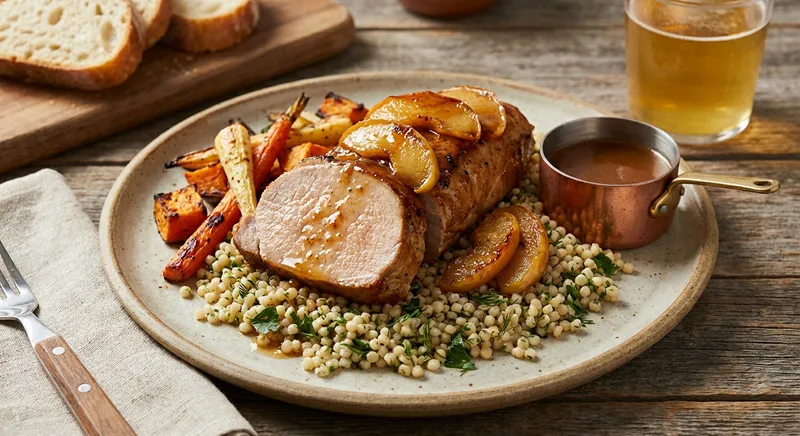
Juicy, rosemary-scented pork tenderloin is seared to a caramelized crust, roasted with sweet apple-cider pan sauce, and served alongside honeyed roasted carrots and parsnips. Pearl (Israeli) couscous toasted in olive oil, finished with butter and fresh rosemary, provides a glossy, herb-bright bed that soaks up the cider-mustard glaze—comforting, refined, and balanced.
Preheat and organize: Preheat your oven to 200°C (400°F). Arrange racks so a sheet pan will sit in the middle. Pat the pork tenderloins dry with paper towels — removing surface moisture is essential for a proper sear that creates a caramelized crust.
Season pork and vegetables: Season each pork tenderloin generously with salt, pepper, and half the chopped rosemary. Toss the carrot and parsnip batons and red onion wedges with 2 tablespoons (30 ml) olive oil, a pinch of salt and pepper, and the remaining rosemary. Even coating ensures the vegetables roast evenly and the rosemary oil flavors them rather than burning in hot oven pockets.
Roast the vegetables: Spread the vegetables in a single layer on a rimmed baking sheet (line with foil for easy cleanup). Roast for 25–28 minutes, turning once at 12–15 minutes. Roasting at 200°C concentrates the root vegetables’ natural sugars and creates golden edges; flipping ensures even caramelization.
Toast the couscous: While the vegetables roast, heat 1 tablespoon (15 ml) olive oil in a medium saucepan over medium heat. Add the dry Israeli couscous and toast, stirring, for 4–5 minutes until the pearls are glossy and take on a light golden color — toasting blooms nutty aromatics and keeps the couscous from becoming gluey.
Cook the couscous: Pour 500 ml hot chicken stock or water over the toasted couscous, add a pinch of salt, bring to a simmer, then reduce heat to low, cover, and cook for 8–10 minutes until tender but still slightly al dente. Remove from heat and stir in 1 teaspoon (5 g) unsalted butter and 1 teaspoon chopped rosemary (reserve any extra for finishing). Rest, covered, for 5 minutes to let steam finish the cooking; this resting period firms the grains and produces a glossy finish.
Sear the pork: While the couscous simmers, heat a large heavy skillet (cast-iron preferred) over medium-high until shimmering. Add 1 tablespoon (15 ml) olive oil. Sear the pork tenderloins 2–3 minutes per side, turning to develop an even golden-brown crust — the Maillard reaction from a hot pan adds deep savory flavors. Sear the ends briefly as well.
Roast the pork: Transfer the seared tenderloins to a clean sheet pan or keep in the oven-safe skillet and roast in the preheated oven for 10–14 minutes, or until an instant-read thermometer inserted into the center reads 62–63°C (145–145.5°F). Cooking to this temperature yields a juicy, slightly pink center. Remember carryover cooking will raise the temperature a few degrees while resting.
Make the cider pan sauce: When the pork comes out of the pan (remove to a cutting board to rest, tented loosely with foil), return the skillet to medium heat. If the skillet is dry, add 1 teaspoon butter. Pour in 200 ml apple cider and use a wooden spoon to scrape any brown bits (fond) from the bottom — those bits are flavor. Let the cider reduce by about half (3–4 minutes) to concentrate flavor. Whisk in the Dijon mustard and 1 teaspoon butter to finish the sauce; this emulsifies the sauce, rounds acidity, and gives it a silky sheen. Taste and season with salt and pepper.
Finish couscous and vegetables: Fluff the rested couscous with a fork, stir in remaining butter and a drizzle of olive oil if you like for shine. Taste and adjust salt. Check the roasted vegetables — if they need another minute under the broiler for extra color, give them a quick flash (watch closely).
Slice and plate: Slice pork tenderloins into medallions (about 1–1.5 cm thick) to show the tender pink center; slicing across the grain maximizes tenderness. Arrange a generous spoonful of herbed Israeli couscous, a portion of roasted root vegetables, and lay pork medallions on top or beside. Spoon warm cider-mustard pan sauce over the pork and drizzle a little around the plate for contrast.
Rest and serve: Serve immediately with any remaining sauce at the table. Resting the meat for 5–7 minutes before slicing preserves juices and lets the internal temperature stabilize — the result is silkier-textured pork.
783
Calories
49g
Protein
79g
Carbs
30g
Fat
9g
Fiber
How did this recipe turn out? Let others know!
to rate this recipe
By heather head
Juicy, rosemary-scented pork tenderloin is seared to a caramelized crust, roasted with sweet apple-cider pan sauce, and served alongside honeyed roasted carrots and parsnips. Pearl (Israeli) couscous toasted in olive oil, finished with butter and fresh rosemary, provides a glossy, herb-bright bed that soaks up the cider-mustard glaze—comforting, refined, and balanced.
Preheat and organize: Preheat your oven to 200°C (400°F). Arrange racks so a sheet pan will sit in the middle. Pat the pork tenderloins dry with paper towels — removing surface moisture is essential for a proper sear that creates a caramelized crust.
Season pork and vegetables: Season each pork tenderloin generously with salt, pepper, and half the chopped rosemary. Toss the carrot and parsnip batons and red onion wedges with 2 tablespoons (30 ml) olive oil, a pinch of salt and pepper, and the remaining rosemary. Even coating ensures the vegetables roast evenly and the rosemary oil flavors them rather than burning in hot oven pockets.
Roast the vegetables: Spread the vegetables in a single layer on a rimmed baking sheet (line with foil for easy cleanup). Roast for 25–28 minutes, turning once at 12–15 minutes. Roasting at 200°C concentrates the root vegetables’ natural sugars and creates golden edges; flipping ensures even caramelization.
Toast the couscous: While the vegetables roast, heat 1 tablespoon (15 ml) olive oil in a medium saucepan over medium heat. Add the dry Israeli couscous and toast, stirring, for 4–5 minutes until the pearls are glossy and take on a light golden color — toasting blooms nutty aromatics and keeps the couscous from becoming gluey.
Cook the couscous: Pour 500 ml hot chicken stock or water over the toasted couscous, add a pinch of salt, bring to a simmer, then reduce heat to low, cover, and cook for 8–10 minutes until tender but still slightly al dente. Remove from heat and stir in 1 teaspoon (5 g) unsalted butter and 1 teaspoon chopped rosemary (reserve any extra for finishing). Rest, covered, for 5 minutes to let steam finish the cooking; this resting period firms the grains and produces a glossy finish.
Sear the pork: While the couscous simmers, heat a large heavy skillet (cast-iron preferred) over medium-high until shimmering. Add 1 tablespoon (15 ml) olive oil. Sear the pork tenderloins 2–3 minutes per side, turning to develop an even golden-brown crust — the Maillard reaction from a hot pan adds deep savory flavors. Sear the ends briefly as well.
Roast the pork: Transfer the seared tenderloins to a clean sheet pan or keep in the oven-safe skillet and roast in the preheated oven for 10–14 minutes, or until an instant-read thermometer inserted into the center reads 62–63°C (145–145.5°F). Cooking to this temperature yields a juicy, slightly pink center. Remember carryover cooking will raise the temperature a few degrees while resting.
Make the cider pan sauce: When the pork comes out of the pan (remove to a cutting board to rest, tented loosely with foil), return the skillet to medium heat. If the skillet is dry, add 1 teaspoon butter. Pour in 200 ml apple cider and use a wooden spoon to scrape any brown bits (fond) from the bottom — those bits are flavor. Let the cider reduce by about half (3–4 minutes) to concentrate flavor. Whisk in the Dijon mustard and 1 teaspoon butter to finish the sauce; this emulsifies the sauce, rounds acidity, and gives it a silky sheen. Taste and season with salt and pepper.
Finish couscous and vegetables: Fluff the rested couscous with a fork, stir in remaining butter and a drizzle of olive oil if you like for shine. Taste and adjust salt. Check the roasted vegetables — if they need another minute under the broiler for extra color, give them a quick flash (watch closely).
Slice and plate: Slice pork tenderloins into medallions (about 1–1.5 cm thick) to show the tender pink center; slicing across the grain maximizes tenderness. Arrange a generous spoonful of herbed Israeli couscous, a portion of roasted root vegetables, and lay pork medallions on top or beside. Spoon warm cider-mustard pan sauce over the pork and drizzle a little around the plate for contrast.
Rest and serve: Serve immediately with any remaining sauce at the table. Resting the meat for 5–7 minutes before slicing preserves juices and lets the internal temperature stabilize — the result is silkier-textured pork.
783
Calories
49g
Protein
79g
Carbs
30g
Fat
9g
Fiber
Your Rating:
