By emensah m
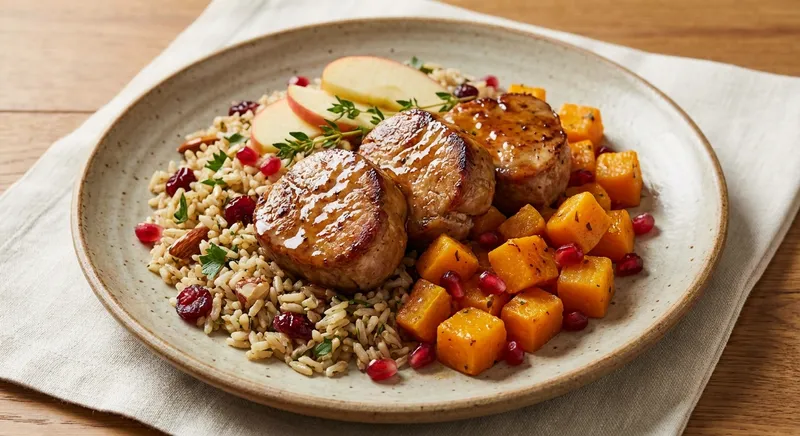
Tender pork tenderloin medallions are seared to a caramelized crust, then gently braised in dry apple cider and Dijon-sage pan sauce until silky and aromatic. Paired with a nutty brown rice pilaf studded with shallot and thyme, and sweet roasted butternut squash finished with bright pomegranate arils, this dish balances sweet, savory and tangy flavors with contrasting textures for an elegant weeknight or dinner-party centerpiece.
Preheat and prep: Preheat the oven to 400°F (200°C). Line a rimmed baking sheet with parchment or foil for the butternut. Pat the pork medallions dry with paper towels and season both sides lightly with salt and crack black pepper. Drying the pork ensures a fast, even sear that develops flavor through the Maillard reaction.
Roast the butternut: Toss the cubed butternut (480 g) with 1 tbsp olive oil, 2 tsp chopped thyme, a generous pinch of salt and a few grinds of black pepper. Spread in a single layer on the prepared sheet — don’t crowd the pan or the squash will steam instead of roast. Roast for 25–30 minutes, turning once halfway, until edges are caramelized and flesh is tender. Caramelization adds depth and a slightly sweet contrast to the cider-braised pork.
Start the rice pilaf: While the squash goes in, heat a medium saucepan over medium heat and add 1 tbsp olive oil and 1 tbsp butter. When the butter foams, add half the finely chopped shallot (≈1 small shallot) and the minced garlic; sweat gently for 1–2 minutes until translucent (don’t brown — browning will make the pilaf bitter). Toast the dry brown rice (240 g) in the aromatics for 2–3 minutes, stirring constantly; this toasting step starts to brown the bran and gives the finished rice a nuttier, more complex flavor.
Simmer the rice: Add 720 ml warm low-sodium stock and 2 tsp thyme to the rice, bring to a gentle simmer, then reduce heat to low, cover tightly, and cook for 30–35 minutes (follow your rice package for exact time). Brown rice must simmer longer than white rice — low, steady heat prevents the liquid from evaporating too quickly and yields tender, separate grains. When done, remove from heat and let stand, covered, 5–10 minutes to steam; finish with the remaining 1 tbsp butter and fluff with a fork, seasoning to taste.
Sear the pork medallions: While the rice simmers and the squash roasts, heat a large, heavy skillet (cast-iron preferred) over medium-high heat. Add 2 tbsp olive oil and let it shimmer (this ensures an immediate sizzle when the meat hits the pan). Sear the medallions in a single layer — 1–2 minutes per side — until a deep golden crust forms. Do not overcrowd; work in batches if necessary. A good sear creates flavor and color for the sauce.
Remove and rest: Transfer seared medallions to a plate and tent loosely with foil. Resting after searing lets the internal juices redistribute and prevents them from being driven out during the braise.
Build the sauce: Reduce heat to medium, add the remaining 1 tbsp olive oil to the skillet if it looks dry. Add the remaining chopped shallot (≈1 small shallot) and sauté 1–2 minutes until softened. Stir in 1 tsp minced garlic and cook 20–30 seconds — this short cook time tempers garlic’s raw edge and avoids bitterness. Pour in 400 ml dry apple cider and use a wooden spoon to scrape any brown bits from the pan (deglazing lifts concentrated flavor into the sauce).
Finish the braise: Stir in 4 tsp Dijon mustard and 4 tsp chopped fresh sage, then return the pork medallions to the skillet in a single layer. Bring the cider to a gentle simmer, cover (or reduce heat and partially cover) and let the pork braise for 6–8 minutes, turning once, until just shy of your target temperature (pork tenderloin medallions are best cooked to 145°F/63°C and will rise a few degrees while resting). Braising in cider adds acidity and sweetness that both tenderize and complement pork.
Reduce to a glossy pan sauce: Remove the pork to the resting plate again. Increase heat and reduce the braising liquid for 3–5 minutes until syrupy and concentrated (this concentrates flavor without overcooking the meat). Off heat, swirl in 1 tbsp cold butter to finish the sauce — the butter emulsion rounds and thickens the sauce and gives it a silky sheen. Taste and adjust seasoning with salt and pepper.
Finish components and plate: Fluff the rice again and taste for salt; fold in 1 tsp chopped sage and a few grinds of pepper for brightness. Arrange a generous spoonful of herbed brown rice on each plate, add roasted butternut alongside, place 3–4 pork medallions on top or next to the rice, and spoon the cider-mustard pan sauce over the pork. Scatter pomegranate arils (1 tbsp per plate) over the pork and squash to add a juicy, tart contrast and attractive color.
Rest and serve immediately: Serve while warm. The pork should be juicy and slightly pink in the center; the sauce glossy, the rice nutty and each grain separate, with roasted squash caramelized and sweet. Encourage guests to mix pomegranate into the rice for bursts of freshness.
731
Calories
41g
Protein
74g
Carbs
30g
Fat
5g
Fiber
How did this recipe turn out? Let others know!
to rate this recipe
By emensah m
Tender pork tenderloin medallions are seared to a caramelized crust, then gently braised in dry apple cider and Dijon-sage pan sauce until silky and aromatic. Paired with a nutty brown rice pilaf studded with shallot and thyme, and sweet roasted butternut squash finished with bright pomegranate arils, this dish balances sweet, savory and tangy flavors with contrasting textures for an elegant weeknight or dinner-party centerpiece.
Preheat and prep: Preheat the oven to 400°F (200°C). Line a rimmed baking sheet with parchment or foil for the butternut. Pat the pork medallions dry with paper towels and season both sides lightly with salt and crack black pepper. Drying the pork ensures a fast, even sear that develops flavor through the Maillard reaction.
Roast the butternut: Toss the cubed butternut (480 g) with 1 tbsp olive oil, 2 tsp chopped thyme, a generous pinch of salt and a few grinds of black pepper. Spread in a single layer on the prepared sheet — don’t crowd the pan or the squash will steam instead of roast. Roast for 25–30 minutes, turning once halfway, until edges are caramelized and flesh is tender. Caramelization adds depth and a slightly sweet contrast to the cider-braised pork.
Start the rice pilaf: While the squash goes in, heat a medium saucepan over medium heat and add 1 tbsp olive oil and 1 tbsp butter. When the butter foams, add half the finely chopped shallot (≈1 small shallot) and the minced garlic; sweat gently for 1–2 minutes until translucent (don’t brown — browning will make the pilaf bitter). Toast the dry brown rice (240 g) in the aromatics for 2–3 minutes, stirring constantly; this toasting step starts to brown the bran and gives the finished rice a nuttier, more complex flavor.
Simmer the rice: Add 720 ml warm low-sodium stock and 2 tsp thyme to the rice, bring to a gentle simmer, then reduce heat to low, cover tightly, and cook for 30–35 minutes (follow your rice package for exact time). Brown rice must simmer longer than white rice — low, steady heat prevents the liquid from evaporating too quickly and yields tender, separate grains. When done, remove from heat and let stand, covered, 5–10 minutes to steam; finish with the remaining 1 tbsp butter and fluff with a fork, seasoning to taste.
Sear the pork medallions: While the rice simmers and the squash roasts, heat a large, heavy skillet (cast-iron preferred) over medium-high heat. Add 2 tbsp olive oil and let it shimmer (this ensures an immediate sizzle when the meat hits the pan). Sear the medallions in a single layer — 1–2 minutes per side — until a deep golden crust forms. Do not overcrowd; work in batches if necessary. A good sear creates flavor and color for the sauce.
Remove and rest: Transfer seared medallions to a plate and tent loosely with foil. Resting after searing lets the internal juices redistribute and prevents them from being driven out during the braise.
Build the sauce: Reduce heat to medium, add the remaining 1 tbsp olive oil to the skillet if it looks dry. Add the remaining chopped shallot (≈1 small shallot) and sauté 1–2 minutes until softened. Stir in 1 tsp minced garlic and cook 20–30 seconds — this short cook time tempers garlic’s raw edge and avoids bitterness. Pour in 400 ml dry apple cider and use a wooden spoon to scrape any brown bits from the pan (deglazing lifts concentrated flavor into the sauce).
Finish the braise: Stir in 4 tsp Dijon mustard and 4 tsp chopped fresh sage, then return the pork medallions to the skillet in a single layer. Bring the cider to a gentle simmer, cover (or reduce heat and partially cover) and let the pork braise for 6–8 minutes, turning once, until just shy of your target temperature (pork tenderloin medallions are best cooked to 145°F/63°C and will rise a few degrees while resting). Braising in cider adds acidity and sweetness that both tenderize and complement pork.
Reduce to a glossy pan sauce: Remove the pork to the resting plate again. Increase heat and reduce the braising liquid for 3–5 minutes until syrupy and concentrated (this concentrates flavor without overcooking the meat). Off heat, swirl in 1 tbsp cold butter to finish the sauce — the butter emulsion rounds and thickens the sauce and gives it a silky sheen. Taste and adjust seasoning with salt and pepper.
Finish components and plate: Fluff the rice again and taste for salt; fold in 1 tsp chopped sage and a few grinds of pepper for brightness. Arrange a generous spoonful of herbed brown rice on each plate, add roasted butternut alongside, place 3–4 pork medallions on top or next to the rice, and spoon the cider-mustard pan sauce over the pork. Scatter pomegranate arils (1 tbsp per plate) over the pork and squash to add a juicy, tart contrast and attractive color.
Rest and serve immediately: Serve while warm. The pork should be juicy and slightly pink in the center; the sauce glossy, the rice nutty and each grain separate, with roasted squash caramelized and sweet. Encourage guests to mix pomegranate into the rice for bursts of freshness.
731
Calories
41g
Protein
74g
Carbs
30g
Fat
5g
Fiber
Your Rating:
