By Andrew Acosta
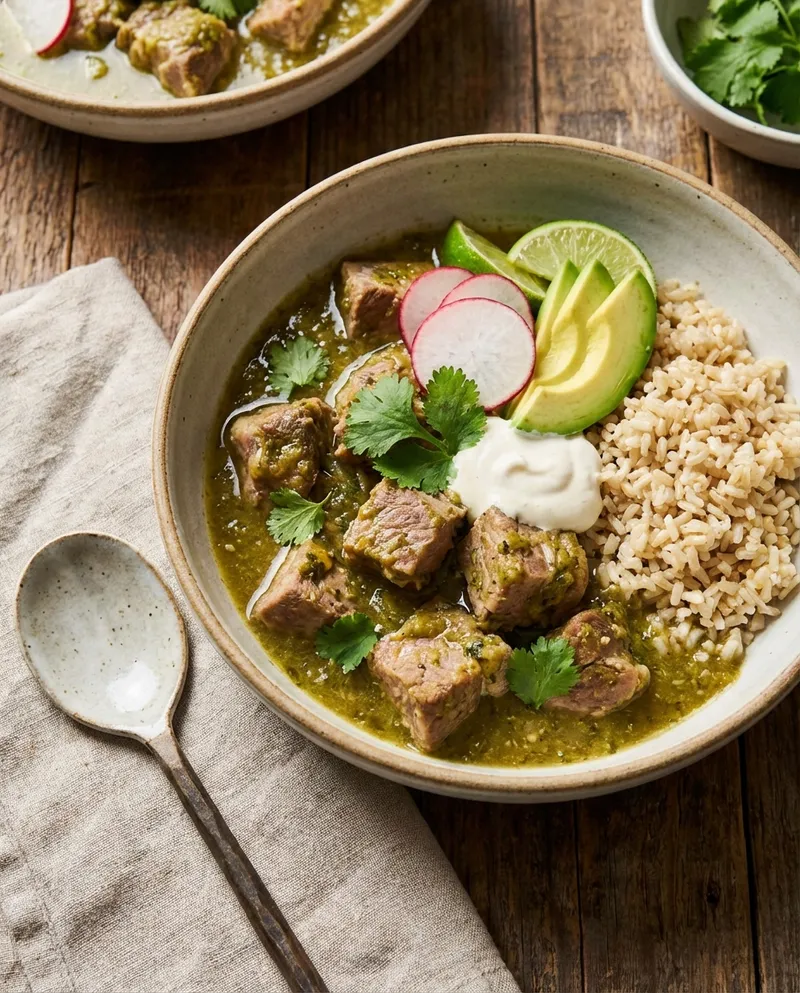
Tender cubes of pork shoulder are browned to a caramelized crust, then slowly braised in bright tomatillo salsa verde and fresh orange — a balance of tangy, herby and savory flavors. Served over nutty brown rice and finished with cilantro, this dish delivers homey comfort with restaurant polish: crisped edges, silky braising sauce, and a citrus lift that keeps every bite lively.
Measure and prep everything first: rinse the brown rice in a fine-mesh sieve under cold water until the water runs clear (this removes excess surface starch so the grains cook more separate). Zest and juice half an orange and set aside. Pat the pork pieces dry with paper towels and season lightly with 1/2 tsp salt and a few grinds of black pepper. Dry meat browns; moisture prevents a good sear.
Start the rice: bring 1 cup (240 ml) water and a pinch of salt to a boil in a small saucepan. Add the rinsed brown rice, stir once, reduce heat to low, cover tightly and simmer for 35–40 minutes until the water is absorbed and the rice is tender. Rest, covered, off the heat for 10 minutes before fluffing with a fork. Cooking rice first frees you to focus on the braise without overcooking the rice.
Heat a 12" (30 cm) heavy skillet or Dutch oven over medium-high heat until hot. Add 1 tbsp olive oil and swirl to coat. Add half the pork pieces in a single layer (don’t overcrowd — crowding steams instead of browns). Sear without moving for 2–3 minutes until a deep golden crust forms, then flip and brown the other side for another 1–2 minutes. Transfer to a bowl and repeat with remaining pork and oil if necessary. Browning creates Maillard flavors that form the savory foundation of the braise.
Reduce heat to medium. Add the chopped onion to the pan and sauté, scraping up any browned bits, until softened and translucent, about 4–5 minutes. The fond (brown bits) is flavor — deglazing will lift those into the sauce. Add the minced garlic and sauté 30–45 seconds until fragrant (garlic browns quickly and will become bitter if overcooked).
Stir in the ground cumin and dried oregano and cook 20–30 seconds to bloom the spices — heating briefly in fat releases their essential oils and deepens flavor. This small step adds brightness and complexity to the verde.
Pour in the tomatillo salsa verde, the orange juice and zest, and 1/2 cup (120 ml) chicken broth. Scrape the pan with a wooden spoon to loosen any remaining fond — these bits carry concentrated flavor. Return the seared pork and any accumulated juices to the skillet. The liquid should come about halfway up the pork; we want a moist braise but also some ability to reduce the sauce for concentration.
Bring the mixture to a gentle simmer, then reduce heat to low, cover partially to allow some evaporation, and simmer gently for 30–40 minutes, stirring occasionally. Cook until the pork is fork-tender and the sauce has slightly thickened. Low, steady heat breaks down connective tissue in shoulder cuts, turning them tender and silky without drying out.
Taste the sauce and adjust seasoning with the remaining 1/4 tsp salt and black pepper as needed. If the sauce tastes too sharp from the tomatillos or orange, a small pinch of sugar or a drizzle of olive oil can smooth acidity. If it’s too thin, increase heat briefly to reduce and concentrate flavors — but watch so you don’t toughen the meat.
To serve, spoon a bed of fluffy brown rice onto warmed plates. Top with the citrus-braised pork and spoon over plenty of the verde sauce. Sprinkle with chopped cilantro and an extra pinch of orange zest for brightness. Resting and finishing with fresh herbs adds an aromatic lift and a fresh contrast to the rich braise.
Leftovers: cool quickly and refrigerate within 2 hours. The pork will deepen in flavor overnight and can be gently reheated on the stovetop over low heat; add a splash of water or broth if the sauce has thickened too much.
477
Calories
21g
Protein
46g
Carbs
23g
Fat
3g
Fiber
How did this recipe turn out? Let others know!
to rate this recipe
By Andrew Acosta
Tender cubes of pork shoulder are browned to a caramelized crust, then slowly braised in bright tomatillo salsa verde and fresh orange — a balance of tangy, herby and savory flavors. Served over nutty brown rice and finished with cilantro, this dish delivers homey comfort with restaurant polish: crisped edges, silky braising sauce, and a citrus lift that keeps every bite lively.
Measure and prep everything first: rinse the brown rice in a fine-mesh sieve under cold water until the water runs clear (this removes excess surface starch so the grains cook more separate). Zest and juice half an orange and set aside. Pat the pork pieces dry with paper towels and season lightly with 1/2 tsp salt and a few grinds of black pepper. Dry meat browns; moisture prevents a good sear.
Start the rice: bring 1 cup (240 ml) water and a pinch of salt to a boil in a small saucepan. Add the rinsed brown rice, stir once, reduce heat to low, cover tightly and simmer for 35–40 minutes until the water is absorbed and the rice is tender. Rest, covered, off the heat for 10 minutes before fluffing with a fork. Cooking rice first frees you to focus on the braise without overcooking the rice.
Heat a 12" (30 cm) heavy skillet or Dutch oven over medium-high heat until hot. Add 1 tbsp olive oil and swirl to coat. Add half the pork pieces in a single layer (don’t overcrowd — crowding steams instead of browns). Sear without moving for 2–3 minutes until a deep golden crust forms, then flip and brown the other side for another 1–2 minutes. Transfer to a bowl and repeat with remaining pork and oil if necessary. Browning creates Maillard flavors that form the savory foundation of the braise.
Reduce heat to medium. Add the chopped onion to the pan and sauté, scraping up any browned bits, until softened and translucent, about 4–5 minutes. The fond (brown bits) is flavor — deglazing will lift those into the sauce. Add the minced garlic and sauté 30–45 seconds until fragrant (garlic browns quickly and will become bitter if overcooked).
Stir in the ground cumin and dried oregano and cook 20–30 seconds to bloom the spices — heating briefly in fat releases their essential oils and deepens flavor. This small step adds brightness and complexity to the verde.
Pour in the tomatillo salsa verde, the orange juice and zest, and 1/2 cup (120 ml) chicken broth. Scrape the pan with a wooden spoon to loosen any remaining fond — these bits carry concentrated flavor. Return the seared pork and any accumulated juices to the skillet. The liquid should come about halfway up the pork; we want a moist braise but also some ability to reduce the sauce for concentration.
Bring the mixture to a gentle simmer, then reduce heat to low, cover partially to allow some evaporation, and simmer gently for 30–40 minutes, stirring occasionally. Cook until the pork is fork-tender and the sauce has slightly thickened. Low, steady heat breaks down connective tissue in shoulder cuts, turning them tender and silky without drying out.
Taste the sauce and adjust seasoning with the remaining 1/4 tsp salt and black pepper as needed. If the sauce tastes too sharp from the tomatillos or orange, a small pinch of sugar or a drizzle of olive oil can smooth acidity. If it’s too thin, increase heat briefly to reduce and concentrate flavors — but watch so you don’t toughen the meat.
To serve, spoon a bed of fluffy brown rice onto warmed plates. Top with the citrus-braised pork and spoon over plenty of the verde sauce. Sprinkle with chopped cilantro and an extra pinch of orange zest for brightness. Resting and finishing with fresh herbs adds an aromatic lift and a fresh contrast to the rich braise.
Leftovers: cool quickly and refrigerate within 2 hours. The pork will deepen in flavor overnight and can be gently reheated on the stovetop over low heat; add a splash of water or broth if the sauce has thickened too much.
477
Calories
21g
Protein
46g
Carbs
23g
Fat
3g
Fiber
Your Rating:
