By emensah m
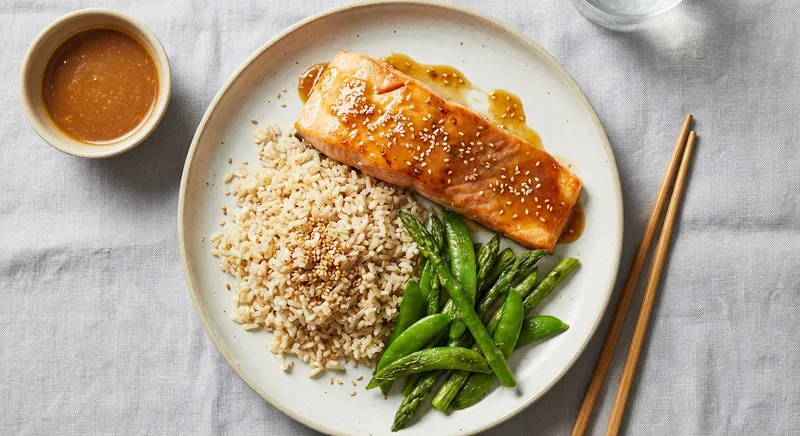
Silky, flaky Arctic char is brightened with a lacquered white-miso, mirin and fresh orange glaze, then gently steamed so the fish stays buttery and just-cooked. Paired with sesame-scented brown rice and barely-tender baby bok choy (or tatsoi), each forkful balances umami, citrus brightness and a whisper of toasty sesame for an elegant, restaurant-quality plate that’s fast enough for weeknights.
Bring the mise en place together: pat the arctic char dry with paper towels (dry surface = better glaze adhesion). Measure and have all marinade ingredients and garnishes ready. Why: drying the fish lets the miso-orange glaze stick and prevents steaming water from diluting flavors.
Make the citrus-miso glaze: in a small bowl whisk together the white miso (4 tsp), mirin (4 tsp) and fresh orange juice (4 tbsp) until smooth. If the miso is stiff, dissolve it in the mirin first — this 'blooms' the miso and makes the glaze silky. Why: whisking and lightly warming (see tip) fully dissolves miso and balances sweetness, salt and citrus for an even coating.
Portion the fish: divide the 560 g of arctic char into four 140 g portions if not already portioned. Lightly score the skin (1–2 shallow slashes) to help even cooking and prevent the fillet from curling during steaming. Season the flesh-side with a pinch of sea salt and white pepper. Why: scoring reduces contraction and ensures the piece cooks flat and evenly.
Marinate the fillets: brush roughly 1 teaspoon of the glaze over the flesh of each fillet, reserving the rest for finishing. Let rest 5–10 minutes at room temperature (no more than 15). Why: a short sit time allows the flavors to cling without chemically 'cooking' the fish like a ceviche; immediate steaming locks the glaze in place.
Prepare the steam setup: you can steam en papillote (parchment), in a steamer basket, or on a plate in a wok. If using parchment, cut 4 large squares and place a fillet on each with a thin smear of reserved glaze and a few scallions. Fold into tight packets and seal. If using a steamer or plate, oil the plate lightly (the optional neutral oil) to prevent sticking and arrange fillets skin-side down. Why: steaming in packets concentrates aroma and prevents water droplets from washing the glaze off the fish; oiled plates prevent sticking while keeping the skin intact.
Steam the fish: bring a pot or wok of water to a gentle simmer (not a roiling boil) and steam the fish, covered, for 5–7 minutes depending on thickness. For 140 g fillets about 6 minutes will yield tender, just-cooked flesh that flakes easily. Why: gentle steaming cooks the fish evenly and preserves moisture; vigorous boiling can overcook and make the flesh dry.
While the fish steams, finish the rice: transfer 480 g cooked brown rice to a large bowl. Stir in the toasted sesame oil (2 tsp), thinly sliced scallion (4 tbsp), half of the toasted sesame seeds (1 tsp), and 3 tbsp of the chopped cilantro or dill. Season with a pinch of sea salt and a light grind of white pepper. Why: dressing the rice hot lifts the aroma of sesame oil and loosens grains for a glossy, fragrant base.
Steam the greens: in the final 2–3 minutes of the fish steaming, add the baby bok choy (240 g) to the steamer or a separate steamer insert and steam until the stalks are tender but still bright and slightly crisp (about 2–3 minutes). Immediately transfer to a bowl and toss with the remaining chopped herbs, the remaining 1 tsp toasted sesame seeds and a pinch of sea salt. Why: very brief steaming keeps greens vivid, preserves texture and prevents a soggy plate.
Finish and glaze: when the fish is cooked, remove from the steamer and open the packets (if used). Give the reserved glaze a quick stir and brush a light layer over each fillet for shine and flavor. Sprinkle each fillet with the remaining thinly sliced scallion (reserve a little for garnish) and a tiny pinch of white pepper. Why: a final glaze layer adds gloss and concentrated flavor right before serving.
Plate: spoon a portion (120 g) of the sesame brown rice onto each plate, fan a steamed fillet beside it (skin-side down or up per preference), and arrange a small bundle of the tender greens alongside. Scatter remaining scallions, chopped cilantro/dill (1 tbsp per plate), and a light dusting of toasted sesame seeds over the fish and rice. Finish with a final pinch of flaky sea salt if desired. Why: plating warm components together ensures a cohesive mouthful of textures—flaky fish, nutty rice, and crisp-tender greens.
Serve immediately: the dish is best hot so the glaze is glossy and the rice warm. Leftovers can be refrigerated up to 24 hours (see tips). Why: fish texture and glaze appearance degrade on sitting, so serve promptly for best contrast and flavor.
430
Calories
33g
Protein
37g
Carbs
18g
Fat
3g
Fiber
How did this recipe turn out? Let others know!
to rate this recipe
By emensah m
Silky, flaky Arctic char is brightened with a lacquered white-miso, mirin and fresh orange glaze, then gently steamed so the fish stays buttery and just-cooked. Paired with sesame-scented brown rice and barely-tender baby bok choy (or tatsoi), each forkful balances umami, citrus brightness and a whisper of toasty sesame for an elegant, restaurant-quality plate that’s fast enough for weeknights.
Bring the mise en place together: pat the arctic char dry with paper towels (dry surface = better glaze adhesion). Measure and have all marinade ingredients and garnishes ready. Why: drying the fish lets the miso-orange glaze stick and prevents steaming water from diluting flavors.
Make the citrus-miso glaze: in a small bowl whisk together the white miso (4 tsp), mirin (4 tsp) and fresh orange juice (4 tbsp) until smooth. If the miso is stiff, dissolve it in the mirin first — this 'blooms' the miso and makes the glaze silky. Why: whisking and lightly warming (see tip) fully dissolves miso and balances sweetness, salt and citrus for an even coating.
Portion the fish: divide the 560 g of arctic char into four 140 g portions if not already portioned. Lightly score the skin (1–2 shallow slashes) to help even cooking and prevent the fillet from curling during steaming. Season the flesh-side with a pinch of sea salt and white pepper. Why: scoring reduces contraction and ensures the piece cooks flat and evenly.
Marinate the fillets: brush roughly 1 teaspoon of the glaze over the flesh of each fillet, reserving the rest for finishing. Let rest 5–10 minutes at room temperature (no more than 15). Why: a short sit time allows the flavors to cling without chemically 'cooking' the fish like a ceviche; immediate steaming locks the glaze in place.
Prepare the steam setup: you can steam en papillote (parchment), in a steamer basket, or on a plate in a wok. If using parchment, cut 4 large squares and place a fillet on each with a thin smear of reserved glaze and a few scallions. Fold into tight packets and seal. If using a steamer or plate, oil the plate lightly (the optional neutral oil) to prevent sticking and arrange fillets skin-side down. Why: steaming in packets concentrates aroma and prevents water droplets from washing the glaze off the fish; oiled plates prevent sticking while keeping the skin intact.
Steam the fish: bring a pot or wok of water to a gentle simmer (not a roiling boil) and steam the fish, covered, for 5–7 minutes depending on thickness. For 140 g fillets about 6 minutes will yield tender, just-cooked flesh that flakes easily. Why: gentle steaming cooks the fish evenly and preserves moisture; vigorous boiling can overcook and make the flesh dry.
While the fish steams, finish the rice: transfer 480 g cooked brown rice to a large bowl. Stir in the toasted sesame oil (2 tsp), thinly sliced scallion (4 tbsp), half of the toasted sesame seeds (1 tsp), and 3 tbsp of the chopped cilantro or dill. Season with a pinch of sea salt and a light grind of white pepper. Why: dressing the rice hot lifts the aroma of sesame oil and loosens grains for a glossy, fragrant base.
Steam the greens: in the final 2–3 minutes of the fish steaming, add the baby bok choy (240 g) to the steamer or a separate steamer insert and steam until the stalks are tender but still bright and slightly crisp (about 2–3 minutes). Immediately transfer to a bowl and toss with the remaining chopped herbs, the remaining 1 tsp toasted sesame seeds and a pinch of sea salt. Why: very brief steaming keeps greens vivid, preserves texture and prevents a soggy plate.
Finish and glaze: when the fish is cooked, remove from the steamer and open the packets (if used). Give the reserved glaze a quick stir and brush a light layer over each fillet for shine and flavor. Sprinkle each fillet with the remaining thinly sliced scallion (reserve a little for garnish) and a tiny pinch of white pepper. Why: a final glaze layer adds gloss and concentrated flavor right before serving.
Plate: spoon a portion (120 g) of the sesame brown rice onto each plate, fan a steamed fillet beside it (skin-side down or up per preference), and arrange a small bundle of the tender greens alongside. Scatter remaining scallions, chopped cilantro/dill (1 tbsp per plate), and a light dusting of toasted sesame seeds over the fish and rice. Finish with a final pinch of flaky sea salt if desired. Why: plating warm components together ensures a cohesive mouthful of textures—flaky fish, nutty rice, and crisp-tender greens.
Serve immediately: the dish is best hot so the glaze is glossy and the rice warm. Leftovers can be refrigerated up to 24 hours (see tips). Why: fish texture and glaze appearance degrade on sitting, so serve promptly for best contrast and flavor.
430
Calories
33g
Protein
37g
Carbs
18g
Fat
3g
Fiber
Your Rating:
