By Kayla Alaniz
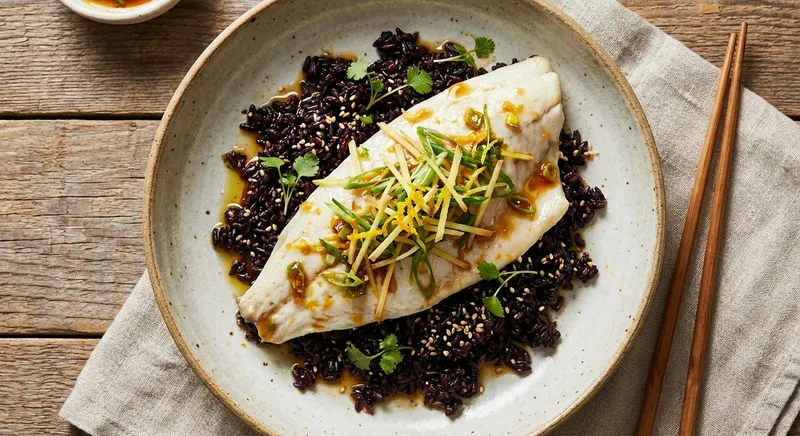
Delicate branzino fillets are gently steamed with bright lemon and warm grated ginger until just flaky, then finished with a fragrant scallion–sesame oil and a splash of light soy. Served over glossy, nutty forbidden (black) rice, this Asian-fusion main balances silky texture, citrus brightness, and toasty aromatics for a restaurant-quality plate that’s surprisingly easy at home.
Measure and rinse the rice: place 300 g (total) forbidden black rice in a fine-mesh sieve and rinse under cold running water until the water runs clearer. Rinsing removes dust and excess surface starch so the grains cook evenly and don’t clump. If you have time, cover the rice with water and soak 20–30 minutes to shorten cook time and even out texture—especially helpful for black rice and wild blends.
Cook the rice: drain the soaked (or rinsed) rice and combine with 600 ml water and 1 tsp kosher salt in a medium saucepan. Bring to a vigorous simmer uncovered, then reduce to a low simmer and partially cover. Cook 30–35 minutes, stirring once or twice early to prevent sticking, until grains are tender but still have some bite. Black rice can take longer than white rice; you’re aiming for tender, glossy grains. If there’s any excess water at the end, drain briefly; then return to the pan, cover tightly, and let rest 10 minutes off the heat to finish steaming—this resting step evens out moisture and gives a silkier grain.
While the rice starts, prep the fish and aromatics: pat the fillets dry with paper towel (dry surface browns and seasons better even when steaming). Season each fillet lightly with kosher salt (about 1/2 tsp per 180 g fillet) and a few grinds of black pepper. Zest the lemon and then juice it — you’ll need about 60–80 ml total from one lemon; reserve.
Assemble the steam parcels (two options): - Stovetop steamer: lay the fillets on a heatproof plate large enough to fit in your steamer. Scatter 1 tsp grated ginger per fillet (or spread proportionally across pieces) and 1/4 lemon’s juice and a touch of zest over each. The ginger and citrus sit against the fish so their volatile oils and acids gently perfume and slightly cook the surface—this brightens flavor without toughening. - Oven en papillote: preheat to 200°C/400°F. Fold each fillet into a parchment parcel with its ginger, zest, and a drizzle of lemon juice and a tiny pinch of salt. Bake on a rimmed sheet 8–12 minutes depending on thickness. En papillote traps steam and concentrates aromatics, yielding tender, intensely flavored fish.
Steam the fish (stovetop method recommended for the most delicate texture): bring 2–3 cm (an inch) of water to a simmer in the bottom of a wide sauté pan fitted with a steamer basket or a heatproof rack. Place the plate with fillets into the steamer, cover tightly, and steam 6–10 minutes, depending on thickness—fish is done when opaque and it flakes easily with a fork or reaches 60°C/140°F at the thickest point. Steaming is gentle and preserves the branzino’s silky texture; it also keeps the citrus-ginger aroma bright.
Make the scallion–sesame finishing sauce while the fish steams: put the thinly sliced scallions (separate whites and greens) in a small heatproof bowl. Add 4 tsp light soy sauce, the 2 tsp sesame oil, the remaining grated ginger (reserve about 1/2 tsp to dot on the rice if you like extra kick), and the lemon zest plus the rest of the lemon juice to taste (about 1 tbsp). Stir and season with a pinch of pepper. The idea is to marry salty, nutty, and bright notes — the residual heat of the cooked fish will warm this mixture and bloom the sesame oil and soy aroma without needing much additional cooking.
Dress the fish and rice: when the fish is done, carefully transfer each fillet to warmed plates on a bed of the cooked black rice (fluffed). Spoon the scallion–sesame mixture over each fillet. Scatter the green parts of the scallions and a small handful of chopped cilantro over the top. A final drizzle of the reserved lemon juice can be added to taste. Tasting and finishing right before serving preserves the bright citrus and the fresh bite of the scallions.
Plating and optional garnish: for a restaurant finish, spoon rice in a compact mound using a small bowl or ring mold, lay the fish across the rice at a slight angle, and spoon the scallion sauce so it pools elegantly. Add a light sprinkle of lemon zest and a couple of micro cilantro leaves. Serve immediately — steamed fish is at its best hot and tender.
Storage and reheating note: leftover rice will firm up in the fridge; reheat gently with a splash of water in a covered pan to steam it back. Leftover steamed fish is best eaten within 24 hours and should be reheated gently in a low oven (140°C/275°F) wrapped in foil for 8–10 minutes so it warms without drying.
526
Calories
49g
Protein
61g
Carbs
11g
Fat
4g
Fiber
How did this recipe turn out? Let others know!
to rate this recipe
By Kayla Alaniz
Delicate branzino fillets are gently steamed with bright lemon and warm grated ginger until just flaky, then finished with a fragrant scallion–sesame oil and a splash of light soy. Served over glossy, nutty forbidden (black) rice, this Asian-fusion main balances silky texture, citrus brightness, and toasty aromatics for a restaurant-quality plate that’s surprisingly easy at home.
Measure and rinse the rice: place 300 g (total) forbidden black rice in a fine-mesh sieve and rinse under cold running water until the water runs clearer. Rinsing removes dust and excess surface starch so the grains cook evenly and don’t clump. If you have time, cover the rice with water and soak 20–30 minutes to shorten cook time and even out texture—especially helpful for black rice and wild blends.
Cook the rice: drain the soaked (or rinsed) rice and combine with 600 ml water and 1 tsp kosher salt in a medium saucepan. Bring to a vigorous simmer uncovered, then reduce to a low simmer and partially cover. Cook 30–35 minutes, stirring once or twice early to prevent sticking, until grains are tender but still have some bite. Black rice can take longer than white rice; you’re aiming for tender, glossy grains. If there’s any excess water at the end, drain briefly; then return to the pan, cover tightly, and let rest 10 minutes off the heat to finish steaming—this resting step evens out moisture and gives a silkier grain.
While the rice starts, prep the fish and aromatics: pat the fillets dry with paper towel (dry surface browns and seasons better even when steaming). Season each fillet lightly with kosher salt (about 1/2 tsp per 180 g fillet) and a few grinds of black pepper. Zest the lemon and then juice it — you’ll need about 60–80 ml total from one lemon; reserve.
Assemble the steam parcels (two options): - Stovetop steamer: lay the fillets on a heatproof plate large enough to fit in your steamer. Scatter 1 tsp grated ginger per fillet (or spread proportionally across pieces) and 1/4 lemon’s juice and a touch of zest over each. The ginger and citrus sit against the fish so their volatile oils and acids gently perfume and slightly cook the surface—this brightens flavor without toughening. - Oven en papillote: preheat to 200°C/400°F. Fold each fillet into a parchment parcel with its ginger, zest, and a drizzle of lemon juice and a tiny pinch of salt. Bake on a rimmed sheet 8–12 minutes depending on thickness. En papillote traps steam and concentrates aromatics, yielding tender, intensely flavored fish.
Steam the fish (stovetop method recommended for the most delicate texture): bring 2–3 cm (an inch) of water to a simmer in the bottom of a wide sauté pan fitted with a steamer basket or a heatproof rack. Place the plate with fillets into the steamer, cover tightly, and steam 6–10 minutes, depending on thickness—fish is done when opaque and it flakes easily with a fork or reaches 60°C/140°F at the thickest point. Steaming is gentle and preserves the branzino’s silky texture; it also keeps the citrus-ginger aroma bright.
Make the scallion–sesame finishing sauce while the fish steams: put the thinly sliced scallions (separate whites and greens) in a small heatproof bowl. Add 4 tsp light soy sauce, the 2 tsp sesame oil, the remaining grated ginger (reserve about 1/2 tsp to dot on the rice if you like extra kick), and the lemon zest plus the rest of the lemon juice to taste (about 1 tbsp). Stir and season with a pinch of pepper. The idea is to marry salty, nutty, and bright notes — the residual heat of the cooked fish will warm this mixture and bloom the sesame oil and soy aroma without needing much additional cooking.
Dress the fish and rice: when the fish is done, carefully transfer each fillet to warmed plates on a bed of the cooked black rice (fluffed). Spoon the scallion–sesame mixture over each fillet. Scatter the green parts of the scallions and a small handful of chopped cilantro over the top. A final drizzle of the reserved lemon juice can be added to taste. Tasting and finishing right before serving preserves the bright citrus and the fresh bite of the scallions.
Plating and optional garnish: for a restaurant finish, spoon rice in a compact mound using a small bowl or ring mold, lay the fish across the rice at a slight angle, and spoon the scallion sauce so it pools elegantly. Add a light sprinkle of lemon zest and a couple of micro cilantro leaves. Serve immediately — steamed fish is at its best hot and tender.
Storage and reheating note: leftover rice will firm up in the fridge; reheat gently with a splash of water in a covered pan to steam it back. Leftover steamed fish is best eaten within 24 hours and should be reheated gently in a low oven (140°C/275°F) wrapped in foil for 8–10 minutes so it warms without drying.
526
Calories
49g
Protein
61g
Carbs
11g
Fat
4g
Fiber
Your Rating:
