By emensah m
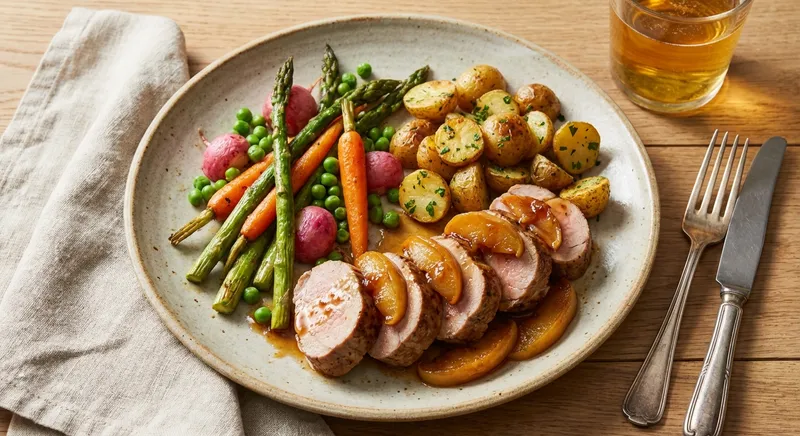
A glossy, caramelized apple-cider glaze coats a perfectly seared pork tenderloin — tender and juicy with a whisper of mustard spice. Paired with golden garlic-parsley baby potatoes and bright, crisp-roasted asparagus, this dish balances sweet, savory and herbaceous flavors for an elegant weeknight or dinner-party centerpiece.
Preheat and prep: Preheat your oven to 425°F (220°C). This high roasting temperature encourages browning on the potatoes and gives the pork a quick finish in the oven without drying. Line a rimmed baking sheet with foil or parchment for easy cleanup.
Prep the potatoes: Place 12 small halved baby potatoes in a large bowl. Toss with 2 tablespoons olive oil, 2 cloves minced garlic, 1 teaspoon kosher salt and 1/2 teaspoon black pepper. Spread cut-side down on the prepared baking sheet. Roasting cut-side down encourages contact browning for a deep golden crust.
Begin roasting potatoes: Slide the potatoes into the preheated oven and roast for 20 minutes while you prepare the pork. They will be par-cooked and will finish while the pork rests, ensuring everything finishes at the right doneness.
Trim and season the pork: Pat the 720 g pork tenderloin dry with paper towels (dry surfaces brown better). Trim any silver skin and, if the tenderloin is uneven, tie it loosely into a uniform cylinder with kitchen twine to ensure even cooking. Season generously all over with salt and pepper.
Sear the pork for a browned crust: Heat a large, ovenproof skillet (cast iron preferred) over medium-high heat until shimmering. Add 1 tablespoon olive oil and swirl. Sear the pork 2–3 minutes per side — including the ends — until a deep golden-brown crust forms. Browning (the Maillard reaction) adds concentrated savory flavor and color.
Deglaze and make the apple-cider glaze: Remove the pork briefly to a plate. Lower heat to medium, add the 1 cup apple cider to the hot pan to deglaze, scraping up browned bits (those are flavor). Stir in 4 teaspoons Dijon mustard and bring the cider to a simmer. Reduce gently until syrupy and reduced to about 1/3 cup (about 6–8 minutes). Reducing concentrates the cider’s sweetness and allows the mustard to emulsify into a glossy glaze.
Finish glaze and roast pork: Whisk a tablespoon of unsalted butter into the reduced glaze off the heat to round and thicken it; this gives the sauce a silky sheen. Return the pork to the pan and spoon some glaze over it. Transfer the skillet to the oven alongside the par-roasted potatoes and roast for 10–12 minutes (or until an instant-read thermometer inserted into the thickest part reads 145°F / 63°C). The oven time will gently finish the pork without overcooking.
Roast the asparagus: While the pork roasts, toss 4 cups asparagus spears with the remaining 1 tablespoon olive oil, 1 clove minced garlic, a pinch of salt and pepper. Spread on a second baking sheet or a cleared spot on the first sheet. Roast 8–10 minutes until bright green and just tender — roasting keeps asparagus crisp-tender with some caramelized tips.
Rest pork and finish potatoes: When the pork reaches 145°F, remove the skillet and transfer the tenderloin to a cutting board. Tent loosely with foil and rest 8–10 minutes (resting lets juices redistribute; slicing immediately will lose more juice). While the pork rests, return the potatoes to the oven if needed and roast until golden and fork-tender, 5–8 more minutes. Toss potatoes with the remaining minced garlic and 4 tablespoons chopped parsley after roasting so the herb stays bright.
Slice and glaze: Slice the rested pork into 1/2-inch medallions. Rewarm the reduced glaze if it has thickened; spoon or brush it over the sliced pork so every bite is glossy and flavorful. Taste a potato and the asparagus to adjust salt and pepper just before plating.
Plate and garnish: On each plate, arrange a bed of garlic‑parsley potatoes, a neat bundle of roasted asparagus, and 4–5 slices of pork. Spoon any extra glaze over the pork and scatter the remaining chopped parsley for color and freshness. Serve immediately.
585
Calories
47g
Protein
40g
Carbs
28g
Fat
7g
Fiber
How did this recipe turn out? Let others know!
to rate this recipe
By emensah m
A glossy, caramelized apple-cider glaze coats a perfectly seared pork tenderloin — tender and juicy with a whisper of mustard spice. Paired with golden garlic-parsley baby potatoes and bright, crisp-roasted asparagus, this dish balances sweet, savory and herbaceous flavors for an elegant weeknight or dinner-party centerpiece.
Preheat and prep: Preheat your oven to 425°F (220°C). This high roasting temperature encourages browning on the potatoes and gives the pork a quick finish in the oven without drying. Line a rimmed baking sheet with foil or parchment for easy cleanup.
Prep the potatoes: Place 12 small halved baby potatoes in a large bowl. Toss with 2 tablespoons olive oil, 2 cloves minced garlic, 1 teaspoon kosher salt and 1/2 teaspoon black pepper. Spread cut-side down on the prepared baking sheet. Roasting cut-side down encourages contact browning for a deep golden crust.
Begin roasting potatoes: Slide the potatoes into the preheated oven and roast for 20 minutes while you prepare the pork. They will be par-cooked and will finish while the pork rests, ensuring everything finishes at the right doneness.
Trim and season the pork: Pat the 720 g pork tenderloin dry with paper towels (dry surfaces brown better). Trim any silver skin and, if the tenderloin is uneven, tie it loosely into a uniform cylinder with kitchen twine to ensure even cooking. Season generously all over with salt and pepper.
Sear the pork for a browned crust: Heat a large, ovenproof skillet (cast iron preferred) over medium-high heat until shimmering. Add 1 tablespoon olive oil and swirl. Sear the pork 2–3 minutes per side — including the ends — until a deep golden-brown crust forms. Browning (the Maillard reaction) adds concentrated savory flavor and color.
Deglaze and make the apple-cider glaze: Remove the pork briefly to a plate. Lower heat to medium, add the 1 cup apple cider to the hot pan to deglaze, scraping up browned bits (those are flavor). Stir in 4 teaspoons Dijon mustard and bring the cider to a simmer. Reduce gently until syrupy and reduced to about 1/3 cup (about 6–8 minutes). Reducing concentrates the cider’s sweetness and allows the mustard to emulsify into a glossy glaze.
Finish glaze and roast pork: Whisk a tablespoon of unsalted butter into the reduced glaze off the heat to round and thicken it; this gives the sauce a silky sheen. Return the pork to the pan and spoon some glaze over it. Transfer the skillet to the oven alongside the par-roasted potatoes and roast for 10–12 minutes (or until an instant-read thermometer inserted into the thickest part reads 145°F / 63°C). The oven time will gently finish the pork without overcooking.
Roast the asparagus: While the pork roasts, toss 4 cups asparagus spears with the remaining 1 tablespoon olive oil, 1 clove minced garlic, a pinch of salt and pepper. Spread on a second baking sheet or a cleared spot on the first sheet. Roast 8–10 minutes until bright green and just tender — roasting keeps asparagus crisp-tender with some caramelized tips.
Rest pork and finish potatoes: When the pork reaches 145°F, remove the skillet and transfer the tenderloin to a cutting board. Tent loosely with foil and rest 8–10 minutes (resting lets juices redistribute; slicing immediately will lose more juice). While the pork rests, return the potatoes to the oven if needed and roast until golden and fork-tender, 5–8 more minutes. Toss potatoes with the remaining minced garlic and 4 tablespoons chopped parsley after roasting so the herb stays bright.
Slice and glaze: Slice the rested pork into 1/2-inch medallions. Rewarm the reduced glaze if it has thickened; spoon or brush it over the sliced pork so every bite is glossy and flavorful. Taste a potato and the asparagus to adjust salt and pepper just before plating.
Plate and garnish: On each plate, arrange a bed of garlic‑parsley potatoes, a neat bundle of roasted asparagus, and 4–5 slices of pork. Spoon any extra glaze over the pork and scatter the remaining chopped parsley for color and freshness. Serve immediately.
585
Calories
47g
Protein
40g
Carbs
28g
Fat
7g
Fiber
Your Rating:
