By Amy Winstead
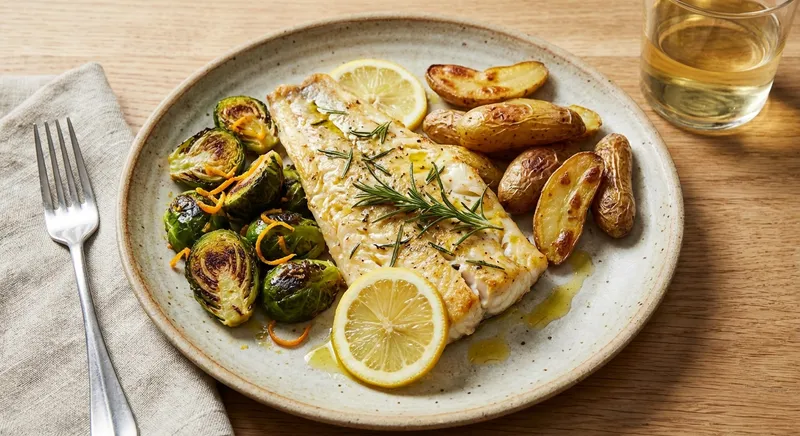
Tender, rosemary-scented sea bass fillets roast alongside caramelized citrus-bright Brussels sprouts and crispy halved fingerling potatoes. The dish balances buttery, herbaceous fish, tangy clementine segments and crunchy-on-the-outside, fluffy-inside potatoes for a restaurant-quality, Mediterranean-inspired plate that’s elegant but simple enough for a weeknight.
Preheat the oven to 220°C / 425°F (convection if available) and position a rack in the upper third. High, dry heat will crisp the potatoes and brown the sprouts without overcooking the delicate fish; placing the rack up higher helps the fish develop color and the vegetables caramelize.
Parboil the halved fingerling potatoes for 8 minutes in salted boiling water, then drain and shake the pan briefly to roughen their cut surfaces. Parboiling starts the cooking so the potatoes become fluffy inside, and roughing the cut side creates extra surface area so they crisp beautifully in the oven.
Toss the parboiled potatoes with 2 tablespoons of the olive oil, 2 teaspoons chopped rosemary, a pinch (about 1/2 tsp) flaky sea salt and 1/4 tsp black pepper. Spread them cut-side down on a rimmed baking sheet or roasting pan in a single layer. Cutting oil and rosemary directly onto the potatoes lets the herb’s oils bloom in contact with heat and ensures those cut sides caramelize into a golden crust.
Roast the potatoes for 15 minutes alone. This gives them a head start so when you add the other ingredients the potatoes will already be turning crisp and golden without overbaking the fish.
While the potatoes roast, toss the halved Brussels sprouts with the remaining 2 tablespoons olive oil, the remaining 2 teaspoons chopped rosemary, sliced garlic, a pinch of flaky sea salt (about 1/2 tsp) and 1/4 tsp black pepper. The garlic and rosemary will infuse the oil; coating the sprouts in this mixture promotes even browning and prevents the garlic from burning when roasted.
After the potatoes have roasted 15 minutes, stir the pan and push the potatoes to one side. Add the seasoned Brussels sprouts cut-side down on the empty side of the pan. Roast everything together for 12–15 more minutes, until the sprouts are deeply browned at the edges and the potatoes are fully crisp and golden. Cooking the sprouts on the same pan lets their fond mingle with the potatoes, amplifying flavor.
Pat the sea bass fillets dry with paper towels and season the flesh and skin lightly with flaky sea salt and black pepper. Drying the surface removes moisture so the fish will brown instead of steaming in the oven.
Make small wells between the potatoes and sprouts and lay the fillets skin-side down on the baking sheet. Dot each fillet with 1 teaspoon of butter and sprinkle a little of the thinly sliced garlic and a scant 1 teaspoon chopped rosemary over the top. Placing the fish on the same sheet that already has hot, flavored oil ensures quick, even cooking and lets the fish pick up some of the pan’s browned flavors.
Return the sheet to the oven and roast for 8–10 minutes, depending on fillet thickness, until the fish flakes easily and registers 52–55°C / 125–131°F in the thickest part for moist, just-cooked sea bass. The shorter cook keeps the fish tender; the butter bastes the fillets and adds a glossy finish.
Remove from the oven and immediately squeeze 1 teaspoon fresh lemon juice over each fillet and scatter the clementine segments across the vegetables. The acid brightens the buttery fish and the citrus segments add a juicy, sweet-tart foil to the roasted vegetables—don’t skip this finishing touch.
Plate warm: arrange a bed of potatoes and sprouts, place a fillet on top (skin-side up for presentation if crisp), spoon any pan juices over, and finish with a small grind of black pepper and a final pinch of flaky salt. Serve immediately so the skin stays crisp and the citrus retains freshness.
If you like, garnish with extra rosemary sprigs or a drizzle (½–1 tsp) of very good extra-virgin olive oil to finish. A final drizzle elevates the dish visually and adds a green, fragrant richness.
572
Calories
44g
Protein
45g
Carbs
25g
Fat
9g
Fiber
How did this recipe turn out? Let others know!
to rate this recipe
By Amy Winstead
Tender, rosemary-scented sea bass fillets roast alongside caramelized citrus-bright Brussels sprouts and crispy halved fingerling potatoes. The dish balances buttery, herbaceous fish, tangy clementine segments and crunchy-on-the-outside, fluffy-inside potatoes for a restaurant-quality, Mediterranean-inspired plate that’s elegant but simple enough for a weeknight.
Preheat the oven to 220°C / 425°F (convection if available) and position a rack in the upper third. High, dry heat will crisp the potatoes and brown the sprouts without overcooking the delicate fish; placing the rack up higher helps the fish develop color and the vegetables caramelize.
Parboil the halved fingerling potatoes for 8 minutes in salted boiling water, then drain and shake the pan briefly to roughen their cut surfaces. Parboiling starts the cooking so the potatoes become fluffy inside, and roughing the cut side creates extra surface area so they crisp beautifully in the oven.
Toss the parboiled potatoes with 2 tablespoons of the olive oil, 2 teaspoons chopped rosemary, a pinch (about 1/2 tsp) flaky sea salt and 1/4 tsp black pepper. Spread them cut-side down on a rimmed baking sheet or roasting pan in a single layer. Cutting oil and rosemary directly onto the potatoes lets the herb’s oils bloom in contact with heat and ensures those cut sides caramelize into a golden crust.
Roast the potatoes for 15 minutes alone. This gives them a head start so when you add the other ingredients the potatoes will already be turning crisp and golden without overbaking the fish.
While the potatoes roast, toss the halved Brussels sprouts with the remaining 2 tablespoons olive oil, the remaining 2 teaspoons chopped rosemary, sliced garlic, a pinch of flaky sea salt (about 1/2 tsp) and 1/4 tsp black pepper. The garlic and rosemary will infuse the oil; coating the sprouts in this mixture promotes even browning and prevents the garlic from burning when roasted.
After the potatoes have roasted 15 minutes, stir the pan and push the potatoes to one side. Add the seasoned Brussels sprouts cut-side down on the empty side of the pan. Roast everything together for 12–15 more minutes, until the sprouts are deeply browned at the edges and the potatoes are fully crisp and golden. Cooking the sprouts on the same pan lets their fond mingle with the potatoes, amplifying flavor.
Pat the sea bass fillets dry with paper towels and season the flesh and skin lightly with flaky sea salt and black pepper. Drying the surface removes moisture so the fish will brown instead of steaming in the oven.
Make small wells between the potatoes and sprouts and lay the fillets skin-side down on the baking sheet. Dot each fillet with 1 teaspoon of butter and sprinkle a little of the thinly sliced garlic and a scant 1 teaspoon chopped rosemary over the top. Placing the fish on the same sheet that already has hot, flavored oil ensures quick, even cooking and lets the fish pick up some of the pan’s browned flavors.
Return the sheet to the oven and roast for 8–10 minutes, depending on fillet thickness, until the fish flakes easily and registers 52–55°C / 125–131°F in the thickest part for moist, just-cooked sea bass. The shorter cook keeps the fish tender; the butter bastes the fillets and adds a glossy finish.
Remove from the oven and immediately squeeze 1 teaspoon fresh lemon juice over each fillet and scatter the clementine segments across the vegetables. The acid brightens the buttery fish and the citrus segments add a juicy, sweet-tart foil to the roasted vegetables—don’t skip this finishing touch.
Plate warm: arrange a bed of potatoes and sprouts, place a fillet on top (skin-side up for presentation if crisp), spoon any pan juices over, and finish with a small grind of black pepper and a final pinch of flaky salt. Serve immediately so the skin stays crisp and the citrus retains freshness.
If you like, garnish with extra rosemary sprigs or a drizzle (½–1 tsp) of very good extra-virgin olive oil to finish. A final drizzle elevates the dish visually and adds a green, fragrant richness.
572
Calories
44g
Protein
45g
Carbs
25g
Fat
9g
Fiber
Your Rating:
