By j
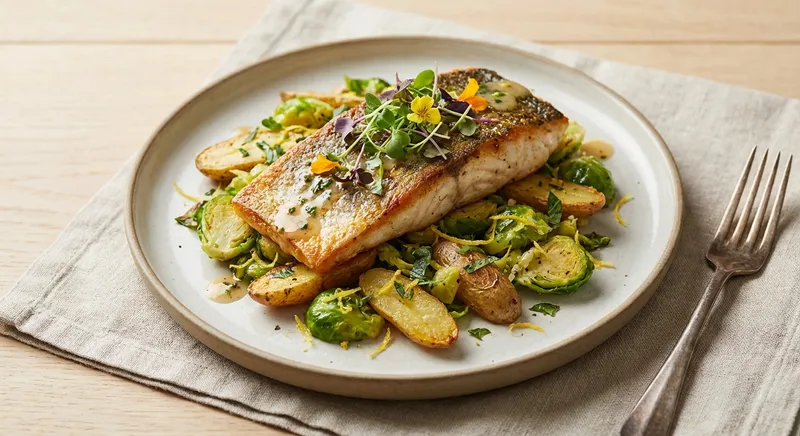
A light yet indulgent weeknight main: a tender, pan-seared sea bass fillet finished with lemon-butter and bright herbs sits atop a crisp-tender salad of smashed parboiled fingerlings and shredded Brussels sprouts. The dish balances crisp textures, bright citrus, and herbaceous warmth for a restaurant-quality plate that’s faster than it looks.
Bring ingredients to room temperature (5–10 minutes). Pat the sea bass dry with paper towels and season both sides lightly with salt and a pinch of black pepper. Drying the fillet removes surface moisture so the fish can form a golden sear rather than steam when it hits the pan.
Heat a 10–12" heavy skillet over medium-high heat until hot; add the olive oil and let it shimmer but not smoke. A hot pan ensures immediate contact heat to trigger Maillard browning on the fish and the vegetables, producing deeper flavor.
If your sea bass has skin, place it skin-side down in the pan. Press gently with a spatula for 10–15 seconds to prevent the edges from curling; cook without moving for 3–4 minutes until the skin is crisp and the fish releases easily. If the fillet is skinless, sear the presentation side first 2–3 minutes to get a golden crust. High initial heat creates a flavorful crust that also helps keep the center moist.
Flip the fillet and immediately reduce the heat to medium. Add the butter and the thinly sliced garlic to the pan; tilt the pan slightly and spoon the melted butter, garlic and any pan juices over the top of the fish for 45–90 seconds (baste). Lower heat prevents the garlic from burning; basting with butter adds richness and carries aromatic herb flavors into the flesh.
While the fish cooks on the second side, start the potato–Brussels salad in a separate skillet (or after you remove the fish, use the same pan and wipe it clean). Heat a 8" skillet over medium-high heat and add a light drizzle of olive oil. Add the shredded Brussels sprouts and the halved parboiled fingerling potatoes, cut-side down. Spread them in a single layer and let them cook undisturbed for 2–3 minutes to develop a brown crust.
Using the flat of a spatula or a potato masher, gently smash each potato half so the surface breaks and more edges contact the pan—this increases surface area to crisp and soak up flavors. Cook, tossing occasionally, until the Brussels sprouts are tender-crisp and the potatoes have golden-brown edges, 4–6 minutes more. Parboiling made the interiors tender; now you’re developing texture and caramelized flavor.
Finish the salad by turning off the heat and stirring in the lemon juice, chopped parsley and dill, the remaining 1 tsp butter (if desired) and a small pinch of salt and pepper to taste. The acid brightens the vegetables and the herbs refresh the dish; finishing with cool lemon prevents overcooking the greens.
Check the sea bass for doneness: it should flake easily with a fork but still be moist—internal temperature about 55–60°C (130–140°F) for perfectly tender fish. Remove from the pan and let rest 1–2 minutes; carryover heat finishes cooking and resting prevents juices from spilling out immediately when cut.
Plate: make a bed of the smashed potato and Brussels salad, place the sea bass on top, and spoon any remaining butter-garlic pan juices over the fish. Finish with an extra drizzle of olive oil, a squeeze of fresh lemon if you like it brighter, and a scattering of the remaining fresh herbs.
Taste and adjust: sprinkle flaky salt over the fish for contrast and more cracked black pepper if desired. Serve immediately so the skin stays crisp and the potatoes retain their caramelized edges.
477
Calories
37g
Protein
35g
Carbs
23g
Fat
6g
Fiber
How did this recipe turn out? Let others know!
to rate this recipe
By j
A light yet indulgent weeknight main: a tender, pan-seared sea bass fillet finished with lemon-butter and bright herbs sits atop a crisp-tender salad of smashed parboiled fingerlings and shredded Brussels sprouts. The dish balances crisp textures, bright citrus, and herbaceous warmth for a restaurant-quality plate that’s faster than it looks.
Bring ingredients to room temperature (5–10 minutes). Pat the sea bass dry with paper towels and season both sides lightly with salt and a pinch of black pepper. Drying the fillet removes surface moisture so the fish can form a golden sear rather than steam when it hits the pan.
Heat a 10–12" heavy skillet over medium-high heat until hot; add the olive oil and let it shimmer but not smoke. A hot pan ensures immediate contact heat to trigger Maillard browning on the fish and the vegetables, producing deeper flavor.
If your sea bass has skin, place it skin-side down in the pan. Press gently with a spatula for 10–15 seconds to prevent the edges from curling; cook without moving for 3–4 minutes until the skin is crisp and the fish releases easily. If the fillet is skinless, sear the presentation side first 2–3 minutes to get a golden crust. High initial heat creates a flavorful crust that also helps keep the center moist.
Flip the fillet and immediately reduce the heat to medium. Add the butter and the thinly sliced garlic to the pan; tilt the pan slightly and spoon the melted butter, garlic and any pan juices over the top of the fish for 45–90 seconds (baste). Lower heat prevents the garlic from burning; basting with butter adds richness and carries aromatic herb flavors into the flesh.
While the fish cooks on the second side, start the potato–Brussels salad in a separate skillet (or after you remove the fish, use the same pan and wipe it clean). Heat a 8" skillet over medium-high heat and add a light drizzle of olive oil. Add the shredded Brussels sprouts and the halved parboiled fingerling potatoes, cut-side down. Spread them in a single layer and let them cook undisturbed for 2–3 minutes to develop a brown crust.
Using the flat of a spatula or a potato masher, gently smash each potato half so the surface breaks and more edges contact the pan—this increases surface area to crisp and soak up flavors. Cook, tossing occasionally, until the Brussels sprouts are tender-crisp and the potatoes have golden-brown edges, 4–6 minutes more. Parboiling made the interiors tender; now you’re developing texture and caramelized flavor.
Finish the salad by turning off the heat and stirring in the lemon juice, chopped parsley and dill, the remaining 1 tsp butter (if desired) and a small pinch of salt and pepper to taste. The acid brightens the vegetables and the herbs refresh the dish; finishing with cool lemon prevents overcooking the greens.
Check the sea bass for doneness: it should flake easily with a fork but still be moist—internal temperature about 55–60°C (130–140°F) for perfectly tender fish. Remove from the pan and let rest 1–2 minutes; carryover heat finishes cooking and resting prevents juices from spilling out immediately when cut.
Plate: make a bed of the smashed potato and Brussels salad, place the sea bass on top, and spoon any remaining butter-garlic pan juices over the fish. Finish with an extra drizzle of olive oil, a squeeze of fresh lemon if you like it brighter, and a scattering of the remaining fresh herbs.
Taste and adjust: sprinkle flaky salt over the fish for contrast and more cracked black pepper if desired. Serve immediately so the skin stays crisp and the potatoes retain their caramelized edges.
477
Calories
37g
Protein
35g
Carbs
23g
Fat
6g
Fiber
Your Rating:
