By Kathryn Scott
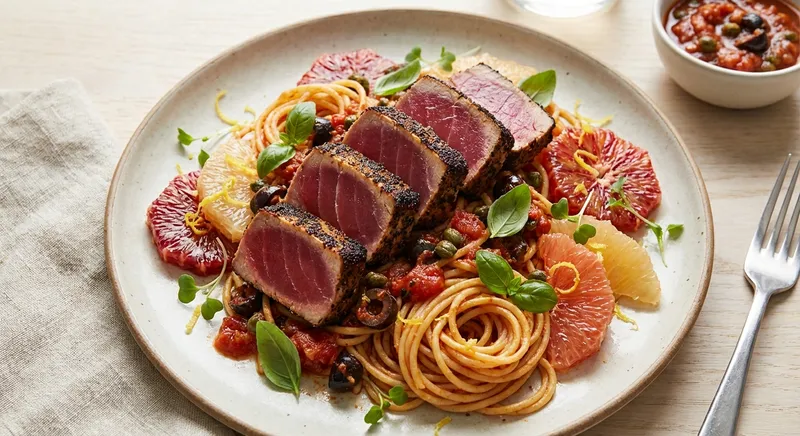
A bright Mediterranean-meets-winter plate: rare, pepper-crusted ahi tuna atop gluten-free spaghetti tossed in a briny puttanesca sauce, finished with sweet-tart winter citrus and fresh parsley. The contrast of silky rare tuna, tangy capers and olives, and bursts of blood-orange freshness makes every bite layered, elegant, and restaurant-quality.
Bring a large pot of water to a vigorous boil and salt it generously (about 1 tablespoon salt per 4–5 liters / 1 gallon). Salting the water seasons the pasta from the inside out; it should taste like seawater. Keep the pot at a full boil — gluten-free pasta benefits from steady heat to cook evenly.
While the water heats, pat the tuna dry with paper towels and season both sides with a light sprinkle of salt and a generous crack of black pepper. Drying the surface removes moisture so the tuna sears instead of steams; pepper adds a savory crust that complements puttanesca.
Heat a heavy skillet (preferably stainless steel or cast iron) over high heat until smoking-hot, then add 1 tsp of the olive oil and swirl to coat. A very hot pan creates an immediate crust on the tuna which locks juices into the center, giving the classic rare interior and flavorful exterior.
Sear the tuna 45–60 seconds per side for a rare center (internal temp ~42–46°C / 108–115°F) depending on thickness, searing the edges briefly to render a thin band of cooked fish. If you prefer medium-rare, add 15–30 seconds per side. Transfer tuna to a cutting board to rest 3–5 minutes — resting lets juices redistribute so slices stay moist.
When the water is boiling, add the gluten-free spaghetti and cook according to package instructions minus 30–60 seconds for al dente. Cooking slightly under allows the pasta to finish cooking when tossed with the sauce, preventing a gummy texture that some gluten-free pastas develop if overcooked.
While the pasta cooks, warm the puttanesca sauce in a separate sauté pan over medium heat with the smashed garlic clove and the remaining 1 tsp olive oil. Warm slowly for 4–6 minutes to meld flavors; the garlic will flavor the oil (this blooms garlic’s aroma) without burning. Remove and discard the garlic clove before finishing.
Reserve ¾ cup (180 ml) of the pasta cooking water, then drain the spaghetti. Add the drained pasta to the warm puttanesca sauce and toss over medium heat for 1–2 minutes, adding a few tablespoons of reserved pasta water as needed to create a silky emulsion that coats the strands. The starchy water helps the sauce cling to the pasta and smooths any graininess from gluten-free noodles.
Fold in half the chopped parsley and about two-thirds of the citrus segments (reserve the rest for garnish) gently so the citrus doesn’t break up — the citrus gives a bright counterpoint to the salty brine of olives and capers and fresh parsley balances the sauce’s richness.
Slice the rested tuna against the grain into 6–8mm (1/4"–3/8") slices for elegant presentation and a tender bite. Slicing against the grain shortens muscle fibers so each bite feels delicate.
Divide the sauced spaghetti between two warmed plates. Fan slices of tuna over the pasta, scatter the remaining citrus segments and the rest of the parsley, then finish with a light drizzle of the remaining olive oil and a final crack of black pepper. The finishing oil adds gloss and mouthfeel; the citrus on top preserves a fresh burst when served.
Serve immediately. Recommend tasting for final salt only at the table; capers and olives in the puttanesca are salty, so additional salt may not be necessary. Enjoy while the tuna is still warm at the edges and rare in the center.
658
Calories
48g
Protein
76g
Carbs
18g
Fat
6g
Fiber
How did this recipe turn out? Let others know!
to rate this recipe
By Kathryn Scott
A bright Mediterranean-meets-winter plate: rare, pepper-crusted ahi tuna atop gluten-free spaghetti tossed in a briny puttanesca sauce, finished with sweet-tart winter citrus and fresh parsley. The contrast of silky rare tuna, tangy capers and olives, and bursts of blood-orange freshness makes every bite layered, elegant, and restaurant-quality.
Bring a large pot of water to a vigorous boil and salt it generously (about 1 tablespoon salt per 4–5 liters / 1 gallon). Salting the water seasons the pasta from the inside out; it should taste like seawater. Keep the pot at a full boil — gluten-free pasta benefits from steady heat to cook evenly.
While the water heats, pat the tuna dry with paper towels and season both sides with a light sprinkle of salt and a generous crack of black pepper. Drying the surface removes moisture so the tuna sears instead of steams; pepper adds a savory crust that complements puttanesca.
Heat a heavy skillet (preferably stainless steel or cast iron) over high heat until smoking-hot, then add 1 tsp of the olive oil and swirl to coat. A very hot pan creates an immediate crust on the tuna which locks juices into the center, giving the classic rare interior and flavorful exterior.
Sear the tuna 45–60 seconds per side for a rare center (internal temp ~42–46°C / 108–115°F) depending on thickness, searing the edges briefly to render a thin band of cooked fish. If you prefer medium-rare, add 15–30 seconds per side. Transfer tuna to a cutting board to rest 3–5 minutes — resting lets juices redistribute so slices stay moist.
When the water is boiling, add the gluten-free spaghetti and cook according to package instructions minus 30–60 seconds for al dente. Cooking slightly under allows the pasta to finish cooking when tossed with the sauce, preventing a gummy texture that some gluten-free pastas develop if overcooked.
While the pasta cooks, warm the puttanesca sauce in a separate sauté pan over medium heat with the smashed garlic clove and the remaining 1 tsp olive oil. Warm slowly for 4–6 minutes to meld flavors; the garlic will flavor the oil (this blooms garlic’s aroma) without burning. Remove and discard the garlic clove before finishing.
Reserve ¾ cup (180 ml) of the pasta cooking water, then drain the spaghetti. Add the drained pasta to the warm puttanesca sauce and toss over medium heat for 1–2 minutes, adding a few tablespoons of reserved pasta water as needed to create a silky emulsion that coats the strands. The starchy water helps the sauce cling to the pasta and smooths any graininess from gluten-free noodles.
Fold in half the chopped parsley and about two-thirds of the citrus segments (reserve the rest for garnish) gently so the citrus doesn’t break up — the citrus gives a bright counterpoint to the salty brine of olives and capers and fresh parsley balances the sauce’s richness.
Slice the rested tuna against the grain into 6–8mm (1/4"–3/8") slices for elegant presentation and a tender bite. Slicing against the grain shortens muscle fibers so each bite feels delicate.
Divide the sauced spaghetti between two warmed plates. Fan slices of tuna over the pasta, scatter the remaining citrus segments and the rest of the parsley, then finish with a light drizzle of the remaining olive oil and a final crack of black pepper. The finishing oil adds gloss and mouthfeel; the citrus on top preserves a fresh burst when served.
Serve immediately. Recommend tasting for final salt only at the table; capers and olives in the puttanesca are salty, so additional salt may not be necessary. Enjoy while the tuna is still warm at the edges and rare in the center.
658
Calories
48g
Protein
76g
Carbs
18g
Fat
6g
Fiber
Your Rating:
