By Recipe AI
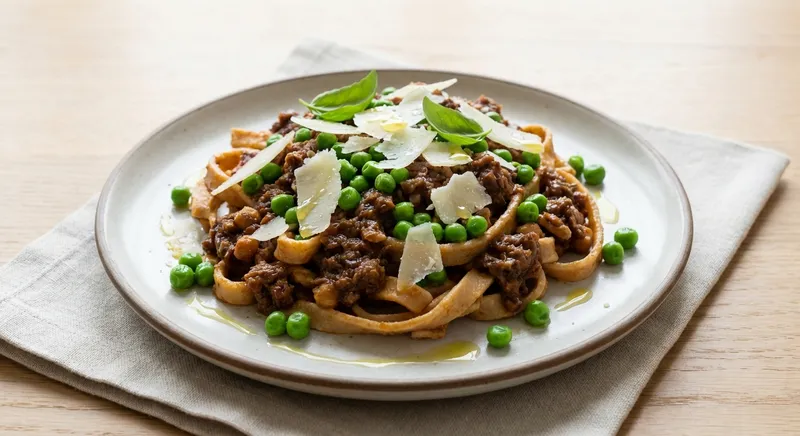
A rich, savory pork ragu that pairs the caramelized depth of slow-simmered ground pork with bright crushed tomatoes, fragrant rosemary and thyme, and sweet spring peas. Served over nutty gluten-free chickpea penne (or fusilli) and finished with sharp Pecorino, this dish balances rustic comfort with elegant Italian flavors—comforting, bright, and perfectly textured.
Prep everything before you start: mince the shallot and garlic, finely chop the rosemary and thyme, measure the pasta and open the tomatoes. Prepping ahead keeps the cooking rhythm smooth and prevents overcooking delicate ingredients like peas.
Heat a wide, heavy-bottomed saucepan or Dutch oven over medium heat and add 2 tablespoons of the olive oil. A heavy pot distributes heat evenly so the meat browns without burning.
When the oil shimmers, add the ground pork in an even layer. Let it sit undisturbed for 2–3 minutes to develop color, then use a wooden spoon to break it up. Browning (Maillard reaction) creates deep, savory flavors that form the backbone of the ragu—don't rush or crowd the meat or it will steam instead of brown.
Continue cooking until the pork is well-browned with some golden bits sticking to the pan, about 6–8 minutes total. Season lightly with salt and a few cracks of black pepper while cooking to help moisture release and assist browning.
Push the browned pork to one side of the pan. Add the remaining 2 tablespoons of olive oil to the empty side, then add the minced shallot. Sauté for 2–3 minutes until softened and translucent—this builds a sweet, aromatic base. Add the garlic and sauté 30–45 seconds until fragrant; garlic burns quickly, so watch it closely.
Stir the pork and aromatics together, then add the chopped rosemary and thyme. Toast the herbs in the pan for 20–30 seconds to bloom their essential oils—this increases their aroma and integrates their flavor into the meat.
Pour in the crushed tomatoes and 60–90 ml (about 1/4–1/3 cup) of water to loosen the sauce if it looks very thick. Scrape the bottom of the pan with your spoon to lift up any browned bits (fond)—these bits dissolve into the sauce and add concentrated flavor. Bring the mixture to a gentle simmer.
Reduce the heat to low so the sauce cooks at a very gentle simmer. Cover the pot partially (lid ajar) and simmer for 45–60 minutes, stirring occasionally. Slow, gentle simmering lets the pork become tender and the tomato flavors concentrate and meld with the herbs. If sauce reduces too much, add splashes of water as needed—ragu should be thick but saucy.
During the last 8–10 minutes of the ragu’s simmer, bring a large pot of well-salted water to a rolling boil for the pasta. Salt the water generously (it should taste like sea water); this is the only chance to season the pasta itself.
Cook the chickpea pasta 1–2 minutes less than the package’s recommended time for al dente; chickpea pasta can go from perfect to mushy quickly. Reserve 1 cup (240 ml) of pasta cooking water before draining—starchy water helps marry the pasta and sauce.
Add the peas to the ragu in the final 3–4 minutes of simmering so they cook through but stay bright and tender. Taste and adjust seasoning with salt and pepper. If the sauce feels too acidic, pinch in a small pinch of sugar or a splash (1 tsp) of olive oil to round it out.
Add the drained pasta directly to the ragu with 2–4 tablespoons of reserved pasta water. Toss over medium-low heat for 1–2 minutes so the pasta absorbs sauce and the starchy water binds them (this technique—’mantecatura’—creates a silky coating). Stir in 3 tablespoons of the grated Pecorino and finish with a final drizzle of olive oil if desired.
Serve hot in warmed shallow bowls and sprinkle the remaining 1 tablespoon of Pecorino on each plate. Grind fresh black pepper over the top and garnish with a small sprig of thyme or rosemary if you like.
871
Calories
45g
Protein
63g
Carbs
52g
Fat
11g
Fiber
How did this recipe turn out? Let others know!
to rate this recipe
By Recipe AI
A rich, savory pork ragu that pairs the caramelized depth of slow-simmered ground pork with bright crushed tomatoes, fragrant rosemary and thyme, and sweet spring peas. Served over nutty gluten-free chickpea penne (or fusilli) and finished with sharp Pecorino, this dish balances rustic comfort with elegant Italian flavors—comforting, bright, and perfectly textured.
Prep everything before you start: mince the shallot and garlic, finely chop the rosemary and thyme, measure the pasta and open the tomatoes. Prepping ahead keeps the cooking rhythm smooth and prevents overcooking delicate ingredients like peas.
Heat a wide, heavy-bottomed saucepan or Dutch oven over medium heat and add 2 tablespoons of the olive oil. A heavy pot distributes heat evenly so the meat browns without burning.
When the oil shimmers, add the ground pork in an even layer. Let it sit undisturbed for 2–3 minutes to develop color, then use a wooden spoon to break it up. Browning (Maillard reaction) creates deep, savory flavors that form the backbone of the ragu—don't rush or crowd the meat or it will steam instead of brown.
Continue cooking until the pork is well-browned with some golden bits sticking to the pan, about 6–8 minutes total. Season lightly with salt and a few cracks of black pepper while cooking to help moisture release and assist browning.
Push the browned pork to one side of the pan. Add the remaining 2 tablespoons of olive oil to the empty side, then add the minced shallot. Sauté for 2–3 minutes until softened and translucent—this builds a sweet, aromatic base. Add the garlic and sauté 30–45 seconds until fragrant; garlic burns quickly, so watch it closely.
Stir the pork and aromatics together, then add the chopped rosemary and thyme. Toast the herbs in the pan for 20–30 seconds to bloom their essential oils—this increases their aroma and integrates their flavor into the meat.
Pour in the crushed tomatoes and 60–90 ml (about 1/4–1/3 cup) of water to loosen the sauce if it looks very thick. Scrape the bottom of the pan with your spoon to lift up any browned bits (fond)—these bits dissolve into the sauce and add concentrated flavor. Bring the mixture to a gentle simmer.
Reduce the heat to low so the sauce cooks at a very gentle simmer. Cover the pot partially (lid ajar) and simmer for 45–60 minutes, stirring occasionally. Slow, gentle simmering lets the pork become tender and the tomato flavors concentrate and meld with the herbs. If sauce reduces too much, add splashes of water as needed—ragu should be thick but saucy.
During the last 8–10 minutes of the ragu’s simmer, bring a large pot of well-salted water to a rolling boil for the pasta. Salt the water generously (it should taste like sea water); this is the only chance to season the pasta itself.
Cook the chickpea pasta 1–2 minutes less than the package’s recommended time for al dente; chickpea pasta can go from perfect to mushy quickly. Reserve 1 cup (240 ml) of pasta cooking water before draining—starchy water helps marry the pasta and sauce.
Add the peas to the ragu in the final 3–4 minutes of simmering so they cook through but stay bright and tender. Taste and adjust seasoning with salt and pepper. If the sauce feels too acidic, pinch in a small pinch of sugar or a splash (1 tsp) of olive oil to round it out.
Add the drained pasta directly to the ragu with 2–4 tablespoons of reserved pasta water. Toss over medium-low heat for 1–2 minutes so the pasta absorbs sauce and the starchy water binds them (this technique—’mantecatura’—creates a silky coating). Stir in 3 tablespoons of the grated Pecorino and finish with a final drizzle of olive oil if desired.
Serve hot in warmed shallow bowls and sprinkle the remaining 1 tablespoon of Pecorino on each plate. Grind fresh black pepper over the top and garnish with a small sprig of thyme or rosemary if you like.
871
Calories
45g
Protein
63g
Carbs
52g
Fat
11g
Fiber
Your Rating:
