By Kali Humphrey
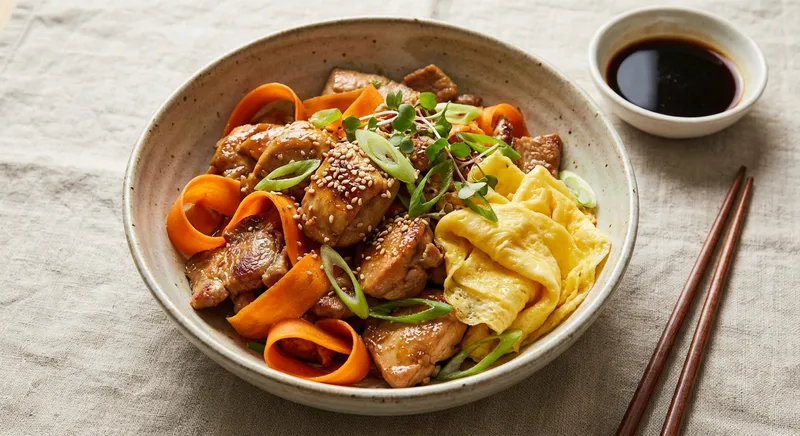
A restaurant-style Asian stir-fry that pairs tender, caramelized chicken thigh and pork tenderloin with sweet carrot ribbons, finished in a glossy ginger-tamari butter sauce and topped with silky, soft-scrambled eggs. Bright ginger, toasted sesame, and a touch of honey balance savory richness for a textural contrast—crispy edges on the meat, tender carrots, and custardy eggs—making every bite layered and unforgettable.
Trim and cut the proteins: Pat the chicken thighs and pork tenderloin very dry with paper towels (this helps browning). Cut the chicken into 1" pieces and the pork into 1/2" thick slices or thin strips for quick, even cooking. Season both lightly with kosher salt and black pepper. Why: Dry meat sears better and cutting to uniform sizes ensures both proteins finish at the same time.
Make the sauce: In a small bowl whisk together the tamari, rice wine vinegar, honey, toasted sesame oil, and the chicken stock (or water). In a separate small cup mix the cornstarch with 1 tablespoon of the sauce (or water) to make a smooth slurry. Why: Combining the cornstarch into liquid before adding to the hot pan prevents lumps and gives you control over sauce thickness.
Prepare the aromatics and carrots: Peel the carrots and use a vegetable peeler to shave long ribbons (or cut on a mandoline into thin slices). Mince the garlic, grate the ginger, and separate the scallion whites (finely minced) and greens (sliced). Why: Carrot ribbons cook very quickly and provide a silky texture that contrasts with the meat; separating scallion parts lets you use the whites for cooking (flavor) and greens for fresh finishing.
Heat a large wok or heavy skillet over medium-high heat until hot. Add 1 tablespoon neutral oil and swirl. Add the pork in a single layer and let it sear untouched for 1–1½ minutes to develop a golden crust, then stir or flip and cook another 1 minute until just opaque in the center. Transfer pork to a plate and tent loosely with foil. Why: Searing in a hot pan caramelizes surface proteins (Maillard reaction), adding savory depth.
Add the remaining 1 tablespoon neutral oil and 1 tablespoon butter to the hot pan. Add the chicken in a single layer and sear without moving for 2–3 minutes until a deep golden-brown crust forms; flip and cook another 1–2 minutes until mostly cooked through. Transfer chicken to the plate with the pork. Why: Browning the chicken in butter creates a nutty, caramelized flavor and the rendered fat boosts the sauce base.
Lower the heat to medium. Add the garlic, ginger, and minced scallion whites to the pan and sauté for 30–45 seconds until fragrant (don’t let garlic burn). Why: Short sauté releases aromatics that flavor the entire dish; cooking briefly preserves their bright notes without bitterness.
Add the carrot ribbons and a pinch of salt; toss and cook for 1–2 minutes until they are bright and just softened but still have a slight bite. Why: Quick cooking preserves the color, natural sweetness, and texture of the carrots.
Return the pork and chicken to the pan along with any accumulated juices. Stir to combine and pour in the prepared sauce, stirring to deglaze the pan and lift up the fond (browned bits). Bring the mixture to a simmer. Why: Deglazing incorporates those browned flavors into the sauce for a deeper, cohesive taste.
Whisk the cornstarch slurry again and add it to the simmering sauce. Stir constantly until the sauce becomes glossy and slightly thickened, about 30–60 seconds. Add the remaining 2 tablespoons butter off the heat and swirl to finish the sauce, which rounds flavors and adds silkiness. Taste and adjust seasoning with salt, pepper, or a splash more tamari if needed. Why: Finishing with cold butter (monté) emulsifies the sauce and gives it a luxurious mouthfeel.
Make the silky scrambled eggs while the sauce finishes: In a small bowl whisk eggs with a pinch of salt. Heat a separate nonstick skillet over low heat and add 1 teaspoon butter. Pour in the eggs and stir slowly and gently with a silicone spatula, scraping the bottom constantly to form small curds; remove while still slightly wetter than you want (carryover cooking). Why: Low-and-slow scrambling yields custardy eggs that contrast with the savory stir-fry; cooking too fast makes them dry and rubbery.
Plate: Spoon the chicken and pork stir-fry over bowls or a bed of steamed rice (or cauliflower rice for lower carbs). Top each serving with a generous portion of the silky scrambled egg, scatter sliced scallion greens and toasted sesame seeds, and, if using, a sprinkle of red pepper flakes and a lime wedge. Why: Layering the egg over the hot stir-fry creates a luscious interplay of textures and lets diners finish with a bright squeeze of lime.
Serve immediately, and encourage diners to mix the egg into the meat and carrots—this melts into the sauce and makes every bite silky-rich. Why: Combining components at the table allows flavors and textures to marry, producing a more complex eating experience.
671
Calories
48g
Protein
16g
Carbs
45g
Fat
3g
Fiber
How did this recipe turn out? Let others know!
to rate this recipe
By Kali Humphrey
A restaurant-style Asian stir-fry that pairs tender, caramelized chicken thigh and pork tenderloin with sweet carrot ribbons, finished in a glossy ginger-tamari butter sauce and topped with silky, soft-scrambled eggs. Bright ginger, toasted sesame, and a touch of honey balance savory richness for a textural contrast—crispy edges on the meat, tender carrots, and custardy eggs—making every bite layered and unforgettable.
Trim and cut the proteins: Pat the chicken thighs and pork tenderloin very dry with paper towels (this helps browning). Cut the chicken into 1" pieces and the pork into 1/2" thick slices or thin strips for quick, even cooking. Season both lightly with kosher salt and black pepper. Why: Dry meat sears better and cutting to uniform sizes ensures both proteins finish at the same time.
Make the sauce: In a small bowl whisk together the tamari, rice wine vinegar, honey, toasted sesame oil, and the chicken stock (or water). In a separate small cup mix the cornstarch with 1 tablespoon of the sauce (or water) to make a smooth slurry. Why: Combining the cornstarch into liquid before adding to the hot pan prevents lumps and gives you control over sauce thickness.
Prepare the aromatics and carrots: Peel the carrots and use a vegetable peeler to shave long ribbons (or cut on a mandoline into thin slices). Mince the garlic, grate the ginger, and separate the scallion whites (finely minced) and greens (sliced). Why: Carrot ribbons cook very quickly and provide a silky texture that contrasts with the meat; separating scallion parts lets you use the whites for cooking (flavor) and greens for fresh finishing.
Heat a large wok or heavy skillet over medium-high heat until hot. Add 1 tablespoon neutral oil and swirl. Add the pork in a single layer and let it sear untouched for 1–1½ minutes to develop a golden crust, then stir or flip and cook another 1 minute until just opaque in the center. Transfer pork to a plate and tent loosely with foil. Why: Searing in a hot pan caramelizes surface proteins (Maillard reaction), adding savory depth.
Add the remaining 1 tablespoon neutral oil and 1 tablespoon butter to the hot pan. Add the chicken in a single layer and sear without moving for 2–3 minutes until a deep golden-brown crust forms; flip and cook another 1–2 minutes until mostly cooked through. Transfer chicken to the plate with the pork. Why: Browning the chicken in butter creates a nutty, caramelized flavor and the rendered fat boosts the sauce base.
Lower the heat to medium. Add the garlic, ginger, and minced scallion whites to the pan and sauté for 30–45 seconds until fragrant (don’t let garlic burn). Why: Short sauté releases aromatics that flavor the entire dish; cooking briefly preserves their bright notes without bitterness.
Add the carrot ribbons and a pinch of salt; toss and cook for 1–2 minutes until they are bright and just softened but still have a slight bite. Why: Quick cooking preserves the color, natural sweetness, and texture of the carrots.
Return the pork and chicken to the pan along with any accumulated juices. Stir to combine and pour in the prepared sauce, stirring to deglaze the pan and lift up the fond (browned bits). Bring the mixture to a simmer. Why: Deglazing incorporates those browned flavors into the sauce for a deeper, cohesive taste.
Whisk the cornstarch slurry again and add it to the simmering sauce. Stir constantly until the sauce becomes glossy and slightly thickened, about 30–60 seconds. Add the remaining 2 tablespoons butter off the heat and swirl to finish the sauce, which rounds flavors and adds silkiness. Taste and adjust seasoning with salt, pepper, or a splash more tamari if needed. Why: Finishing with cold butter (monté) emulsifies the sauce and gives it a luxurious mouthfeel.
Make the silky scrambled eggs while the sauce finishes: In a small bowl whisk eggs with a pinch of salt. Heat a separate nonstick skillet over low heat and add 1 teaspoon butter. Pour in the eggs and stir slowly and gently with a silicone spatula, scraping the bottom constantly to form small curds; remove while still slightly wetter than you want (carryover cooking). Why: Low-and-slow scrambling yields custardy eggs that contrast with the savory stir-fry; cooking too fast makes them dry and rubbery.
Plate: Spoon the chicken and pork stir-fry over bowls or a bed of steamed rice (or cauliflower rice for lower carbs). Top each serving with a generous portion of the silky scrambled egg, scatter sliced scallion greens and toasted sesame seeds, and, if using, a sprinkle of red pepper flakes and a lime wedge. Why: Layering the egg over the hot stir-fry creates a luscious interplay of textures and lets diners finish with a bright squeeze of lime.
Serve immediately, and encourage diners to mix the egg into the meat and carrots—this melts into the sauce and makes every bite silky-rich. Why: Combining components at the table allows flavors and textures to marry, producing a more complex eating experience.
671
Calories
48g
Protein
16g
Carbs
45g
Fat
3g
Fiber
Your Rating:
