By Kali Humphrey
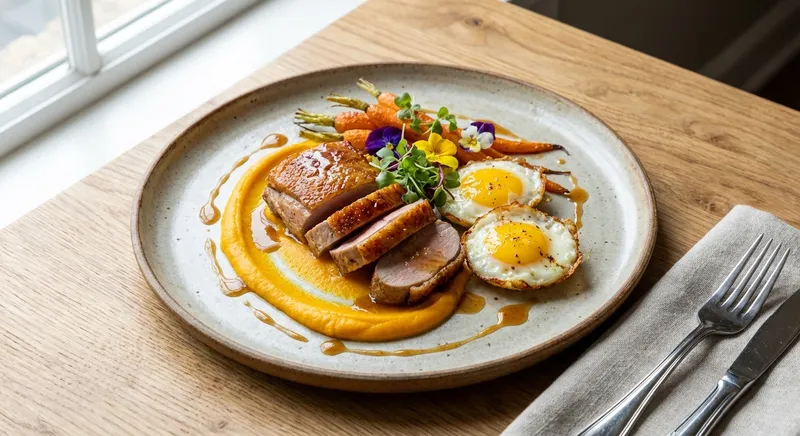
A showstopping, restaurant-quality plate: tender, caramelized pork tenderloin and juicy chicken breast served on a silky honey-butter carrot purée, finished with rich butter-basted eggs and a bright lemon-thyme drizzle. The dish balances sweet roasted carrots, nutty brown butter, and savory double proteins for a luxurious textural and flavor contrast.
Preheat and prep: Preheat your oven to 200°C (400°F). Pat the pork tenderloin and chicken breasts dry with paper towels and trim any silver skin or excess fat. Drying the meat is essential to get a good sear — moisture creates steam and prevents browning.
Season both proteins generously with 1 1/2 tsp kosher salt and 3/4 tsp black pepper. Let them sit at room temperature for 10–15 minutes while you prepare the carrots; this evens internal temperature and helps even cooking.
Make the carrot base: In a medium saucepan over medium heat, melt 30 g (2 tbsp) of the butter with 1 tbsp olive oil. Add the chopped shallot and sauté 2–3 minutes until translucent — this builds a savory aromatics base that complements the carrots. Add the minced garlic and cook 30 seconds to bloom the garlic’s aroma.
Add the carrot chunks and stir to coat in the butter. Pour in the chicken stock so the liquid comes about halfway up the carrots (240 ml). Bring to a simmer, cover, and cook until the carrots are tender when pierced with a fork, about 12–15 minutes. Cooking them in broth adds depth and avoids needing flour (keeps it gluten-free).
Finish the carrot purée: Drain most of the cooking liquid, reserving about 60–80 ml. Transfer carrots to a blender or use an immersion blender; add 20 g (1 1/2 tbsp) butter and 2 tbsp honey, and blend until very smooth. Add reserved cooking liquid a little at a time to adjust texture — you want a glossy, spoonable purée, not runny. Season to taste with 1/2 tsp salt, 1/4 tsp pepper and 1 tsp lemon juice to brighten the sweetness.
Sear the proteins: Heat a large ovenproof skillet (cast iron is ideal) over medium-high heat with 1 tbsp olive oil. When shimmering, sear the pork tenderloin on all sides until golden brown (about 2–3 minutes per side) — this Maillard crust adds savory flavor and a caramelized surface. Transfer the pork to one side of the skillet or to a baking sheet.
In the same pan, add another small pat (10 g) of butter and sear the chicken breasts skinless side down (or presentation side) until golden, 3–4 minutes, then flip and sear the other side 1–2 minutes. Searing in the same pan builds fond (brown bits) which will deepen flavor when combined with pan juices. Don’t over-crowd the pan — if needed, sear in two batches.
Roast until just done: Place both seared proteins in the 200°C (400°F) oven. Roast pork until its internal temperature reads 58–60°C (136–140°F) for medium-rare (it will carry-over cook to about 63°C/145°F while resting), about 12–15 minutes depending on thickness. Roast chicken to 74°C (165°F), about 12–18 minutes; timing will vary, so check with an instant-read thermometer. Resting will redistribute juices and finish carry-over cooking.
While meats are resting, make brown-butter lemon-thyme drizzle: In a small saucepan over medium heat, melt the remaining 40 g butter and cook until fragrant and nut-brown solids form (1–2 minutes). Watch carefully — brown butter goes from toasty to burnt quickly. Remove from heat and stir in chopped thyme and 1 tbsp lemon juice; the brown butter adds toasty complexity and the citrus cuts richness.
Butter-baste the eggs: Wipe the skillet clean and return to low-medium heat. Add 20 g butter and let it foam. Crack 2 eggs per serving (total 8) into the pan, spacing them out. Reduce heat to low, cover briefly or spoon hot butter over the whites until they set but the yolks are still glossy (approx 2–3 minutes). Basting with melted butter cooks the whites gently and infuses the eggs with flavor without overcooking the yolks.
Slice and rest: Slice pork into medallions and chicken into even slices on a diagonal for good presentation. Taste the carrot purée again and reheat gently if necessary; whisk in a small knob of butter if you want an extra glossy finish.
Plate: Spoon a generous smear of carrot purée on each plate. Fan slices of pork and chicken on top or beside the purée. Place two butter-basted eggs over the proteins. Finish with a drizzle of brown-butter lemon-thyme, a sprinkle of flaky salt, cracked black pepper and a micro-thyme leaf or parsley if available. The composed plate balances sweet, savory, and bright elements and offers contrasting textures (silky purée, tender meat, silky yolk).
Serve immediately so the yolks remain runny and the purée is warm — the yolk will mingle with the purée on the plate and create a luxurious sauce.
886
Calories
82g
Protein
26g
Carbs
47g
Fat
5g
Fiber
How did this recipe turn out? Let others know!
to rate this recipe
By Kali Humphrey
A showstopping, restaurant-quality plate: tender, caramelized pork tenderloin and juicy chicken breast served on a silky honey-butter carrot purée, finished with rich butter-basted eggs and a bright lemon-thyme drizzle. The dish balances sweet roasted carrots, nutty brown butter, and savory double proteins for a luxurious textural and flavor contrast.
Preheat and prep: Preheat your oven to 200°C (400°F). Pat the pork tenderloin and chicken breasts dry with paper towels and trim any silver skin or excess fat. Drying the meat is essential to get a good sear — moisture creates steam and prevents browning.
Season both proteins generously with 1 1/2 tsp kosher salt and 3/4 tsp black pepper. Let them sit at room temperature for 10–15 minutes while you prepare the carrots; this evens internal temperature and helps even cooking.
Make the carrot base: In a medium saucepan over medium heat, melt 30 g (2 tbsp) of the butter with 1 tbsp olive oil. Add the chopped shallot and sauté 2–3 minutes until translucent — this builds a savory aromatics base that complements the carrots. Add the minced garlic and cook 30 seconds to bloom the garlic’s aroma.
Add the carrot chunks and stir to coat in the butter. Pour in the chicken stock so the liquid comes about halfway up the carrots (240 ml). Bring to a simmer, cover, and cook until the carrots are tender when pierced with a fork, about 12–15 minutes. Cooking them in broth adds depth and avoids needing flour (keeps it gluten-free).
Finish the carrot purée: Drain most of the cooking liquid, reserving about 60–80 ml. Transfer carrots to a blender or use an immersion blender; add 20 g (1 1/2 tbsp) butter and 2 tbsp honey, and blend until very smooth. Add reserved cooking liquid a little at a time to adjust texture — you want a glossy, spoonable purée, not runny. Season to taste with 1/2 tsp salt, 1/4 tsp pepper and 1 tsp lemon juice to brighten the sweetness.
Sear the proteins: Heat a large ovenproof skillet (cast iron is ideal) over medium-high heat with 1 tbsp olive oil. When shimmering, sear the pork tenderloin on all sides until golden brown (about 2–3 minutes per side) — this Maillard crust adds savory flavor and a caramelized surface. Transfer the pork to one side of the skillet or to a baking sheet.
In the same pan, add another small pat (10 g) of butter and sear the chicken breasts skinless side down (or presentation side) until golden, 3–4 minutes, then flip and sear the other side 1–2 minutes. Searing in the same pan builds fond (brown bits) which will deepen flavor when combined with pan juices. Don’t over-crowd the pan — if needed, sear in two batches.
Roast until just done: Place both seared proteins in the 200°C (400°F) oven. Roast pork until its internal temperature reads 58–60°C (136–140°F) for medium-rare (it will carry-over cook to about 63°C/145°F while resting), about 12–15 minutes depending on thickness. Roast chicken to 74°C (165°F), about 12–18 minutes; timing will vary, so check with an instant-read thermometer. Resting will redistribute juices and finish carry-over cooking.
While meats are resting, make brown-butter lemon-thyme drizzle: In a small saucepan over medium heat, melt the remaining 40 g butter and cook until fragrant and nut-brown solids form (1–2 minutes). Watch carefully — brown butter goes from toasty to burnt quickly. Remove from heat and stir in chopped thyme and 1 tbsp lemon juice; the brown butter adds toasty complexity and the citrus cuts richness.
Butter-baste the eggs: Wipe the skillet clean and return to low-medium heat. Add 20 g butter and let it foam. Crack 2 eggs per serving (total 8) into the pan, spacing them out. Reduce heat to low, cover briefly or spoon hot butter over the whites until they set but the yolks are still glossy (approx 2–3 minutes). Basting with melted butter cooks the whites gently and infuses the eggs with flavor without overcooking the yolks.
Slice and rest: Slice pork into medallions and chicken into even slices on a diagonal for good presentation. Taste the carrot purée again and reheat gently if necessary; whisk in a small knob of butter if you want an extra glossy finish.
Plate: Spoon a generous smear of carrot purée on each plate. Fan slices of pork and chicken on top or beside the purée. Place two butter-basted eggs over the proteins. Finish with a drizzle of brown-butter lemon-thyme, a sprinkle of flaky salt, cracked black pepper and a micro-thyme leaf or parsley if available. The composed plate balances sweet, savory, and bright elements and offers contrasting textures (silky purée, tender meat, silky yolk).
Serve immediately so the yolks remain runny and the purée is warm — the yolk will mingle with the purée on the plate and create a luxurious sauce.
886
Calories
82g
Protein
26g
Carbs
47g
Fat
5g
Fiber
Your Rating:
