By abbey f
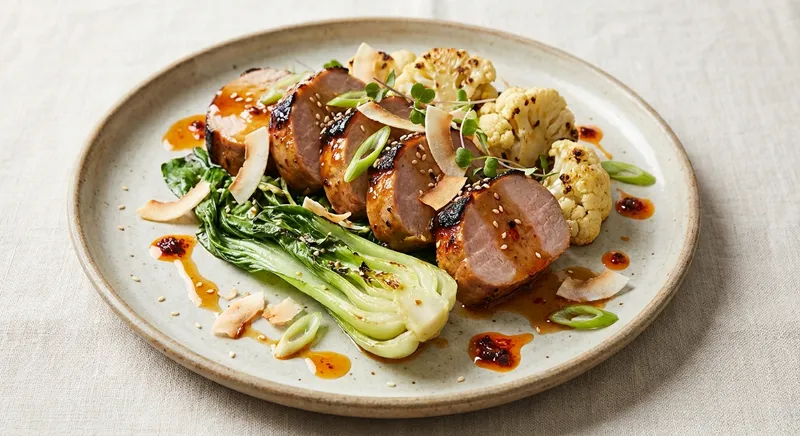
A glossy, umami-forward pork tenderloin brushed with a bright ginger–coconut aminos glaze, served alongside crisp-tender bok choy and caramelized roasted cauliflower. The glaze balances savory coconut-salty depth with fresh ginger heat, while quick-seared pork and charred cauliflower add Maillard-rich texture—restaurant polish with home-kitchen simplicity.
Bring the pork to room temperature (15 minutes) and pat dry. Season evenly with 1/4 tsp kosher salt and 1/8 tsp black pepper. Bringing meat to room temperature ensures even cooking; patting dry promotes a better sear (the Maillard reaction) which builds flavor.
Preheat your oven to 400°F (200°C) if your roasted cauliflower needs reheating or you prefer finishing the pork in the oven. If your cauliflower is already hot and you plan to pan-roast the pork only, a hot oven is optional. A hot oven shortens oven-finish time and helps concentrate glaze glaze onto the pork.
Make the glaze: In a small bowl whisk together 2 tbsp coconut aminos, 1.5 tbsp grated ginger, 1 minced garlic clove, and 1 tsp honey. In a separate small cup, mix 1/2 tsp cornstarch with 1 tsp cold water to form a smooth slurry. The coconut aminos provide a salty-sweet coconut backbone; the ginger adds brightness and heat. Cornstarch will thicken the glaze quickly when warmed so it clings to the pork.
Heat a heavy skillet (cast-iron preferred) over medium-high heat until shimmering, add 1 tbsp avocado oil and swirl to coat. Sear the pork tenderloin on all sides (about 1.5–2 minutes per side) until well-browned. High heat sears the surface quickly, creating a flavorful crust and locking in juices. Avoid moving the meat too much — let it develop color.
Reduce heat to medium. Pour the glaze into the pan alongside the pork and let it come to a gentle simmer, spooning it over the pork for 1 minute. Add the cornstarch slurry and stir the sauce for 30–45 seconds until it thickens and becomes glossy. Finishing the pork in the pan with glaze builds layers of flavor and allows the sauce to caramelize onto the meat.
If your pork is thicker than 1.5 inches or you prefer it medium (internal temp 140–145°F), transfer the skillet to the preheated oven for 6–8 minutes. For a 6 oz tenderloin piece, you’ll typically reach 135–140°F in 6–8 minutes for medium-rare to medium. Use an instant-read thermometer to avoid overcooking—pork tenderloin dries quickly. Tent the rested pork with foil for 5 minutes to let carryover cooking finish and juices redistribute.
While the pork rests, warm the roasted cauliflower: in a separate skillet over medium-high heat add 1 tsp oil and the 2 cups roasted cauliflower, tossing to reheat and re-crisp edges for 2–3 minutes. The high heat restores caramelized texture and deepens nutty flavors.
In the same skillet (or a clean skillet) heat the remaining 1 tsp oil over medium-high. Add the bok choy, season with a pinch of salt and pepper, and cook, stirring, until the stems are bright and crisp-tender (about 2–3 minutes). Add 1 tsp butter and a splash (about 1 tsp) of the reserved glaze or pan juices, toss, and remove. Quick-cooking the bok choy preserves its crunch and green color; a little butter and glaze give it gloss and tie it to the pork.
Slice the rested pork into medallions. Spoon any remaining warm glaze from the pan over the slices. Plate with the warm roasted cauliflower and bok choy. Garnish with a sprinkle of toasted sesame seeds and sliced scallion if using. Serving immediately preserves texture contrast between glossy pork, crisp-tender greens, and caramel cauliflower.
Taste and adjust final seasoning at the plate — a tiny pinch of flaky sea salt on the pork slices brightens the dish and brings out the glaze’s sweetness and umami.
637
Calories
41g
Protein
25g
Carbs
43g
Fat
5g
Fiber
How did this recipe turn out? Let others know!
to rate this recipe
By abbey f
A glossy, umami-forward pork tenderloin brushed with a bright ginger–coconut aminos glaze, served alongside crisp-tender bok choy and caramelized roasted cauliflower. The glaze balances savory coconut-salty depth with fresh ginger heat, while quick-seared pork and charred cauliflower add Maillard-rich texture—restaurant polish with home-kitchen simplicity.
Bring the pork to room temperature (15 minutes) and pat dry. Season evenly with 1/4 tsp kosher salt and 1/8 tsp black pepper. Bringing meat to room temperature ensures even cooking; patting dry promotes a better sear (the Maillard reaction) which builds flavor.
Preheat your oven to 400°F (200°C) if your roasted cauliflower needs reheating or you prefer finishing the pork in the oven. If your cauliflower is already hot and you plan to pan-roast the pork only, a hot oven is optional. A hot oven shortens oven-finish time and helps concentrate glaze glaze onto the pork.
Make the glaze: In a small bowl whisk together 2 tbsp coconut aminos, 1.5 tbsp grated ginger, 1 minced garlic clove, and 1 tsp honey. In a separate small cup, mix 1/2 tsp cornstarch with 1 tsp cold water to form a smooth slurry. The coconut aminos provide a salty-sweet coconut backbone; the ginger adds brightness and heat. Cornstarch will thicken the glaze quickly when warmed so it clings to the pork.
Heat a heavy skillet (cast-iron preferred) over medium-high heat until shimmering, add 1 tbsp avocado oil and swirl to coat. Sear the pork tenderloin on all sides (about 1.5–2 minutes per side) until well-browned. High heat sears the surface quickly, creating a flavorful crust and locking in juices. Avoid moving the meat too much — let it develop color.
Reduce heat to medium. Pour the glaze into the pan alongside the pork and let it come to a gentle simmer, spooning it over the pork for 1 minute. Add the cornstarch slurry and stir the sauce for 30–45 seconds until it thickens and becomes glossy. Finishing the pork in the pan with glaze builds layers of flavor and allows the sauce to caramelize onto the meat.
If your pork is thicker than 1.5 inches or you prefer it medium (internal temp 140–145°F), transfer the skillet to the preheated oven for 6–8 minutes. For a 6 oz tenderloin piece, you’ll typically reach 135–140°F in 6–8 minutes for medium-rare to medium. Use an instant-read thermometer to avoid overcooking—pork tenderloin dries quickly. Tent the rested pork with foil for 5 minutes to let carryover cooking finish and juices redistribute.
While the pork rests, warm the roasted cauliflower: in a separate skillet over medium-high heat add 1 tsp oil and the 2 cups roasted cauliflower, tossing to reheat and re-crisp edges for 2–3 minutes. The high heat restores caramelized texture and deepens nutty flavors.
In the same skillet (or a clean skillet) heat the remaining 1 tsp oil over medium-high. Add the bok choy, season with a pinch of salt and pepper, and cook, stirring, until the stems are bright and crisp-tender (about 2–3 minutes). Add 1 tsp butter and a splash (about 1 tsp) of the reserved glaze or pan juices, toss, and remove. Quick-cooking the bok choy preserves its crunch and green color; a little butter and glaze give it gloss and tie it to the pork.
Slice the rested pork into medallions. Spoon any remaining warm glaze from the pan over the slices. Plate with the warm roasted cauliflower and bok choy. Garnish with a sprinkle of toasted sesame seeds and sliced scallion if using. Serving immediately preserves texture contrast between glossy pork, crisp-tender greens, and caramel cauliflower.
Taste and adjust final seasoning at the plate — a tiny pinch of flaky sea salt on the pork slices brightens the dish and brings out the glaze’s sweetness and umami.
637
Calories
41g
Protein
25g
Carbs
43g
Fat
5g
Fiber
Your Rating:
