By Sokuntheary Kim
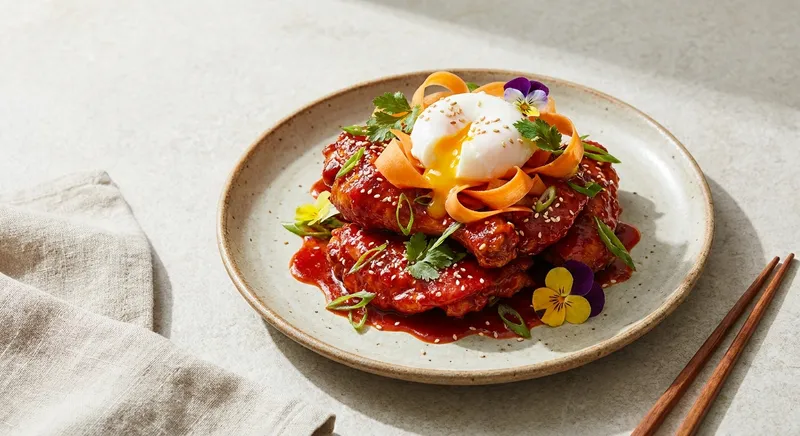
A bright, protein-forward Korean bowl: tender, seared chicken glazed with a lean gochujang-soy marinade, crisp-tender quick-pickled carrots (saengchae) for crunchy brightness, and a silky poached egg that adds richness without excess calories. The result is a balanced harmony of savory-spicy, tangy-sweet and textural contrasts — restaurant-quality flavor with home-friendly technique and a focus on high protein, low calories.
Prep: Pat the chicken breasts dry and season lightly with salt and pepper. Why: Removing surface moisture gives a better sear and the first seasoning layer helps build flavor into the meat.
Make the marinade: In a bowl whisk together low-sodium soy sauce, gochujang, rice vinegar, 1 tsp toasted sesame oil, minced garlic, minced ginger (if using) and honey or sugar substitute. Reserve 2 tablespoons of the marinade in a small bowl for glazing later. Why: Marinade flavors the chicken and the vinegar briefly tenderizes the surface; reserving some sauce lets you finish the chicken without cross-contamination from raw meat.
Marinate the chicken: Place the chicken in a shallow dish or a zip-top bag and pour the remaining marinade over it. Turn to coat and marinate at room temperature for 10–15 minutes (or up to 30 minutes in the fridge). Why: Short marination is enough for thin/medium chicken breast slices — it imparts flavor without making the meat mushy from too much acid.
Prepare the carrots: While the chicken marinates, julienne or use a box grater to matchstick 400 g carrots. Toss the carrot matchsticks with rice vinegar (1 tbsp), a pinch of salt, 1 tsp toasted sesame oil, and the reserved 2 tbsp marinade (or 1 tsp honey if you reserved none). Let sit 10–15 minutes to quick-pickle. Why: Quick-pickling brightens the carrots and gives a crunchy, tangy counterpoint to the savory chicken; doing this while the chicken marinates saves time.
Heat the pan: Place a heavy skillet (cast-iron preferred) over medium-high heat and add 1 tsp neutral oil. Heat until shimmering. Why: A very hot pan gives the Maillard reaction (golden crust) quickly without overcooking the interior.
Sear the chicken: Remove chicken from marinade (shake off excess), and place breasts in the hot skillet without crowding. Sear 3–4 minutes per side for medium thickness (until an internal thermometer reads 72°C / 160°F). If breasts are thick, cover for 1–2 minutes and reduce heat to finish through. Why: Searing at high heat creates a caramelized exterior that concentrates flavor; finishing gently prevents the lean breast from drying out.
Glaze and rest: In the last 30–60 seconds, brush the reserved marinade (or a tablespoon of it warmed) over the chicken to create a glossy coating. Transfer chicken to a cutting board and rest 5 minutes before slicing against the grain. Why: Resting redistributes juices so the chicken stays moist; slicing against the grain shortens muscle fibers, making the meat feel more tender.
Cook the eggs (silky poached or soft-fried): Bring a medium pot of water to a gentle simmer with a splash of vinegar for poaching; create a gentle whirlpool and crack each egg into a small cup, slip into simmering water and cook 3 minutes for a runny yolk, then remove with a slotted spoon. Alternatively, fry gently in a nonstick pan with tiny spray of oil over medium-low until whites set and yolks stay soft. Why: A runny yolk enriches the bowl like a warm sauce without adding a lot of extra fat—poaching keeps added oil minimal for lower calories.
Warm and season the carrots: After quick-pickling, taste the carrots and adjust salt, a squeeze more vinegar, or a pinch of sweetener to balance. Toss in the sliced green onion. Why: Balancing acid and salt is crucial; the carrot should be bright but not aggressively sour.
Assemble the bowls: Divide the pickled carrots among 4 plates, fan sliced chicken over them, top each with a silky poached or soft-fried egg, sprinkle with sliced green onions and toasted sesame seeds, and finish with a light drizzle of the reserved 1 tsp toasted sesame oil. Why: Layering components keeps textures distinct — the warm chicken and egg meet the cool-crisp carrot to create contrast in temperature and texture.
Serve immediately: Encourage diners to break the egg and let the yolk coat the chicken and carrots as they eat. Why: The yolk functions as a natural sauce adding richness and helping flavors meld without heavy dressings.
405
Calories
55g
Protein
14g
Carbs
13g
Fat
3g
Fiber
How did this recipe turn out? Let others know!
to rate this recipe
By Sokuntheary Kim
A bright, protein-forward Korean bowl: tender, seared chicken glazed with a lean gochujang-soy marinade, crisp-tender quick-pickled carrots (saengchae) for crunchy brightness, and a silky poached egg that adds richness without excess calories. The result is a balanced harmony of savory-spicy, tangy-sweet and textural contrasts — restaurant-quality flavor with home-friendly technique and a focus on high protein, low calories.
Prep: Pat the chicken breasts dry and season lightly with salt and pepper. Why: Removing surface moisture gives a better sear and the first seasoning layer helps build flavor into the meat.
Make the marinade: In a bowl whisk together low-sodium soy sauce, gochujang, rice vinegar, 1 tsp toasted sesame oil, minced garlic, minced ginger (if using) and honey or sugar substitute. Reserve 2 tablespoons of the marinade in a small bowl for glazing later. Why: Marinade flavors the chicken and the vinegar briefly tenderizes the surface; reserving some sauce lets you finish the chicken without cross-contamination from raw meat.
Marinate the chicken: Place the chicken in a shallow dish or a zip-top bag and pour the remaining marinade over it. Turn to coat and marinate at room temperature for 10–15 minutes (or up to 30 minutes in the fridge). Why: Short marination is enough for thin/medium chicken breast slices — it imparts flavor without making the meat mushy from too much acid.
Prepare the carrots: While the chicken marinates, julienne or use a box grater to matchstick 400 g carrots. Toss the carrot matchsticks with rice vinegar (1 tbsp), a pinch of salt, 1 tsp toasted sesame oil, and the reserved 2 tbsp marinade (or 1 tsp honey if you reserved none). Let sit 10–15 minutes to quick-pickle. Why: Quick-pickling brightens the carrots and gives a crunchy, tangy counterpoint to the savory chicken; doing this while the chicken marinates saves time.
Heat the pan: Place a heavy skillet (cast-iron preferred) over medium-high heat and add 1 tsp neutral oil. Heat until shimmering. Why: A very hot pan gives the Maillard reaction (golden crust) quickly without overcooking the interior.
Sear the chicken: Remove chicken from marinade (shake off excess), and place breasts in the hot skillet without crowding. Sear 3–4 minutes per side for medium thickness (until an internal thermometer reads 72°C / 160°F). If breasts are thick, cover for 1–2 minutes and reduce heat to finish through. Why: Searing at high heat creates a caramelized exterior that concentrates flavor; finishing gently prevents the lean breast from drying out.
Glaze and rest: In the last 30–60 seconds, brush the reserved marinade (or a tablespoon of it warmed) over the chicken to create a glossy coating. Transfer chicken to a cutting board and rest 5 minutes before slicing against the grain. Why: Resting redistributes juices so the chicken stays moist; slicing against the grain shortens muscle fibers, making the meat feel more tender.
Cook the eggs (silky poached or soft-fried): Bring a medium pot of water to a gentle simmer with a splash of vinegar for poaching; create a gentle whirlpool and crack each egg into a small cup, slip into simmering water and cook 3 minutes for a runny yolk, then remove with a slotted spoon. Alternatively, fry gently in a nonstick pan with tiny spray of oil over medium-low until whites set and yolks stay soft. Why: A runny yolk enriches the bowl like a warm sauce without adding a lot of extra fat—poaching keeps added oil minimal for lower calories.
Warm and season the carrots: After quick-pickling, taste the carrots and adjust salt, a squeeze more vinegar, or a pinch of sweetener to balance. Toss in the sliced green onion. Why: Balancing acid and salt is crucial; the carrot should be bright but not aggressively sour.
Assemble the bowls: Divide the pickled carrots among 4 plates, fan sliced chicken over them, top each with a silky poached or soft-fried egg, sprinkle with sliced green onions and toasted sesame seeds, and finish with a light drizzle of the reserved 1 tsp toasted sesame oil. Why: Layering components keeps textures distinct — the warm chicken and egg meet the cool-crisp carrot to create contrast in temperature and texture.
Serve immediately: Encourage diners to break the egg and let the yolk coat the chicken and carrots as they eat. Why: The yolk functions as a natural sauce adding richness and helping flavors meld without heavy dressings.
405
Calories
55g
Protein
14g
Carbs
13g
Fat
3g
Fiber
Your Rating:
