By emensah m
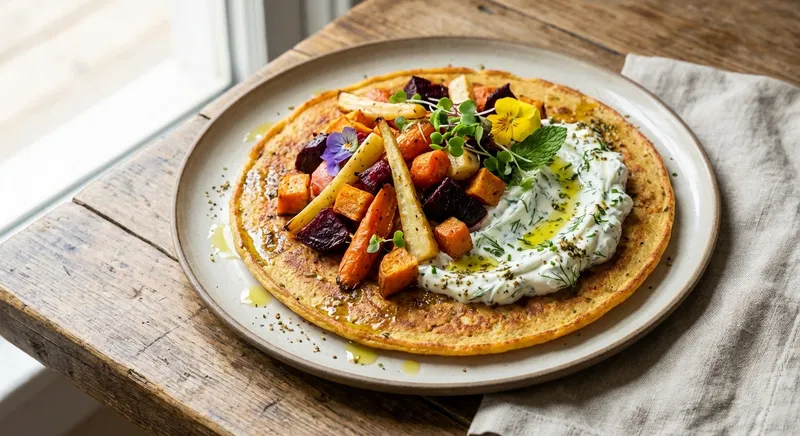
Crisp-edged chickpea (socca) pancakes—nutty, golden and gluten-free—serve as a warm, savory base for a caramelized winter root hash and bright, herb-studded labneh. The contrast of crunchy pancake edges, tender roasted potatoes, parsnips and carrots, and cooling, lemony labneh finished with jewel-like pomegranate seeds makes this a showstopping breakfast, brunch or light dinner.
Make the socca batter: In a medium bowl whisk together the chickpea flour, ground cumin and 1/2 teaspoon kosher salt. Slowly whisk in 480 ml water until completely smooth and lump-free. Whisk in 1 tablespoon olive oil. Rest the batter at room temperature for 45 minutes (this hydrates the flour, mellows bitterness and yields a silkier pancake). Rest also helps small bubbles form which lead to a lighter interior.
Preheat oven and prepare for roasting the roots: Preheat oven to 220°C (425°F). Toss the diced baby potatoes, parsnips and carrots with 2 tablespoons olive oil, the remaining 1/2 teaspoon kosher salt, the smoked paprika and a generous pinch of freshly cracked black pepper. Spread the vegetables on a rimmed baking sheet in a single layer—crowding will steam them instead of roasting. Roasting at high heat caramelizes natural sugars, creating crisp edges and concentrated flavor that contrast the soft socca.
Roast the root hash: Roast for 25–30 minutes, turning once halfway through, until the potatoes are golden and crisp at the edges and the parsnips and carrots are tender and caramelized. During the last 3–4 minutes, add a tablespoon of butter (optional) to the tray and swirl to glaze the vegetables for a glossy finish (fat carries flavor and helps the herbs adhere). Remove from oven and keep warm.
Make the herbed labneh: While the batter rests and vegetables roast, combine the labneh (or thick Greek yogurt), chopped parsley and dill, lemon zest, a pinch of salt and 2–3 cracks of black pepper in a small bowl. Taste and adjust: the lemon zest brightens and the herbs add freshness to balance the earthiness of the chickpea pancakes. Chill until ready to serve.
Finish the socca batter just before cooking: Give the rested batter a quick whisk. If it separated slightly, gentle whisking re-emulsifies it. Check seasoning and add a pinch more salt if needed. The batter should be the consistency of heavy cream; if it's too thick, add up to 2 tablespoons water, whisking until smooth—this ensures even spreading in the pan and a tender interior.
Heat the pan for perfect browning: Place a 10–12-inch cast-iron or heavy nonstick skillet over medium-high heat until it’s very hot (a drop of water should sizzle and evaporate). Add 1 teaspoon olive oil and tilt to coat. A very hot pan gives immediate sizzle, producing a deeply browned, crisp edge on the socca.
Cook the socca pancakes: For 4 servings cook four individual pancakes (about 6–7 inches each) in batches. Pour about 1/3 to 1/2 cup of batter into the hot skillet (depending on size) and tilt the pan to spread a thin, even round about 5–6 mm thick. Cook 2–3 minutes until the bottom is deeply golden and bubbles appear on the surface—this initial high heat creates the crisp exterior. Flip with a wide spatula and cook 1–2 minutes more until the second side is lightly browned. Alternatively, for an extra-crisp top, after 2–3 minutes in the pan transfer the skillet to a preheated 240°C (475°F) oven or under a broiler for 1–2 minutes to puff and blister the top.
Keep socca warm and repeat: Transfer cooked socca to a wire rack set over a sheet tray in a warm oven (90–100°C / warm) while you cook remaining pancakes. A rack keeps the underside crisp by allowing air to circulate—stacking directly will steam and soften the crust.
Warm and finish the root hash: If the roasted vegetables have cooled, reheat the tray briefly in the oven (200°C/400°F) for 5–7 minutes or in a hot skillet with a drizzle of olive oil to re-crisp. Taste and adjust salt/pepper; fold in a tablespoon of chopped parsley if you like a herb finish.
Assemble and garnish: Place one socca pancake on each plate, spoon 3–4 tablespoons of the roasted root hash in the center, add a generous dollop (≈3 tbsp) of herbed labneh alongside, and scatter 1 tablespoon pomegranate seeds over the plate. Finish with a pinch of cracked black pepper and an optional drizzle of good olive oil. The interplay of textures—crisp socca, tender-roasted roots and cool creamy labneh—should be immediate and balanced.
Serve recommendations: Serve immediately while the socca is still warm and crisp. For a brunch course, offer lemon wedges, extra herbs and a hot sauce on the side. Leftover socca keeps well refrigerated—re-crisp in a hot skillet for best results.
596
Calories
20g
Protein
81g
Carbs
21g
Fat
15g
Fiber
How did this recipe turn out? Let others know!
to rate this recipe
By emensah m
Crisp-edged chickpea (socca) pancakes—nutty, golden and gluten-free—serve as a warm, savory base for a caramelized winter root hash and bright, herb-studded labneh. The contrast of crunchy pancake edges, tender roasted potatoes, parsnips and carrots, and cooling, lemony labneh finished with jewel-like pomegranate seeds makes this a showstopping breakfast, brunch or light dinner.
Make the socca batter: In a medium bowl whisk together the chickpea flour, ground cumin and 1/2 teaspoon kosher salt. Slowly whisk in 480 ml water until completely smooth and lump-free. Whisk in 1 tablespoon olive oil. Rest the batter at room temperature for 45 minutes (this hydrates the flour, mellows bitterness and yields a silkier pancake). Rest also helps small bubbles form which lead to a lighter interior.
Preheat oven and prepare for roasting the roots: Preheat oven to 220°C (425°F). Toss the diced baby potatoes, parsnips and carrots with 2 tablespoons olive oil, the remaining 1/2 teaspoon kosher salt, the smoked paprika and a generous pinch of freshly cracked black pepper. Spread the vegetables on a rimmed baking sheet in a single layer—crowding will steam them instead of roasting. Roasting at high heat caramelizes natural sugars, creating crisp edges and concentrated flavor that contrast the soft socca.
Roast the root hash: Roast for 25–30 minutes, turning once halfway through, until the potatoes are golden and crisp at the edges and the parsnips and carrots are tender and caramelized. During the last 3–4 minutes, add a tablespoon of butter (optional) to the tray and swirl to glaze the vegetables for a glossy finish (fat carries flavor and helps the herbs adhere). Remove from oven and keep warm.
Make the herbed labneh: While the batter rests and vegetables roast, combine the labneh (or thick Greek yogurt), chopped parsley and dill, lemon zest, a pinch of salt and 2–3 cracks of black pepper in a small bowl. Taste and adjust: the lemon zest brightens and the herbs add freshness to balance the earthiness of the chickpea pancakes. Chill until ready to serve.
Finish the socca batter just before cooking: Give the rested batter a quick whisk. If it separated slightly, gentle whisking re-emulsifies it. Check seasoning and add a pinch more salt if needed. The batter should be the consistency of heavy cream; if it's too thick, add up to 2 tablespoons water, whisking until smooth—this ensures even spreading in the pan and a tender interior.
Heat the pan for perfect browning: Place a 10–12-inch cast-iron or heavy nonstick skillet over medium-high heat until it’s very hot (a drop of water should sizzle and evaporate). Add 1 teaspoon olive oil and tilt to coat. A very hot pan gives immediate sizzle, producing a deeply browned, crisp edge on the socca.
Cook the socca pancakes: For 4 servings cook four individual pancakes (about 6–7 inches each) in batches. Pour about 1/3 to 1/2 cup of batter into the hot skillet (depending on size) and tilt the pan to spread a thin, even round about 5–6 mm thick. Cook 2–3 minutes until the bottom is deeply golden and bubbles appear on the surface—this initial high heat creates the crisp exterior. Flip with a wide spatula and cook 1–2 minutes more until the second side is lightly browned. Alternatively, for an extra-crisp top, after 2–3 minutes in the pan transfer the skillet to a preheated 240°C (475°F) oven or under a broiler for 1–2 minutes to puff and blister the top.
Keep socca warm and repeat: Transfer cooked socca to a wire rack set over a sheet tray in a warm oven (90–100°C / warm) while you cook remaining pancakes. A rack keeps the underside crisp by allowing air to circulate—stacking directly will steam and soften the crust.
Warm and finish the root hash: If the roasted vegetables have cooled, reheat the tray briefly in the oven (200°C/400°F) for 5–7 minutes or in a hot skillet with a drizzle of olive oil to re-crisp. Taste and adjust salt/pepper; fold in a tablespoon of chopped parsley if you like a herb finish.
Assemble and garnish: Place one socca pancake on each plate, spoon 3–4 tablespoons of the roasted root hash in the center, add a generous dollop (≈3 tbsp) of herbed labneh alongside, and scatter 1 tablespoon pomegranate seeds over the plate. Finish with a pinch of cracked black pepper and an optional drizzle of good olive oil. The interplay of textures—crisp socca, tender-roasted roots and cool creamy labneh—should be immediate and balanced.
Serve recommendations: Serve immediately while the socca is still warm and crisp. For a brunch course, offer lemon wedges, extra herbs and a hot sauce on the side. Leftover socca keeps well refrigerated—re-crisp in a hot skillet for best results.
596
Calories
20g
Protein
81g
Carbs
21g
Fat
15g
Fiber
Your Rating:
