By Kayla Alaniz
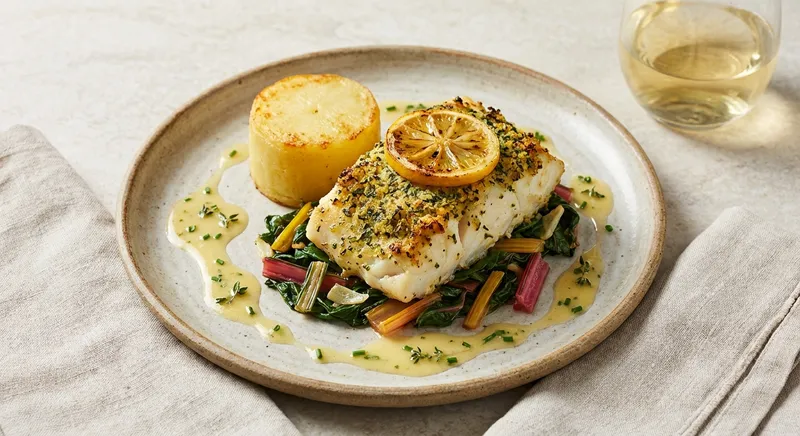
A bright, elegant weeknight or dinner-party main: flaky oven-baked cod with a crunchy lemon‑thyme panko crust, paired with silky wilted Swiss chard and golden potato fondant. The dish balances citrus brightness, herbal aroma and a contrast of crisp crust and tender flesh — finished with lemon and a drizzle of olive oil for a Mediterranean feel.
Bring the cod to room temperature: Take the cod fillets out of the fridge 15–20 minutes before cooking and pat them dry with paper towels. Why: Dry fish browns better and the internal temperature will rise more evenly if the fillets aren’t refrigerator-cold.
Preheat the oven to 200°C/400°F (fan 180°C). Line a rimmed baking sheet with parchment or lightly oil a shallow roasting pan. Why: High oven heat cooks the cod quickly so it stays moist; a rimmed sheet catches any juices and keeps the crust crisp by allowing hot air circulation.
Make the lemon‑thyme panko: In a small bowl combine the panko breadcrumbs (80 g), finely grated zest of the lemon (reserve the juice), 4 tsp chopped thyme leaves, 1½ tbsp of the olive oil (from the 4 tbsp total), ¼ tsp salt and a few grinds of black pepper. Toss until the crumbs are evenly moistened. Why: Tossing panko with a little oil and zest 'blooms' the citrus oils and helps the crumbs brown and stick to the fish without becoming soggy.
Pre-toast (optional but recommended) half the panko in a dry skillet over medium heat for 2–3 minutes, stirring, until just golden. Then combine with remaining panko. Why: Toasting intensifies the panko’s nutty flavor and ensures maximum crunch after baking.
Season and dress the fillets: Lightly season both sides of each cod fillet with salt and pepper. Brush the top surface of each fillet with the reserved lemon juice and then a thin layer of olive oil (this promotes browning and helps the crumb adhere). Press the lemon‑thyme panko onto the top of each fillet, gently compacting so it forms an even crust. Why: The lemon juice brightens the fish while the oil acts as an adhesive that crisps the crust in the oven.
Prepare the potatoes for fondant: Peel the small potatoes and slice them into 4–5 cm long 'drumsticks' or thick rounds (about 3–4 cm thick) so they have a large flat surface for browning. Pat dry. Why: Even, flat surfaces create a deep, caramelized crust when seared, while the cut size ensures the centers cook through before the exterior over-browns.
Brown the potatoes: Heat a wide, ovenproof skillet over medium-high heat with 2 tbsp olive oil (from the remaining oil). When the oil is hot but not smoking, add the potatoes cut-side down in a single layer. Cook undisturbed until a deep golden crust forms, 6–8 minutes. Why: A long, undisturbed sear creates the Maillard crust that gives fondant potatoes their signature flavor and texture.
Add liquid and roast the potatoes: Carefully pour in enough stock (about 250–300 ml) to come halfway up the sides of the potatoes; add a knob of butter (optional) and a pinch of salt and pepper. Bring to a simmer on the stovetop, then transfer the skillet to the oven and roast at 200°C/400°F for 20–25 minutes until potatoes are tender when pierced. Why: Gentle braising in stock finishes the potatoes through while the hot oven helps evaporate excess liquid and concentrate flavor.
Bake the cod: While the potatoes roast, arrange the crusted cod fillets on the prepared baking sheet, skin-side down if skin is present. Bake on the middle rack for 8–12 minutes depending on thickness (a 2–3 cm thick fillet will take ~10 minutes). Finish under the broiler for 1–2 minutes if you want extra color on the crust — watch carefully. Why: Baking at a high temperature cooks the fish quickly and evenly; the short broil crisps the panko without drying the cod.
Wilt the Swiss chard: While the fish finishes, heat 1 tbsp olive oil in a sauté pan over medium heat. Add the optional minced garlic and cook 20–30 seconds until fragrant (don’t brown). Add the chopped Swiss chard (320 g) and a pinch of salt. Toss and cook until just wilted — 2–4 minutes. Finish with a squeeze of the remaining lemon juice, a grind of black pepper and a small drizzle of olive oil or a knob of butter (optional). Why: Quick wilting preserves the chard’s bright color and fresh flavor; acid from lemon lifts the dish and balances the richness.
Rest and plate: Remove cod from the oven when an instant‑read thermometer in the thickest part reads 54–56°C (130–133°F) for moist, flakey fish — it will continue to carryover cook to 60°C. Let potatoes rest 2–3 minutes. Plate each portion with a potato fondant, a bed of wilted chard, and the crusted cod on top. Finish with a little flaky sea salt, extra thyme leaves and a light drizzle of olive oil and reserved lemon juice to taste. Why: Resting lets juices redistribute; finishing with acid and oil adds shine and brightens flavors.
Serve immediately: This dish is best hot so the crust stays crisp and the potatoes remain warm. Why: Texture contrast (crisp crust, tender fish, silky chard, creamy potato interior) is the highlight — it’s strongest when everything is freshly cooked.
515
Calories
39g
Protein
54g
Carbs
16g
Fat
6g
Fiber
How did this recipe turn out? Let others know!
to rate this recipe
By Kayla Alaniz
A bright, elegant weeknight or dinner-party main: flaky oven-baked cod with a crunchy lemon‑thyme panko crust, paired with silky wilted Swiss chard and golden potato fondant. The dish balances citrus brightness, herbal aroma and a contrast of crisp crust and tender flesh — finished with lemon and a drizzle of olive oil for a Mediterranean feel.
Bring the cod to room temperature: Take the cod fillets out of the fridge 15–20 minutes before cooking and pat them dry with paper towels. Why: Dry fish browns better and the internal temperature will rise more evenly if the fillets aren’t refrigerator-cold.
Preheat the oven to 200°C/400°F (fan 180°C). Line a rimmed baking sheet with parchment or lightly oil a shallow roasting pan. Why: High oven heat cooks the cod quickly so it stays moist; a rimmed sheet catches any juices and keeps the crust crisp by allowing hot air circulation.
Make the lemon‑thyme panko: In a small bowl combine the panko breadcrumbs (80 g), finely grated zest of the lemon (reserve the juice), 4 tsp chopped thyme leaves, 1½ tbsp of the olive oil (from the 4 tbsp total), ¼ tsp salt and a few grinds of black pepper. Toss until the crumbs are evenly moistened. Why: Tossing panko with a little oil and zest 'blooms' the citrus oils and helps the crumbs brown and stick to the fish without becoming soggy.
Pre-toast (optional but recommended) half the panko in a dry skillet over medium heat for 2–3 minutes, stirring, until just golden. Then combine with remaining panko. Why: Toasting intensifies the panko’s nutty flavor and ensures maximum crunch after baking.
Season and dress the fillets: Lightly season both sides of each cod fillet with salt and pepper. Brush the top surface of each fillet with the reserved lemon juice and then a thin layer of olive oil (this promotes browning and helps the crumb adhere). Press the lemon‑thyme panko onto the top of each fillet, gently compacting so it forms an even crust. Why: The lemon juice brightens the fish while the oil acts as an adhesive that crisps the crust in the oven.
Prepare the potatoes for fondant: Peel the small potatoes and slice them into 4–5 cm long 'drumsticks' or thick rounds (about 3–4 cm thick) so they have a large flat surface for browning. Pat dry. Why: Even, flat surfaces create a deep, caramelized crust when seared, while the cut size ensures the centers cook through before the exterior over-browns.
Brown the potatoes: Heat a wide, ovenproof skillet over medium-high heat with 2 tbsp olive oil (from the remaining oil). When the oil is hot but not smoking, add the potatoes cut-side down in a single layer. Cook undisturbed until a deep golden crust forms, 6–8 minutes. Why: A long, undisturbed sear creates the Maillard crust that gives fondant potatoes their signature flavor and texture.
Add liquid and roast the potatoes: Carefully pour in enough stock (about 250–300 ml) to come halfway up the sides of the potatoes; add a knob of butter (optional) and a pinch of salt and pepper. Bring to a simmer on the stovetop, then transfer the skillet to the oven and roast at 200°C/400°F for 20–25 minutes until potatoes are tender when pierced. Why: Gentle braising in stock finishes the potatoes through while the hot oven helps evaporate excess liquid and concentrate flavor.
Bake the cod: While the potatoes roast, arrange the crusted cod fillets on the prepared baking sheet, skin-side down if skin is present. Bake on the middle rack for 8–12 minutes depending on thickness (a 2–3 cm thick fillet will take ~10 minutes). Finish under the broiler for 1–2 minutes if you want extra color on the crust — watch carefully. Why: Baking at a high temperature cooks the fish quickly and evenly; the short broil crisps the panko without drying the cod.
Wilt the Swiss chard: While the fish finishes, heat 1 tbsp olive oil in a sauté pan over medium heat. Add the optional minced garlic and cook 20–30 seconds until fragrant (don’t brown). Add the chopped Swiss chard (320 g) and a pinch of salt. Toss and cook until just wilted — 2–4 minutes. Finish with a squeeze of the remaining lemon juice, a grind of black pepper and a small drizzle of olive oil or a knob of butter (optional). Why: Quick wilting preserves the chard’s bright color and fresh flavor; acid from lemon lifts the dish and balances the richness.
Rest and plate: Remove cod from the oven when an instant‑read thermometer in the thickest part reads 54–56°C (130–133°F) for moist, flakey fish — it will continue to carryover cook to 60°C. Let potatoes rest 2–3 minutes. Plate each portion with a potato fondant, a bed of wilted chard, and the crusted cod on top. Finish with a little flaky sea salt, extra thyme leaves and a light drizzle of olive oil and reserved lemon juice to taste. Why: Resting lets juices redistribute; finishing with acid and oil adds shine and brightens flavors.
Serve immediately: This dish is best hot so the crust stays crisp and the potatoes remain warm. Why: Texture contrast (crisp crust, tender fish, silky chard, creamy potato interior) is the highlight — it’s strongest when everything is freshly cooked.
515
Calories
39g
Protein
54g
Carbs
16g
Fat
6g
Fiber
Your Rating:
