By Andrew Acosta
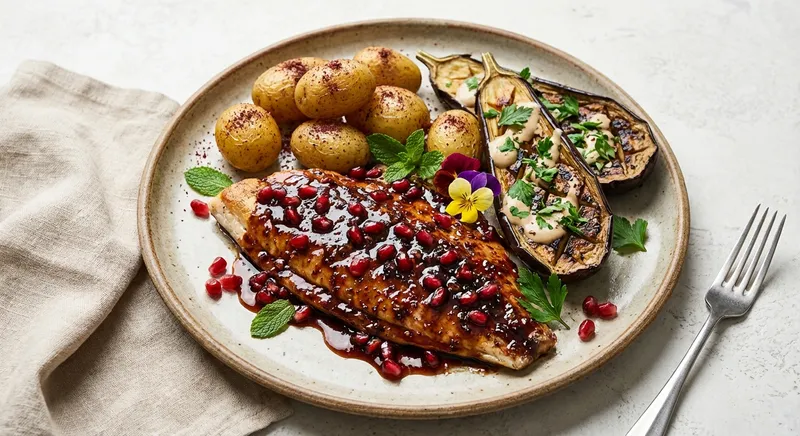
A bright Mediterranean-Middle Eastern plate: flaky, pan-seared sea bream brushed with a tangy-sweet pomegranate glaze, served alongside sumac-scented roasted new potatoes and smoky, charred eggplant. The dish balances sweet-acid pomegranate, lemony sumac, and herbaceous mint for a restaurant-quality dinner that's surprisingly simple to execute.
Bring potatoes to room temperature and parboil: Put the halved new potatoes in a pot, cover with cold salted water, bring to a simmer and cook for 8–10 minutes until just tender when pierced with a knife. Parboiling reduces oven time and ensures tender, fluffy interiors while allowing the exterior to crisp when roasted.
Preheat oven to 220°C / 430°F (convection if available). Drain the potatoes well and let them steam-dry for a minute in the colander — removing surface moisture helps them brown crisply in the oven.
Toss the drained potatoes with 1 tablespoon olive oil, 1/2 tsp ground sumac, a generous pinch of salt and some cracked black pepper. Spread them cut-side down on a baking sheet lined with parchment or a thin layer of oil. Roast for 20–25 minutes, turning once, until golden and edges are crisp. Roasting at high heat caramelizes the potato surface and lets the sumac toast slightly, giving a bright lemony note.
While potatoes roast, prepare the eggplant: brush the slices with a light film of olive oil (use the same tablespoon allocation), season lightly with salt and pepper. Heat a heavy skillet or cast-iron pan over high heat until smoking-hot, then add the eggplant in a single layer and char for 2–3 minutes per side until deeply browned and slightly collapsed. High heat gives the eggplant a smoky, meaty texture; flipping only once prevents sogginess.
Make the pomegranate glaze: in a small bowl stir together 2 tbsp pomegranate molasses and 1 tsp olive oil (this dilutes the molasses slightly so it spreads and caramelizes without burning). If you like, add a tiny pinch of salt to balance sweetness. Taste — the glaze should be tangy, sweet and glossy.
Pat the sea bream dry and season both sides lightly with salt and cracked black pepper. Dry skin sears better — moisture creates steam and prevents a crisp skin.
Heat a non-stick or well-seasoned skillet over medium-high heat and add 1 tsp olive oil. When the oil shimmers but is not smoking, place the fillet skin-side down and press gently with a spatula for 15–20 seconds to ensure full contact. Cook skin-side down for 3–4 minutes depending on thickness until the skin is golden and releases easily. Searing on the skin side first renders fat and gives a crisp contrast to the sweet glaze.
Flip the fillet and cook for 1–2 minutes on the flesh side until the fish is about 90% cooked through. Brush the top with half the pomegranate glaze and allow it to bubble for 20–30 seconds to set (this quick caramelization deepens flavor). Remove from heat and rest the fish for 1–2 minutes — carryover heat will finish cooking without drying it out.
Warm the remaining glaze for 10 seconds in the pan with the eggplant if you like, then toss the charred eggplant briefly to coat — this adds a sweet-tangy sheen to the smoky slices. Alternatively, spoon glaze over the finished fish at plating for a cleaner presentation.
Plate: arrange the sumac-roasted potatoes, add charred eggplant slices, place the pomegranate-glazed sea bream on top or to the side. Finish with torn fresh mint leaves, a crack of black pepper, a light sprinkle of flaky sea salt and lemon wedges. Squeeze lemon over the fish just before eating to lift the flavors.
Serve immediately. The contrast of textures — crisp skin, flaky fish, creamy potato interior and smoky eggplant — plus the sweet-tart pomegranate and bright mint make the dish sing.
640
Calories
33g
Protein
57g
Carbs
31g
Fat
7g
Fiber
How did this recipe turn out? Let others know!
to rate this recipe
By Andrew Acosta
A bright Mediterranean-Middle Eastern plate: flaky, pan-seared sea bream brushed with a tangy-sweet pomegranate glaze, served alongside sumac-scented roasted new potatoes and smoky, charred eggplant. The dish balances sweet-acid pomegranate, lemony sumac, and herbaceous mint for a restaurant-quality dinner that's surprisingly simple to execute.
Bring potatoes to room temperature and parboil: Put the halved new potatoes in a pot, cover with cold salted water, bring to a simmer and cook for 8–10 minutes until just tender when pierced with a knife. Parboiling reduces oven time and ensures tender, fluffy interiors while allowing the exterior to crisp when roasted.
Preheat oven to 220°C / 430°F (convection if available). Drain the potatoes well and let them steam-dry for a minute in the colander — removing surface moisture helps them brown crisply in the oven.
Toss the drained potatoes with 1 tablespoon olive oil, 1/2 tsp ground sumac, a generous pinch of salt and some cracked black pepper. Spread them cut-side down on a baking sheet lined with parchment or a thin layer of oil. Roast for 20–25 minutes, turning once, until golden and edges are crisp. Roasting at high heat caramelizes the potato surface and lets the sumac toast slightly, giving a bright lemony note.
While potatoes roast, prepare the eggplant: brush the slices with a light film of olive oil (use the same tablespoon allocation), season lightly with salt and pepper. Heat a heavy skillet or cast-iron pan over high heat until smoking-hot, then add the eggplant in a single layer and char for 2–3 minutes per side until deeply browned and slightly collapsed. High heat gives the eggplant a smoky, meaty texture; flipping only once prevents sogginess.
Make the pomegranate glaze: in a small bowl stir together 2 tbsp pomegranate molasses and 1 tsp olive oil (this dilutes the molasses slightly so it spreads and caramelizes without burning). If you like, add a tiny pinch of salt to balance sweetness. Taste — the glaze should be tangy, sweet and glossy.
Pat the sea bream dry and season both sides lightly with salt and cracked black pepper. Dry skin sears better — moisture creates steam and prevents a crisp skin.
Heat a non-stick or well-seasoned skillet over medium-high heat and add 1 tsp olive oil. When the oil shimmers but is not smoking, place the fillet skin-side down and press gently with a spatula for 15–20 seconds to ensure full contact. Cook skin-side down for 3–4 minutes depending on thickness until the skin is golden and releases easily. Searing on the skin side first renders fat and gives a crisp contrast to the sweet glaze.
Flip the fillet and cook for 1–2 minutes on the flesh side until the fish is about 90% cooked through. Brush the top with half the pomegranate glaze and allow it to bubble for 20–30 seconds to set (this quick caramelization deepens flavor). Remove from heat and rest the fish for 1–2 minutes — carryover heat will finish cooking without drying it out.
Warm the remaining glaze for 10 seconds in the pan with the eggplant if you like, then toss the charred eggplant briefly to coat — this adds a sweet-tangy sheen to the smoky slices. Alternatively, spoon glaze over the finished fish at plating for a cleaner presentation.
Plate: arrange the sumac-roasted potatoes, add charred eggplant slices, place the pomegranate-glazed sea bream on top or to the side. Finish with torn fresh mint leaves, a crack of black pepper, a light sprinkle of flaky sea salt and lemon wedges. Squeeze lemon over the fish just before eating to lift the flavors.
Serve immediately. The contrast of textures — crisp skin, flaky fish, creamy potato interior and smoky eggplant — plus the sweet-tart pomegranate and bright mint make the dish sing.
640
Calories
33g
Protein
57g
Carbs
31g
Fat
7g
Fiber
Your Rating:
