By Chef
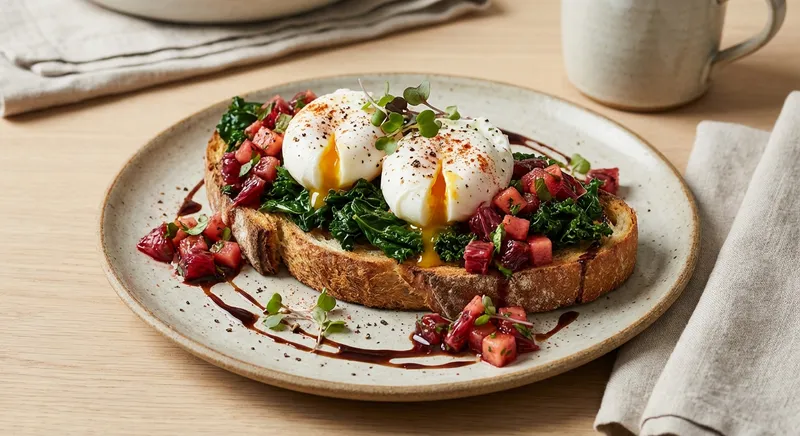
Bright, smoky and deeply satisfying—this modern Mediterranean brunch plates silky sherry-poached eggs with a whisper of smoked paprika atop butter-toasted sourdough. A quick wilt of baby kale adds savory green weight while a fresh blood orange salsa (shallot, garlic, parsley and sherry vinegar) brings citrus sparkle and balance. The result is textural contrast—crispy toast, runny yolk, tender greens—and layered flavors that feel restaurant-caliber but are entirely home-friendly.
Segment the blood orange: Using a sharp knife, cut off the top and bottom of the orange so it sits stable. Working over a bowl to catch juices, slice away the peel and pith, then cut each segment out between the membranes. Reserve any juices that collect. Why: Segmenting (supreme) the orange gives clean, membrane-free pieces that brighten the dish visually and texturally, and the reserved juice amplifies the salsa's flavor.
Make the blood orange salsa: In a small bowl combine the orange segments and any reserved juice, finely chopped shallot, minced garlic, 1 tablespoon of the chopped parsley, 1/2 teaspoon of olive oil (from the allotted amount), a pinch of sea salt and a few grinds of black pepper. Stir and taste; if it needs more acidity or brightness, add a scant 1/2 teaspoon sherry vinegar. Why: The shallot-garlic mix needs a little time to mellow and marry with the citrus; the vinegar is optional because the orange already provides acidity—use it only to balance sweetness.
Toast the sourdough: Heat a skillet over medium heat and add the butter — allow it to foam and just begin to brown (30–45 seconds). Add the sourdough slices and toast 2–3 minutes per side until golden and crisp. Remove and set aside. Why: Toasting in butter adds nutty richness and a crunch that stands up to poached eggs and saucy greens. Browning the butter briefly creates a subtle caramelized flavor without burning the toast.
Prep the poaching water: In a wide, shallow sauté pan or skillet, bring 4 cups (≈1 L) of water to a gentle simmer (small bubbles on the bottom, not a rolling boil). Add 2 teaspoons sherry vinegar, 1/4 teaspoon sea salt, and the smoked paprika to the water and stir briefly. Why: Vinegar helps the egg whites coagulate quickly for a neater poach; smoked paprika in the poaching liquid infuses a gentle background smokiness and a warm color to the whites without overwhelming the eggs.
Crack and poach the eggs: Crack each egg into a small ramekin or cup (this makes it easier to slide the egg into the water cleanly). Use a spoon to stir the simmering water to create a gentle whirlpool, then slide one egg at a time into the centre. Poach for 3–3½ minutes for set whites and a runny yolk, or up to 4½ minutes for a slightly firmer yolk. Remove with a slotted spoon, briefly blot on paper towel to remove excess water, and keep warm on a plate. Why: The whirlpool encourages the white to wrap around the yolk for a tidy shape; timing controls yolk consistency—shorter for runny, longer for jammy.
Wilt the kale: While the eggs poach (you can do this simultaneously), heat a separate 10–12" skillet over medium-high heat, add the remaining 1½ teaspoons olive oil. When warm, add the baby kale and a pinch of salt; toss for about 1–2 minutes until just wilted but still bright green. Remove from heat and stir in the remaining chopped parsley and a small crack of black pepper. Why: Quickly wilting kale concentrates its flavor and softens the stems without making it limp or bitter—keeping it slightly crisp provides nice contrast against the silky egg.
Assemble the toasts: Place a slice of warm buttered sourdough on each plate. Pile half the wilted kale onto each slice, creating a small nest. Spoon a generous tablespoon of blood orange salsa over the kale (reserve a little salsa for garnish). Why: Layering keeps textures distinct—crisp toast below, warm greens in the middle, salsa on top to release citrus brightness as the hot egg and yolk meet it.
Top with poached eggs: Gently set two poached eggs (or one per slice if serving two) on each kale-topped toast. Sprinkle the eggs with the remaining smoked paprika (a light dusting), scatter the rest of the parsley, and finish with flaky sea salt and freshly cracked black pepper. Why: Finishing with smoked paprika intensifies the smoky theme; flaky salt provides bursts of seasoning against the rich yolk.
Finish and serve: Drizzle any accumulated egg juices or a tiny extra drizzle of olive oil over the plate if desired. Serve immediately while the toast is still crisp and the yolks are runny. Why: Timing matters—serve right away to preserve textural contrast and ensure the yolk runs into the salsa and greens for a composed, saucy bite.
Optional garnish and adjustments: If you like a touch more acidity, pass extra sherry vinegar at the table. For an herb-forward pop, swap half the parsley for chives or tarragon. Why: Small finishing adjustments let diners customize brightness and herbal character to taste.
506
Calories
22g
Protein
59g
Carbs
21g
Fat
6g
Fiber
How did this recipe turn out? Let others know!
to rate this recipe
By Chef
Bright, smoky and deeply satisfying—this modern Mediterranean brunch plates silky sherry-poached eggs with a whisper of smoked paprika atop butter-toasted sourdough. A quick wilt of baby kale adds savory green weight while a fresh blood orange salsa (shallot, garlic, parsley and sherry vinegar) brings citrus sparkle and balance. The result is textural contrast—crispy toast, runny yolk, tender greens—and layered flavors that feel restaurant-caliber but are entirely home-friendly.
Segment the blood orange: Using a sharp knife, cut off the top and bottom of the orange so it sits stable. Working over a bowl to catch juices, slice away the peel and pith, then cut each segment out between the membranes. Reserve any juices that collect. Why: Segmenting (supreme) the orange gives clean, membrane-free pieces that brighten the dish visually and texturally, and the reserved juice amplifies the salsa's flavor.
Make the blood orange salsa: In a small bowl combine the orange segments and any reserved juice, finely chopped shallot, minced garlic, 1 tablespoon of the chopped parsley, 1/2 teaspoon of olive oil (from the allotted amount), a pinch of sea salt and a few grinds of black pepper. Stir and taste; if it needs more acidity or brightness, add a scant 1/2 teaspoon sherry vinegar. Why: The shallot-garlic mix needs a little time to mellow and marry with the citrus; the vinegar is optional because the orange already provides acidity—use it only to balance sweetness.
Toast the sourdough: Heat a skillet over medium heat and add the butter — allow it to foam and just begin to brown (30–45 seconds). Add the sourdough slices and toast 2–3 minutes per side until golden and crisp. Remove and set aside. Why: Toasting in butter adds nutty richness and a crunch that stands up to poached eggs and saucy greens. Browning the butter briefly creates a subtle caramelized flavor without burning the toast.
Prep the poaching water: In a wide, shallow sauté pan or skillet, bring 4 cups (≈1 L) of water to a gentle simmer (small bubbles on the bottom, not a rolling boil). Add 2 teaspoons sherry vinegar, 1/4 teaspoon sea salt, and the smoked paprika to the water and stir briefly. Why: Vinegar helps the egg whites coagulate quickly for a neater poach; smoked paprika in the poaching liquid infuses a gentle background smokiness and a warm color to the whites without overwhelming the eggs.
Crack and poach the eggs: Crack each egg into a small ramekin or cup (this makes it easier to slide the egg into the water cleanly). Use a spoon to stir the simmering water to create a gentle whirlpool, then slide one egg at a time into the centre. Poach for 3–3½ minutes for set whites and a runny yolk, or up to 4½ minutes for a slightly firmer yolk. Remove with a slotted spoon, briefly blot on paper towel to remove excess water, and keep warm on a plate. Why: The whirlpool encourages the white to wrap around the yolk for a tidy shape; timing controls yolk consistency—shorter for runny, longer for jammy.
Wilt the kale: While the eggs poach (you can do this simultaneously), heat a separate 10–12" skillet over medium-high heat, add the remaining 1½ teaspoons olive oil. When warm, add the baby kale and a pinch of salt; toss for about 1–2 minutes until just wilted but still bright green. Remove from heat and stir in the remaining chopped parsley and a small crack of black pepper. Why: Quickly wilting kale concentrates its flavor and softens the stems without making it limp or bitter—keeping it slightly crisp provides nice contrast against the silky egg.
Assemble the toasts: Place a slice of warm buttered sourdough on each plate. Pile half the wilted kale onto each slice, creating a small nest. Spoon a generous tablespoon of blood orange salsa over the kale (reserve a little salsa for garnish). Why: Layering keeps textures distinct—crisp toast below, warm greens in the middle, salsa on top to release citrus brightness as the hot egg and yolk meet it.
Top with poached eggs: Gently set two poached eggs (or one per slice if serving two) on each kale-topped toast. Sprinkle the eggs with the remaining smoked paprika (a light dusting), scatter the rest of the parsley, and finish with flaky sea salt and freshly cracked black pepper. Why: Finishing with smoked paprika intensifies the smoky theme; flaky salt provides bursts of seasoning against the rich yolk.
Finish and serve: Drizzle any accumulated egg juices or a tiny extra drizzle of olive oil over the plate if desired. Serve immediately while the toast is still crisp and the yolks are runny. Why: Timing matters—serve right away to preserve textural contrast and ensure the yolk runs into the salsa and greens for a composed, saucy bite.
Optional garnish and adjustments: If you like a touch more acidity, pass extra sherry vinegar at the table. For an herb-forward pop, swap half the parsley for chives or tarragon. Why: Small finishing adjustments let diners customize brightness and herbal character to taste.
506
Calories
22g
Protein
59g
Carbs
21g
Fat
6g
Fiber
Your Rating:
