By Mensah Ruth
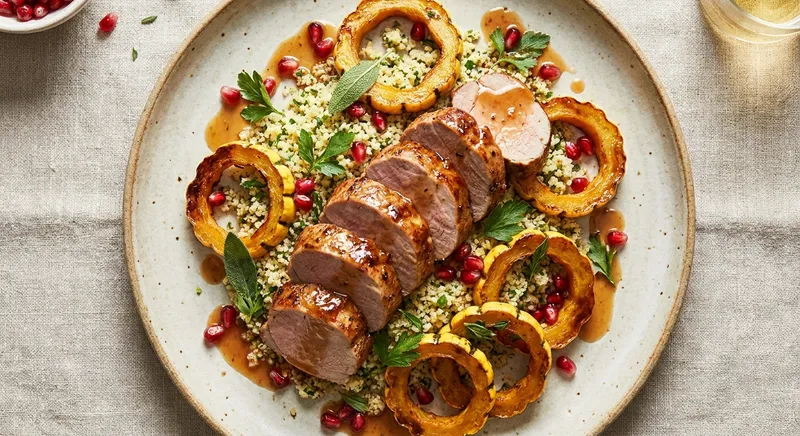
Tender pork medallions braised briefly in fragrant apple cider and Dijon, served with caramel-roasted delicata crescents and a bright, garlicky couscous studded with fresh herbs, peppery arugula and a kiss of Parmesan. The dish balances sweet-tart cider and maple with savory mustard-thyme notes and a crunchy skillet-sear that locks in juices — a cozy, restaurant-quality autumn main.
Preheat the oven to 425°F (220°C). Line a rimmed baking sheet with parchment or foil for easy cleanup. A hot oven will help caramelize the delicata slices quickly so they become golden and slightly crisp at the edges without falling apart.
Prepare the delicata: toss the sliced crescents (480 g) with 1 tablespoon olive oil, 1/2 tsp salt and a few grinds of black pepper. Spread cut-side down in a single layer on the baking sheet, drizzle the maple syrup over the cut faces. Roast 20–25 minutes until the edges brown and the centers are just tender. Roasting concentrates the squash’s natural sugars and gives the surface caramelized flavor that complements the cider braise.
While the squash roasts, trim and portion the pork tenderloins (680 g) into 4 equal medallions or leave whole if you prefer to slice after cooking; pat dry with paper towels and season both sides with salt and pepper. Drying the surface helps get a proper sear — moisture is the enemy of browning.
Heat a large, oven-safe skillet or heavy sauté pan over medium-high heat until shimmering. Add 2 tablespoons olive oil. When the oil is hot but not smoking, sear the pork on the first side without moving it for 2–3 minutes until a rich brown crust forms, flip and brown the other side 1–2 minutes. Searing develops Maillard flavor that makes the finished dish savory and complex.
Remove the pork to a plate. Reduce heat to medium and add the remaining 1 tablespoon olive oil to the pan. Add the finely chopped shallot (1 whole, ≈40 g) and sauté 1–2 minutes until softened and fragrant — you’re sweating aromatics to build the sauce base. Add the minced garlic (4 cloves) and chopped thyme (4 tsp) and cook 20–30 seconds until aromatic; don’t let the garlic burn as it will turn bitter.
Stir in the Dijon mustard (4 tsp) and scrape in any browned bits from the pan (the fond) with a wooden spoon. Pour in the apple cider (2 cups) and bring to a simmer. The mustard adds savory depth and emulsifies with the cider to create a silky braising liquid; deglazing the pan dissolves flavor-packed browned bits into the sauce.
Return the pork to the pan and spoon some of the simmering cider over the top. If your skillet is oven-safe, transfer it to the preheated oven and braise 10–12 minutes (for medallions) or 12–18 minutes (for whole tenderloin) until an instant-read thermometer reads 140–145°F (60–63°C) for medium-rare to medium. If not oven-safe, cover and simmer gently on the stovetop. Low-and-slow or gentle oven heat finishes the pork evenly without drying it out; the cider gently flavors the meat.
Use a slotted spoon to transfer the pork to a cutting board to rest for 6–8 minutes. Resting allows the juices to redistribute so slices stay juicy when cut. Tent lightly with foil.
While the pork rests, reduce the braising liquid on the stovetop: place the skillet over medium-high heat and simmer until it reduces by about one-third and is slightly syrupy, 3–5 minutes. Taste and season with salt and pepper; if you want a brighter finish, whisk in 1/2 tsp maple syrup or an extra 1/2 tsp Dijon to balance acidity. Reducing concentrates flavor and thickens the sauce so it clings to the meat.
Make the garlicky herb couscous: bring the hot stock (3 cups) just to a simmer in a medium saucepan. Off heat, add 1 1/3 cups dry couscous, 1 tsp salt, the chopped sage (2 tsp) and 1 clove minced garlic (reserve remaining garlic earlier). Cover tightly and let sit 5 minutes (or according to package) until the grains absorb liquid. Fluff with a fork — don’t stir vigorously, which can make couscous gummy. Allowing it to steam covered gives light, separated grains.
Fold in the chopped parsley (4 tbsp), chopped baby arugula (or shaved fennel — 120 g), the optional grated Parmesan (4 tbsp) and a drizzle (1 tsp) of olive oil. Taste and season with salt and pepper. The arugula wilts slightly from the steam and adds peppery brightness; Parmesan adds umami and silky richness.
Slice the rested pork into medallions if you cooked a whole tenderloin. Arrange pork over a bed of couscous, scatter roasted delicata around, and spoon the reduced cider sauce over the pork. Finish with a few fresh thyme leaves and an extra grind of black pepper. The composed plate contrasts textures — velvety pork, fluffy couscous and crisp-tender squash — and layers of sweet-tart and savory flavors.
Serve immediately. Leftovers: keep sauce separate in the fridge and reheat gently to avoid overcooking the pork.
745
Calories
46g
Protein
73g
Carbs
27g
Fat
5g
Fiber
How did this recipe turn out? Let others know!
to rate this recipe
By Mensah Ruth
Tender pork medallions braised briefly in fragrant apple cider and Dijon, served with caramel-roasted delicata crescents and a bright, garlicky couscous studded with fresh herbs, peppery arugula and a kiss of Parmesan. The dish balances sweet-tart cider and maple with savory mustard-thyme notes and a crunchy skillet-sear that locks in juices — a cozy, restaurant-quality autumn main.
Preheat the oven to 425°F (220°C). Line a rimmed baking sheet with parchment or foil for easy cleanup. A hot oven will help caramelize the delicata slices quickly so they become golden and slightly crisp at the edges without falling apart.
Prepare the delicata: toss the sliced crescents (480 g) with 1 tablespoon olive oil, 1/2 tsp salt and a few grinds of black pepper. Spread cut-side down in a single layer on the baking sheet, drizzle the maple syrup over the cut faces. Roast 20–25 minutes until the edges brown and the centers are just tender. Roasting concentrates the squash’s natural sugars and gives the surface caramelized flavor that complements the cider braise.
While the squash roasts, trim and portion the pork tenderloins (680 g) into 4 equal medallions or leave whole if you prefer to slice after cooking; pat dry with paper towels and season both sides with salt and pepper. Drying the surface helps get a proper sear — moisture is the enemy of browning.
Heat a large, oven-safe skillet or heavy sauté pan over medium-high heat until shimmering. Add 2 tablespoons olive oil. When the oil is hot but not smoking, sear the pork on the first side without moving it for 2–3 minutes until a rich brown crust forms, flip and brown the other side 1–2 minutes. Searing develops Maillard flavor that makes the finished dish savory and complex.
Remove the pork to a plate. Reduce heat to medium and add the remaining 1 tablespoon olive oil to the pan. Add the finely chopped shallot (1 whole, ≈40 g) and sauté 1–2 minutes until softened and fragrant — you’re sweating aromatics to build the sauce base. Add the minced garlic (4 cloves) and chopped thyme (4 tsp) and cook 20–30 seconds until aromatic; don’t let the garlic burn as it will turn bitter.
Stir in the Dijon mustard (4 tsp) and scrape in any browned bits from the pan (the fond) with a wooden spoon. Pour in the apple cider (2 cups) and bring to a simmer. The mustard adds savory depth and emulsifies with the cider to create a silky braising liquid; deglazing the pan dissolves flavor-packed browned bits into the sauce.
Return the pork to the pan and spoon some of the simmering cider over the top. If your skillet is oven-safe, transfer it to the preheated oven and braise 10–12 minutes (for medallions) or 12–18 minutes (for whole tenderloin) until an instant-read thermometer reads 140–145°F (60–63°C) for medium-rare to medium. If not oven-safe, cover and simmer gently on the stovetop. Low-and-slow or gentle oven heat finishes the pork evenly without drying it out; the cider gently flavors the meat.
Use a slotted spoon to transfer the pork to a cutting board to rest for 6–8 minutes. Resting allows the juices to redistribute so slices stay juicy when cut. Tent lightly with foil.
While the pork rests, reduce the braising liquid on the stovetop: place the skillet over medium-high heat and simmer until it reduces by about one-third and is slightly syrupy, 3–5 minutes. Taste and season with salt and pepper; if you want a brighter finish, whisk in 1/2 tsp maple syrup or an extra 1/2 tsp Dijon to balance acidity. Reducing concentrates flavor and thickens the sauce so it clings to the meat.
Make the garlicky herb couscous: bring the hot stock (3 cups) just to a simmer in a medium saucepan. Off heat, add 1 1/3 cups dry couscous, 1 tsp salt, the chopped sage (2 tsp) and 1 clove minced garlic (reserve remaining garlic earlier). Cover tightly and let sit 5 minutes (or according to package) until the grains absorb liquid. Fluff with a fork — don’t stir vigorously, which can make couscous gummy. Allowing it to steam covered gives light, separated grains.
Fold in the chopped parsley (4 tbsp), chopped baby arugula (or shaved fennel — 120 g), the optional grated Parmesan (4 tbsp) and a drizzle (1 tsp) of olive oil. Taste and season with salt and pepper. The arugula wilts slightly from the steam and adds peppery brightness; Parmesan adds umami and silky richness.
Slice the rested pork into medallions if you cooked a whole tenderloin. Arrange pork over a bed of couscous, scatter roasted delicata around, and spoon the reduced cider sauce over the pork. Finish with a few fresh thyme leaves and an extra grind of black pepper. The composed plate contrasts textures — velvety pork, fluffy couscous and crisp-tender squash — and layers of sweet-tart and savory flavors.
Serve immediately. Leftovers: keep sauce separate in the fridge and reheat gently to avoid overcooking the pork.
745
Calories
46g
Protein
73g
Carbs
27g
Fat
5g
Fiber
Your Rating:
