By Ron Minihan
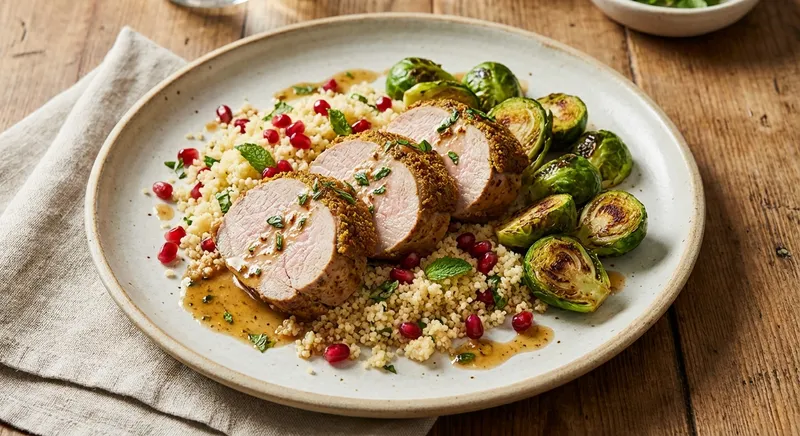
A bright, balanced main where warm, cumin‑kissed pork tenderloin is seared to a caramelized crust and roasted to juicy perfection, paired with fluffy couscous studded with jewel‑like pomegranate seeds and fragrant mint. Steamed Brussels sprouts finished with a little butter and lemon add a slightly sweet, vegetal contrast — the result is restaurant polish with easy weeknight timing.
Preheat the oven to 200°C / 400°F. This high, dry heat will complete the cook quickly after searing, preserving juiciness while keeping the exterior flavorful.
Pat the 160 g pork tenderloin very dry with paper towels and let it sit at room temperature for 8–10 minutes while you prep other ingredients. Drying removes surface moisture so the meat browns; briefly tempering helps it cook evenly.
Mix 1/2 tsp ground cumin, 1/4 tsp smoked paprika, a pinch of salt and 1–2 grinds of black pepper. Rub this spice mix over the pork along with the zest of 1/2 lemon. The zest delivers essential citrus oil (brightening the pork) while the cumin and smoked paprika give warm, aromatic backbone and a hint of smoke.
Heat a 10–12 inch (25–30 cm) oven-proof skillet over medium-high heat until shimmering. Add 1 tbsp olive oil and swirl to coat. When the oil is hot and just beginning to smoke lightly, sear the pork on all sides — about 1½–2 minutes per side — until a deep golden crust forms. Searing (Maillard reaction) builds flavor and texture; do not move the meat too early or the crust won't form.
Transfer the skillet to the preheated oven and roast the pork for 8–12 minutes, or until an instant-read thermometer inserted into the thickest part reads 60°C (140°F) for a juicy, slightly pink center. Roasting after searing cooks gently and preserves succulence. Cooking time varies with thickness — start checking at 8 minutes.
Remove the pork from the oven and transfer to a cutting board. Tent loosely with foil and rest for 6–8 minutes. Resting allows juices to redistribute so slicing won’t dry the meat; the internal temperature will rise a few degrees during rest.
While the pork roasts, prepare the couscous: bring 60 ml (1/4 cup) boiling water or low-sodium broth to a boil with a pinch of salt. Put 45 g (1/4 cup) dry couscous into a heatproof bowl, pour the boiling liquid over it, stir once, and cover tightly. Let sit undisturbed 5 minutes. Coterminous cooking (steaming in hot liquid) gives light, fluffy grains without stirring an overworked texture.
Uncover the couscous and fluff with a fork to separate grains — fluffing prevents clumps and creates a silkier texture. Immediately fold in 2 tbsp pomegranate seeds, 1 tbsp chopped fresh mint, the juice of 1/2 lemon, a pinch of salt, a few grinds of black pepper, and a drizzle (about 1 tsp) of extra-virgin olive oil. The acid and mint brighten the couscous while pomegranate adds bursts of sweet-tart juice and color.
Steam the 150 g halved Brussels sprouts over simmering water for 6–8 minutes, or until tender when pierced with a knife but still bright green. Steaming preserves color and a lightly crisp interior (overcooking makes them mushy and dulls the flavor).
Drain the sprouts well, then toss immediately with 1 tsp olive oil (or 1 tsp butter if you prefer richer flavor), a pinch of salt, and a grind of black pepper. Tossing while hot allows the oil to coat evenly; butter adds silkiness and a toasty aroma.
Slice the rested pork tenderloin into 6–8 slices (about 1 cm thick). Slicing after resting keeps juices inside and makes elegant, even portions. Arrange a spoonful of the pomegranate‑mint couscous on each plate, fan slices of pork on top or alongside, and place steamed Brussels sprouts to the side.
Finish each plate with a light drizzle (about 1 tsp) of extra-virgin olive oil, an extra pinch of lemon zest if you like, and a few extra pomegranate seeds for visual pop. The finishing oil adds mouthfeel and helps carry the flavors; the extra seeds and zest add brightness and contrast.
341
Calories
23g
Protein
26g
Carbs
17g
Fat
4g
Fiber
How did this recipe turn out? Let others know!
to rate this recipe
By Ron Minihan
A bright, balanced main where warm, cumin‑kissed pork tenderloin is seared to a caramelized crust and roasted to juicy perfection, paired with fluffy couscous studded with jewel‑like pomegranate seeds and fragrant mint. Steamed Brussels sprouts finished with a little butter and lemon add a slightly sweet, vegetal contrast — the result is restaurant polish with easy weeknight timing.
Preheat the oven to 200°C / 400°F. This high, dry heat will complete the cook quickly after searing, preserving juiciness while keeping the exterior flavorful.
Pat the 160 g pork tenderloin very dry with paper towels and let it sit at room temperature for 8–10 minutes while you prep other ingredients. Drying removes surface moisture so the meat browns; briefly tempering helps it cook evenly.
Mix 1/2 tsp ground cumin, 1/4 tsp smoked paprika, a pinch of salt and 1–2 grinds of black pepper. Rub this spice mix over the pork along with the zest of 1/2 lemon. The zest delivers essential citrus oil (brightening the pork) while the cumin and smoked paprika give warm, aromatic backbone and a hint of smoke.
Heat a 10–12 inch (25–30 cm) oven-proof skillet over medium-high heat until shimmering. Add 1 tbsp olive oil and swirl to coat. When the oil is hot and just beginning to smoke lightly, sear the pork on all sides — about 1½–2 minutes per side — until a deep golden crust forms. Searing (Maillard reaction) builds flavor and texture; do not move the meat too early or the crust won't form.
Transfer the skillet to the preheated oven and roast the pork for 8–12 minutes, or until an instant-read thermometer inserted into the thickest part reads 60°C (140°F) for a juicy, slightly pink center. Roasting after searing cooks gently and preserves succulence. Cooking time varies with thickness — start checking at 8 minutes.
Remove the pork from the oven and transfer to a cutting board. Tent loosely with foil and rest for 6–8 minutes. Resting allows juices to redistribute so slicing won’t dry the meat; the internal temperature will rise a few degrees during rest.
While the pork roasts, prepare the couscous: bring 60 ml (1/4 cup) boiling water or low-sodium broth to a boil with a pinch of salt. Put 45 g (1/4 cup) dry couscous into a heatproof bowl, pour the boiling liquid over it, stir once, and cover tightly. Let sit undisturbed 5 minutes. Coterminous cooking (steaming in hot liquid) gives light, fluffy grains without stirring an overworked texture.
Uncover the couscous and fluff with a fork to separate grains — fluffing prevents clumps and creates a silkier texture. Immediately fold in 2 tbsp pomegranate seeds, 1 tbsp chopped fresh mint, the juice of 1/2 lemon, a pinch of salt, a few grinds of black pepper, and a drizzle (about 1 tsp) of extra-virgin olive oil. The acid and mint brighten the couscous while pomegranate adds bursts of sweet-tart juice and color.
Steam the 150 g halved Brussels sprouts over simmering water for 6–8 minutes, or until tender when pierced with a knife but still bright green. Steaming preserves color and a lightly crisp interior (overcooking makes them mushy and dulls the flavor).
Drain the sprouts well, then toss immediately with 1 tsp olive oil (or 1 tsp butter if you prefer richer flavor), a pinch of salt, and a grind of black pepper. Tossing while hot allows the oil to coat evenly; butter adds silkiness and a toasty aroma.
Slice the rested pork tenderloin into 6–8 slices (about 1 cm thick). Slicing after resting keeps juices inside and makes elegant, even portions. Arrange a spoonful of the pomegranate‑mint couscous on each plate, fan slices of pork on top or alongside, and place steamed Brussels sprouts to the side.
Finish each plate with a light drizzle (about 1 tsp) of extra-virgin olive oil, an extra pinch of lemon zest if you like, and a few extra pomegranate seeds for visual pop. The finishing oil adds mouthfeel and helps carry the flavors; the extra seeds and zest add brightness and contrast.
341
Calories
23g
Protein
26g
Carbs
17g
Fat
4g
Fiber
Your Rating:
