By emensah m
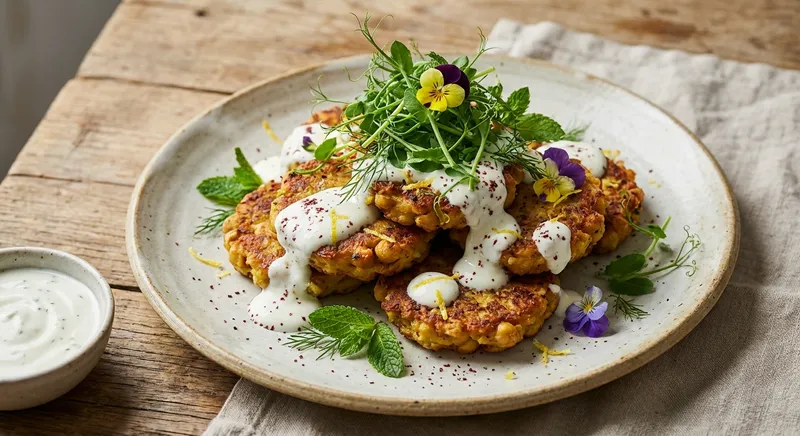
Golden, crisp-on-the-outside and tender-on-the-inside fritters made from lightly mashed chickpeas and grated new potatoes, brightened with spring onion and mint. Served with a tangy lemon‑mint Greek yogurt and a peppery bed of pea shoots, this Mediterranean-inspired plate balances earthy, fresh and zesty flavors with a crunchy texture that feels restaurant‑special yet easy enough for home cooking.
Prepare the potatoes: Grate the new potatoes on the large holes of a box grater (or use a food processor). Place the grated potato in a clean kitchen towel or several layers of paper towels and squeeze out as much moisture as you can. Why: Removing excess water prevents soggy fritters and helps the chickpea flour bind and crisp the exterior.
Prep the chickpeas and aromatics: Drain the canned chickpeas and spread them on a cutting board. Use the side of a chef’s knife or the back of a fork to lightly press them so some whole chickpeas remain for texture but the mixture can hold together. Thinly slice the spring onions and finely chop the mint. Why: A lightly mashed texture gives a pleasant bite and prevents the fritters from becoming paste-like; fresh herbs and scallions provide brightness and lift.
Mix the base: In a large mixing bowl combine the drained chickpeas, squeezed grated potatoes, 1/2 cup chickpea flour, sliced spring onions, chopped mint, 3/4 tsp of the salt (reserve the remainder for seasoning later), 1/8 tsp black pepper, and the optional smoked paprika. Stir until you have an even mixture. If it feels loose, add up to 1 more tablespoon chickpea flour. Why: Chickpea flour both binds the mix and crisps up in the pan — start with the measured amount, then adjust for moisture so the mixture holds a loose patty shape without being dry.
Test the seasoning and consistency: Form a 1.5–2 inch test fritter and fry briefly in a nonstick skillet with 1 teaspoon olive oil over medium heat (about 1–1½ minutes per side) to check seasoning and texture. Why: Frying a small test fritter lets you correct salt, pepper or flour before you commit the whole batch; better to adjust now than after frying all the fritters.
Shape the fritters: Use slightly damp hands or an ice-cream scoop to portion the mixture into 8 even fritters (about 80–90 g each). Press them gently into rounds about ¾ inch thick — not too compact, keep some air so they cook through. Why: Uniform size ensures even cooking; a slightly loose press keeps the interior tender while the exterior crisps.
Make the lemon‑mint yogurt: In a small bowl combine the Greek yogurt, lemon zest, lemon juice, remaining 1/4 tsp salt, a pinch of black pepper and 2 tablespoons of chopped mint. Taste and adjust lemon or salt. Why: The yogurt provides a cool, acidic counterpoint to the rich, fried fritters — zest keeps the lemon oily aromatics while juice adds bright acidity.
Heat the pan: Set a large nonstick or cast-iron skillet over medium heat and add 1 tablespoon of olive oil. Once the oil shimmers (not smoking), lower the heat slightly — medium-low to medium. Why: A hot pan gives an immediate sear to the fritter exterior; lowering slightly prevents the oil from burning and allows the interior to cook through without over-browning.
Fry the fritters: Add fritters so they have breathing room (4 at a time depending on pan size). Cook 3–4 minutes per side until deep golden brown and crisp; flip carefully with a thin spatula. If they brown too quickly, reduce the heat. After each batch, transfer to a wire rack set over a baking sheet to keep them crisp; if desired, keep warm in a 100°C/210°F oven. Why: Cooking in batches and using a wire rack prevents steam from softening the crust; a steady moderate heat develops color (Maillard reaction) which gives flavor.
Finish and plate: Divide pea shoots onto 4 serving plates as a bed. Place two warm fritters on each plate (or three small fritters), spoon 3 tablespoons of the lemon‑mint yogurt alongside or dolloped on top, sprinkle a few extra mint leaves and a grind of black pepper and a light drizzle (about 1 teaspoon) of olive oil per plate. Why: The cool yogurt and peppery greens balance the warm fritters, and the olive oil adds silk and sheen.
Serve immediately: The fritters are best served right away while the exterior is crisp and the interior tender. If you must keep them for a short time, use the low oven to preserve crispness and re-crisp for a minute in a hot skillet before serving. Why: The contrast of textures (crisp exterior vs. soft interior) and the temperature contrast with the yogurt deliver the best eating experience.
479
Calories
20g
Protein
61g
Carbs
19g
Fat
13g
Fiber
How did this recipe turn out? Let others know!
to rate this recipe
By emensah m
Golden, crisp-on-the-outside and tender-on-the-inside fritters made from lightly mashed chickpeas and grated new potatoes, brightened with spring onion and mint. Served with a tangy lemon‑mint Greek yogurt and a peppery bed of pea shoots, this Mediterranean-inspired plate balances earthy, fresh and zesty flavors with a crunchy texture that feels restaurant‑special yet easy enough for home cooking.
Prepare the potatoes: Grate the new potatoes on the large holes of a box grater (or use a food processor). Place the grated potato in a clean kitchen towel or several layers of paper towels and squeeze out as much moisture as you can. Why: Removing excess water prevents soggy fritters and helps the chickpea flour bind and crisp the exterior.
Prep the chickpeas and aromatics: Drain the canned chickpeas and spread them on a cutting board. Use the side of a chef’s knife or the back of a fork to lightly press them so some whole chickpeas remain for texture but the mixture can hold together. Thinly slice the spring onions and finely chop the mint. Why: A lightly mashed texture gives a pleasant bite and prevents the fritters from becoming paste-like; fresh herbs and scallions provide brightness and lift.
Mix the base: In a large mixing bowl combine the drained chickpeas, squeezed grated potatoes, 1/2 cup chickpea flour, sliced spring onions, chopped mint, 3/4 tsp of the salt (reserve the remainder for seasoning later), 1/8 tsp black pepper, and the optional smoked paprika. Stir until you have an even mixture. If it feels loose, add up to 1 more tablespoon chickpea flour. Why: Chickpea flour both binds the mix and crisps up in the pan — start with the measured amount, then adjust for moisture so the mixture holds a loose patty shape without being dry.
Test the seasoning and consistency: Form a 1.5–2 inch test fritter and fry briefly in a nonstick skillet with 1 teaspoon olive oil over medium heat (about 1–1½ minutes per side) to check seasoning and texture. Why: Frying a small test fritter lets you correct salt, pepper or flour before you commit the whole batch; better to adjust now than after frying all the fritters.
Shape the fritters: Use slightly damp hands or an ice-cream scoop to portion the mixture into 8 even fritters (about 80–90 g each). Press them gently into rounds about ¾ inch thick — not too compact, keep some air so they cook through. Why: Uniform size ensures even cooking; a slightly loose press keeps the interior tender while the exterior crisps.
Make the lemon‑mint yogurt: In a small bowl combine the Greek yogurt, lemon zest, lemon juice, remaining 1/4 tsp salt, a pinch of black pepper and 2 tablespoons of chopped mint. Taste and adjust lemon or salt. Why: The yogurt provides a cool, acidic counterpoint to the rich, fried fritters — zest keeps the lemon oily aromatics while juice adds bright acidity.
Heat the pan: Set a large nonstick or cast-iron skillet over medium heat and add 1 tablespoon of olive oil. Once the oil shimmers (not smoking), lower the heat slightly — medium-low to medium. Why: A hot pan gives an immediate sear to the fritter exterior; lowering slightly prevents the oil from burning and allows the interior to cook through without over-browning.
Fry the fritters: Add fritters so they have breathing room (4 at a time depending on pan size). Cook 3–4 minutes per side until deep golden brown and crisp; flip carefully with a thin spatula. If they brown too quickly, reduce the heat. After each batch, transfer to a wire rack set over a baking sheet to keep them crisp; if desired, keep warm in a 100°C/210°F oven. Why: Cooking in batches and using a wire rack prevents steam from softening the crust; a steady moderate heat develops color (Maillard reaction) which gives flavor.
Finish and plate: Divide pea shoots onto 4 serving plates as a bed. Place two warm fritters on each plate (or three small fritters), spoon 3 tablespoons of the lemon‑mint yogurt alongside or dolloped on top, sprinkle a few extra mint leaves and a grind of black pepper and a light drizzle (about 1 teaspoon) of olive oil per plate. Why: The cool yogurt and peppery greens balance the warm fritters, and the olive oil adds silk and sheen.
Serve immediately: The fritters are best served right away while the exterior is crisp and the interior tender. If you must keep them for a short time, use the low oven to preserve crispness and re-crisp for a minute in a hot skillet before serving. Why: The contrast of textures (crisp exterior vs. soft interior) and the temperature contrast with the yogurt deliver the best eating experience.
479
Calories
20g
Protein
61g
Carbs
19g
Fat
13g
Fiber
Your Rating:
