By Courtney Ray-Riddle
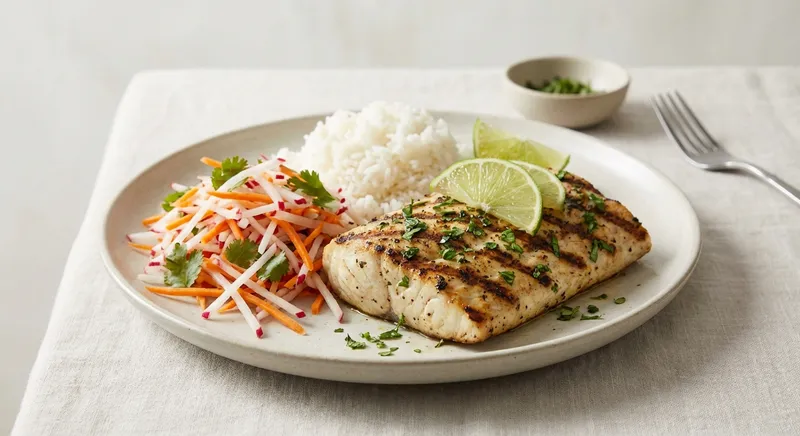
Bright, smoky and refreshingly crunchy—this Caribbean‑Pacific fusion plate pairs charred lime‑cumin mahi‑mahi with pillowy coconut‑infused jasmine rice and a razor‑crisp radish‑cilantro spring slaw. The fish gets a quick char to build smoky complexity while the coconut rice adds silkiness and the slaw provides acidic crunch to balance each bite.
Measure and rinse the jasmine rice in a fine mesh sieve under cold water until the runoff runs clear. Rinsing removes surface starch so the cooked rice will be fluffy (not gummy). Drain well.
Combine the rinsed rice, 200 ml light coconut milk, 480 ml water, 1/2 teaspoon sea salt and 1 tablespoon (15 ml) of the lime juice in a medium saucepan. Bring to a gentle boil uncovered over medium-high heat. Once boiling, reduce the heat to the lowest setting, cover tightly and simmer for 12–14 minutes (or until the liquid is absorbed). Rest, covered, off the heat for 8 minutes. Resting allows trapped steam to finish cooking the rice evenly and keeps grains separate.
While the rice cooks, make the slaw: in a large bowl toss the thinly sliced radishes, shredded cabbage, julienned carrot, chopped cilantro and sliced scallion. Add 2 tablespoons (30 ml) olive oil, the remaining 1 tablespoon (15 ml) lime juice, a pinch of sea salt, cracked black pepper and a pinch of chili flakes if using. Toss and taste — the slaw should be lively and slightly acidic to cut the richness of the fish and coconut rice. Let the slaw sit while you prepare the fish so the flavors meld but the veg stays crunchy.
Pat the mahi‑mahi fillets dry with paper towels. Drying is essential to get a good sear and to help spices stick. Divide the ground cumin (1 tsp) and smoked paprika (1/2 tsp) evenly and rub over both sides of the fillets along with 1 tablespoon (15 ml) olive oil, a good pinch of sea salt and several turns of cracked black pepper. Allow the fillets to rest at room temperature for 8–10 minutes — this relaxes the fish and helps it cook evenly.
Preheat a grill pan or heavy cast‑iron skillet over high heat until smoking lightly. If using an outdoor grill, preheat to high and oil the grates. High heat gives the fish a quick char and caramelization which adds smoky depth; quick cooking keeps the flesh moist.
Brush the hot pan or grill grates with a little oil to prevent sticking. Place the fish skin‑side down (if it has skin) and press gently for 20 seconds to ensure good contact. Sear for 2–3 minutes without moving — you're building a golden crust. Flip and cook the second side for another 1½–3 minutes depending on thickness. Mahi‑mahi is done when it flakes easily with a fork and registers about 56–60°C (133–140°F) internal temperature. Avoid overcooking — lean fish quickly becomes dry.
Remove the fish to a warm plate and spoon a little of the rice cooking liquid (or a drizzle of olive oil and a squeeze of lime) over each fillet to keep it glossy and add brightness. Let the fish rest for 2 minutes — carryover heat finishes the cooking and resting preserves juiciness.
Fluff the coconut‑jasmine rice with a fork and fold in a small handful of chopped cilantro and a pinch more sea salt if needed. A final lime squeeze (about 1 tsp per serving distributed across the rice) brightens the coconut richness and ties the plate together.
Plate: spoon a mound of coconut‑jasmine rice in the center, top with a char‑grilled mahi‑mahi fillet, and arrange a generous portion of radish‑cilantro spring slaw to the side. Garnish with sliced avocado quarters, extra cilantro and an extra lime wedge. Finish with a light drizzle of olive oil and a few flaked sea salt crystals for texture.
Serve immediately, encouraging diners to combine forkfuls of fish, rice and slaw so they get richness, acidity and crunch in each bite.
702
Calories
46g
Protein
61g
Carbs
27g
Fat
6g
Fiber
How did this recipe turn out? Let others know!
to rate this recipe
By Courtney Ray-Riddle
Bright, smoky and refreshingly crunchy—this Caribbean‑Pacific fusion plate pairs charred lime‑cumin mahi‑mahi with pillowy coconut‑infused jasmine rice and a razor‑crisp radish‑cilantro spring slaw. The fish gets a quick char to build smoky complexity while the coconut rice adds silkiness and the slaw provides acidic crunch to balance each bite.
Measure and rinse the jasmine rice in a fine mesh sieve under cold water until the runoff runs clear. Rinsing removes surface starch so the cooked rice will be fluffy (not gummy). Drain well.
Combine the rinsed rice, 200 ml light coconut milk, 480 ml water, 1/2 teaspoon sea salt and 1 tablespoon (15 ml) of the lime juice in a medium saucepan. Bring to a gentle boil uncovered over medium-high heat. Once boiling, reduce the heat to the lowest setting, cover tightly and simmer for 12–14 minutes (or until the liquid is absorbed). Rest, covered, off the heat for 8 minutes. Resting allows trapped steam to finish cooking the rice evenly and keeps grains separate.
While the rice cooks, make the slaw: in a large bowl toss the thinly sliced radishes, shredded cabbage, julienned carrot, chopped cilantro and sliced scallion. Add 2 tablespoons (30 ml) olive oil, the remaining 1 tablespoon (15 ml) lime juice, a pinch of sea salt, cracked black pepper and a pinch of chili flakes if using. Toss and taste — the slaw should be lively and slightly acidic to cut the richness of the fish and coconut rice. Let the slaw sit while you prepare the fish so the flavors meld but the veg stays crunchy.
Pat the mahi‑mahi fillets dry with paper towels. Drying is essential to get a good sear and to help spices stick. Divide the ground cumin (1 tsp) and smoked paprika (1/2 tsp) evenly and rub over both sides of the fillets along with 1 tablespoon (15 ml) olive oil, a good pinch of sea salt and several turns of cracked black pepper. Allow the fillets to rest at room temperature for 8–10 minutes — this relaxes the fish and helps it cook evenly.
Preheat a grill pan or heavy cast‑iron skillet over high heat until smoking lightly. If using an outdoor grill, preheat to high and oil the grates. High heat gives the fish a quick char and caramelization which adds smoky depth; quick cooking keeps the flesh moist.
Brush the hot pan or grill grates with a little oil to prevent sticking. Place the fish skin‑side down (if it has skin) and press gently for 20 seconds to ensure good contact. Sear for 2–3 minutes without moving — you're building a golden crust. Flip and cook the second side for another 1½–3 minutes depending on thickness. Mahi‑mahi is done when it flakes easily with a fork and registers about 56–60°C (133–140°F) internal temperature. Avoid overcooking — lean fish quickly becomes dry.
Remove the fish to a warm plate and spoon a little of the rice cooking liquid (or a drizzle of olive oil and a squeeze of lime) over each fillet to keep it glossy and add brightness. Let the fish rest for 2 minutes — carryover heat finishes the cooking and resting preserves juiciness.
Fluff the coconut‑jasmine rice with a fork and fold in a small handful of chopped cilantro and a pinch more sea salt if needed. A final lime squeeze (about 1 tsp per serving distributed across the rice) brightens the coconut richness and ties the plate together.
Plate: spoon a mound of coconut‑jasmine rice in the center, top with a char‑grilled mahi‑mahi fillet, and arrange a generous portion of radish‑cilantro spring slaw to the side. Garnish with sliced avocado quarters, extra cilantro and an extra lime wedge. Finish with a light drizzle of olive oil and a few flaked sea salt crystals for texture.
Serve immediately, encouraging diners to combine forkfuls of fish, rice and slaw so they get richness, acidity and crunch in each bite.
702
Calories
46g
Protein
61g
Carbs
27g
Fat
6g
Fiber
Your Rating:
