By emensah m
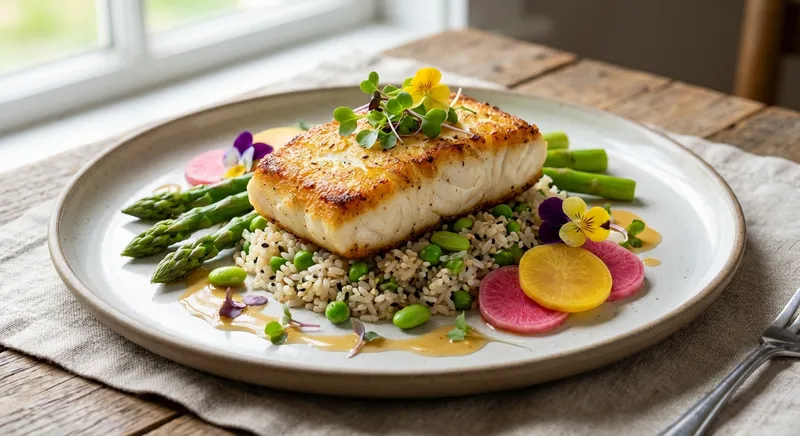
Bright, fragrant and texturally delightful: crisp‑skinned halibut sits atop toasted‑sesame jasmine rice, accompanied by tender-crisp asparagus and razor‑thin, quick‑pickled radish. The dish balances clean white‑fish flavor, nutty sesame, a citrus lift and a whisper of soy for a modern Asian‑inspired plate that feels restaurant‑polished but is fast enough for home.
Quick‑pickle the radish (do this first so the flavors develop while you cook). Stack thin radish slices in a small bowl and sprinkle with 2 tsp rice vinegar and 1/8 tsp sugar; add a pinch of salt, toss, and let sit at room temperature for at least 10 minutes. Why: quick pickling softens the bite, adds brightness and balances the oiliness of seared fish.
Rinse the jasmine rice in a fine‑mesh sieve under cold water until the rinse runs almost clear, then drain. Why: rinsing removes excess surface starch so the grains steam separately and produce a cleaner, fluffier rice rather than clumping.
Combine the drained rice and 280 ml water or low‑sodium stock in a small saucepan. Add a pinch of salt. Bring to a gentle boil over medium‑high heat, then immediately reduce to the lowest simmer, cover tightly and cook undisturbed for 12 minutes (for jasmine) or until liquid is absorbed. Why: a short, steady simmer with a tight lid steams the rice evenly; disturbing it releases steam and leads to uneven cooking.
While the rice simmers, prep the fish and veg: pat the halibut fillets very dry with paper towels (moisture is the enemy of a good sear). Season both sides with 1/2 tsp salt total per fillet and a few grinds of black pepper. Trim and halve the asparagus on the bias, and slice the spring onions thinly. Why: drying the fish ensures a Maillard crust; halving asparagus shortens cooking time and gives pleasing bite.
Place a nonstick or well‑seasoned stainless skillet on medium‑high heat. Add 2 tbsp extra‑virgin olive oil and let it heat until shimmering but not smoking — about 1–2 minutes. Why: a properly preheated pan and hot oil create an immediate sear, preventing the fish from sticking and creating flavor from the Maillard reaction.
If your fillets have skin, sear skin‑side down first: gently lower the fillets into the pan skin‑side down and press lightly with a spatula for 10–15 seconds to ensure full contact. Cook skin‑side down for 3–4 minutes (depending on thickness) until the skin is crisp and releases easily. Why: searing skin first renders any fat and crisps the skin; pressing prevents curling so the fillet cooks evenly.
Flip the fillets and add the 1 tbsp butter and a smashed garlic clove to the pan; lower heat to medium. Spoon the melted butter over the tops of the fillets (baste) for 30–60 seconds to finish cooking — about another 1½–3 minutes depending on thickness. Cook to an internal temperature of about 52–58°C (125–135°F) for juicy, flaky halibut. Why: basting adds gloss, flavor and helps gently finish the fish without drying it out.
When the fillets are nearly done, quickly remove them to a warm plate to rest for 2 minutes (carryover heat will finish them). Why: resting lets the juices redistribute and prevents overcooking when plating.
While the fish rests and rice finishes, cook the asparagus in the same skillet used for the halibut over medium heat: add the asparagus and a splash of water (about 1–2 tbsp). Cover for 1 minute to steam, then uncover and toss with the sliced spring onions and a pinch of salt for another 1–2 minutes until bright green and tender‑crisp. Why: using the same skillet captures the fond (browned bits) left from the halibut, adding savory depth to the asparagus without extra seasoning.
Fluff the finished rice with a fork off the heat; stir in 2 tsp toasted sesame oil, half the toasted sesame seeds (reserve the rest for garnish) and most of the sliced spring onions, reserving a few for the plate. Taste and adjust salt. Why: finishing the rice with sesame oil while warm blooms the nutty aroma and coats individual grains for a glossy mouthfeel.
Plate: spoon a bed of sesame rice into each bowl or plate, arrange the asparagus alongside, and place a halibut fillet on top. Fan the quick‑pickled radish slices beside the fish, sprinkle remaining sesame seeds and scallions over everything, and finish with a 1 tsp splash of light soy/tamari over the fish and a lemon wedge. Add minced cilantro or parsley if using. Why: the soy adds savory umami; lemon brightens and balances the richness of the fish and oil.
Serve immediately while the fish is glossy and warm. Leftovers: keep components separate for best texture (rice and fish refrigerate up to 24 hours; asparagus best eaten same day).
624
Calories
40g
Protein
53g
Carbs
28g
Fat
3g
Fiber
How did this recipe turn out? Let others know!
to rate this recipe
By emensah m
Bright, fragrant and texturally delightful: crisp‑skinned halibut sits atop toasted‑sesame jasmine rice, accompanied by tender-crisp asparagus and razor‑thin, quick‑pickled radish. The dish balances clean white‑fish flavor, nutty sesame, a citrus lift and a whisper of soy for a modern Asian‑inspired plate that feels restaurant‑polished but is fast enough for home.
Quick‑pickle the radish (do this first so the flavors develop while you cook). Stack thin radish slices in a small bowl and sprinkle with 2 tsp rice vinegar and 1/8 tsp sugar; add a pinch of salt, toss, and let sit at room temperature for at least 10 minutes. Why: quick pickling softens the bite, adds brightness and balances the oiliness of seared fish.
Rinse the jasmine rice in a fine‑mesh sieve under cold water until the rinse runs almost clear, then drain. Why: rinsing removes excess surface starch so the grains steam separately and produce a cleaner, fluffier rice rather than clumping.
Combine the drained rice and 280 ml water or low‑sodium stock in a small saucepan. Add a pinch of salt. Bring to a gentle boil over medium‑high heat, then immediately reduce to the lowest simmer, cover tightly and cook undisturbed for 12 minutes (for jasmine) or until liquid is absorbed. Why: a short, steady simmer with a tight lid steams the rice evenly; disturbing it releases steam and leads to uneven cooking.
While the rice simmers, prep the fish and veg: pat the halibut fillets very dry with paper towels (moisture is the enemy of a good sear). Season both sides with 1/2 tsp salt total per fillet and a few grinds of black pepper. Trim and halve the asparagus on the bias, and slice the spring onions thinly. Why: drying the fish ensures a Maillard crust; halving asparagus shortens cooking time and gives pleasing bite.
Place a nonstick or well‑seasoned stainless skillet on medium‑high heat. Add 2 tbsp extra‑virgin olive oil and let it heat until shimmering but not smoking — about 1–2 minutes. Why: a properly preheated pan and hot oil create an immediate sear, preventing the fish from sticking and creating flavor from the Maillard reaction.
If your fillets have skin, sear skin‑side down first: gently lower the fillets into the pan skin‑side down and press lightly with a spatula for 10–15 seconds to ensure full contact. Cook skin‑side down for 3–4 minutes (depending on thickness) until the skin is crisp and releases easily. Why: searing skin first renders any fat and crisps the skin; pressing prevents curling so the fillet cooks evenly.
Flip the fillets and add the 1 tbsp butter and a smashed garlic clove to the pan; lower heat to medium. Spoon the melted butter over the tops of the fillets (baste) for 30–60 seconds to finish cooking — about another 1½–3 minutes depending on thickness. Cook to an internal temperature of about 52–58°C (125–135°F) for juicy, flaky halibut. Why: basting adds gloss, flavor and helps gently finish the fish without drying it out.
When the fillets are nearly done, quickly remove them to a warm plate to rest for 2 minutes (carryover heat will finish them). Why: resting lets the juices redistribute and prevents overcooking when plating.
While the fish rests and rice finishes, cook the asparagus in the same skillet used for the halibut over medium heat: add the asparagus and a splash of water (about 1–2 tbsp). Cover for 1 minute to steam, then uncover and toss with the sliced spring onions and a pinch of salt for another 1–2 minutes until bright green and tender‑crisp. Why: using the same skillet captures the fond (browned bits) left from the halibut, adding savory depth to the asparagus without extra seasoning.
Fluff the finished rice with a fork off the heat; stir in 2 tsp toasted sesame oil, half the toasted sesame seeds (reserve the rest for garnish) and most of the sliced spring onions, reserving a few for the plate. Taste and adjust salt. Why: finishing the rice with sesame oil while warm blooms the nutty aroma and coats individual grains for a glossy mouthfeel.
Plate: spoon a bed of sesame rice into each bowl or plate, arrange the asparagus alongside, and place a halibut fillet on top. Fan the quick‑pickled radish slices beside the fish, sprinkle remaining sesame seeds and scallions over everything, and finish with a 1 tsp splash of light soy/tamari over the fish and a lemon wedge. Add minced cilantro or parsley if using. Why: the soy adds savory umami; lemon brightens and balances the richness of the fish and oil.
Serve immediately while the fish is glossy and warm. Leftovers: keep components separate for best texture (rice and fish refrigerate up to 24 hours; asparagus best eaten same day).
624
Calories
40g
Protein
53g
Carbs
28g
Fat
3g
Fiber
Your Rating:
