By emensah m
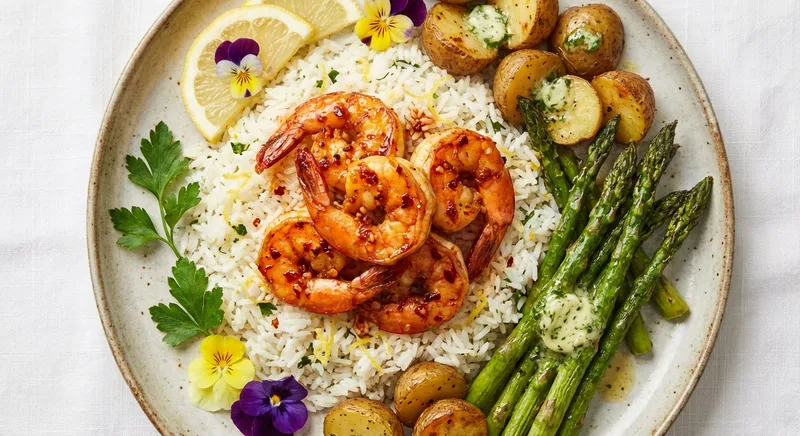
Bright, fragrant and texturally satisfying, this Mediterranean‑inspired plate pairs juicy garlic‑chili shrimp with buttery herb‑bright asparagus, lemony jasmine rice and crisp roasted new potatoes. The shrimp are seared hot for a caramelized edge, finished with a soft, garlicky herb butter that melts over the warm asparagus and potatoes, while the rice is revived with lemon zest for a clean, springtime lift.
Preheat the oven to 220°C / 425°F. Line a baking sheet with parchment or foil. Roasting at high heat develops a golden, slightly crunchy exterior on the new potatoes while keeping the centers tender — this contrast is important for texture on the plate.
Toss the halved new potatoes in 2 tbsp olive oil, 1 tsp kosher salt and 1/2 tsp black pepper. Spread them cut‑side down in a single layer on the baking sheet. Roast for 25–30 minutes, flipping once midway, until deeply golden and tender when pierced with a fork. Why: oil and high heat promote caramelization; seasoning early allows salt to penetrate and season the potato flesh.
While the potatoes start roasting, make the herb garlic butter: in a small bowl, mash the softened unsalted butter with the minced garlic, chopped parsley and chives, 1 tsp lemon zest, a pinch of salt and 1/4 tsp freshly ground black pepper. Cover and keep at room temperature. Why: softening and mashing the butter with the aromatics releases their oils and creates a spreadable compound butter that will melt evenly over the hot ingredients.
Prepare the rice: place the 600 g cooked jasmine rice in a wide skillet over medium heat with 1 tbsp olive oil and the remaining 1 tsp lemon zest. Break up any clumps with a spatula, warm through for 4–5 minutes until the rice is steaming and individual grains are slightly glossy. Season with 1/2 tsp salt and a grind of black pepper. Why: reheating rice in a skillet with oil separates and revives grains and the lemon adds brightness without making the rice soggy.
Trim and cut the asparagus into 2‑inch pieces if you haven't already. Pat the shrimp dry with paper towels and season both sides with 1 tsp kosher salt, 1/2 tsp black pepper and the 1 tsp red chili flakes (or the fresh sliced chili). Why: drying shrimp creates a better sear; seasoning in advance layers flavor and helps moisture escape so the shrimp caramelizes rather than steams.
Heat a large heavy skillet (cast‑iron or stainless) over high heat until very hot, then add 2 tbsp olive oil and swirl. When the oil is shimmering, add the shrimp in a single layer (work in two batches if needed — overcrowding causes steaming). Sear the shrimp 1.5–2 minutes per side until pink with golden edges; they should curl into a loose 'C' shape (tight 'O' is overcooked). Remove shrimp to a warm plate. Why: high heat gives the shrimp a quick Maillard crust that adds flavor and locks juices.
Lower the heat to medium, add the asparagus to the skillet with 1 tbsp olive oil (or the pan juices if present). Sauté 3–4 minutes until bright green and tender‑crisp. Add the minced garlic and sauté 30–45 seconds more until fragrant — don't let the garlic burn. Why: cooking asparagus after the shrimp lets it pick up the fond (browned bits) in the pan for extra savory depth; adding garlic at the end preserves its fresh aroma.
Return the shrimp to the skillet with the asparagus, drop in spoonfuls of the herb garlic butter (about half to start), and tilt the pan slightly while spooning the melted butter over the shrimp and asparagus for 30–45 seconds to glaze. Taste and adjust seasoning. Why: finishing in herb butter adds richness, tames the chile heat, and binds the flavors together with gloss and aroma.
Plate: spoon a bed of lemony jasmine rice onto each plate, arrange a portion of roasted new potatoes alongside, and nestle the shrimp and asparagus on top. Top each portion with a small knob (about 1 tbsp) of the remaining herb butter so it melts across the hot ingredients; serve with a lemon wedge. Why: hot components melt the herb butter into a silky sauce; serving the butter on top preserves its fresh herbal flavor and offers an attractive finish.
Serve immediately. Encourage diners to squeeze the lemon wedge over the dish right before eating for a bright lift. Why: a final hit of acid lifts the fats and ties the dish together, sharpening flavors and enhancing appetite appeal.
Make‑ahead and holding notes: roast the potatoes up to 2 hours ahead and rewarm at 200°C / 400°F for 8–10 minutes. Keep the cooked rice covered at room temperature or warm gently in a pan with a tablespoon of water. Do not reheat shrimp in the oven — it overcooks; instead reheat very briefly in a hot skillet with a splash of water and a pat of the herb butter.
Safety note: if your cooked jasmine rice has been refrigerated, reheat to steaming hot (75°C / 165°F) before serving to ensure food safety. Why: rice can harbor Bacillus spores — proper reheating reduces risk.
740
Calories
46g
Protein
82g
Carbs
27g
Fat
7g
Fiber
How did this recipe turn out? Let others know!
to rate this recipe
By emensah m
Bright, fragrant and texturally satisfying, this Mediterranean‑inspired plate pairs juicy garlic‑chili shrimp with buttery herb‑bright asparagus, lemony jasmine rice and crisp roasted new potatoes. The shrimp are seared hot for a caramelized edge, finished with a soft, garlicky herb butter that melts over the warm asparagus and potatoes, while the rice is revived with lemon zest for a clean, springtime lift.
Preheat the oven to 220°C / 425°F. Line a baking sheet with parchment or foil. Roasting at high heat develops a golden, slightly crunchy exterior on the new potatoes while keeping the centers tender — this contrast is important for texture on the plate.
Toss the halved new potatoes in 2 tbsp olive oil, 1 tsp kosher salt and 1/2 tsp black pepper. Spread them cut‑side down in a single layer on the baking sheet. Roast for 25–30 minutes, flipping once midway, until deeply golden and tender when pierced with a fork. Why: oil and high heat promote caramelization; seasoning early allows salt to penetrate and season the potato flesh.
While the potatoes start roasting, make the herb garlic butter: in a small bowl, mash the softened unsalted butter with the minced garlic, chopped parsley and chives, 1 tsp lemon zest, a pinch of salt and 1/4 tsp freshly ground black pepper. Cover and keep at room temperature. Why: softening and mashing the butter with the aromatics releases their oils and creates a spreadable compound butter that will melt evenly over the hot ingredients.
Prepare the rice: place the 600 g cooked jasmine rice in a wide skillet over medium heat with 1 tbsp olive oil and the remaining 1 tsp lemon zest. Break up any clumps with a spatula, warm through for 4–5 minutes until the rice is steaming and individual grains are slightly glossy. Season with 1/2 tsp salt and a grind of black pepper. Why: reheating rice in a skillet with oil separates and revives grains and the lemon adds brightness without making the rice soggy.
Trim and cut the asparagus into 2‑inch pieces if you haven't already. Pat the shrimp dry with paper towels and season both sides with 1 tsp kosher salt, 1/2 tsp black pepper and the 1 tsp red chili flakes (or the fresh sliced chili). Why: drying shrimp creates a better sear; seasoning in advance layers flavor and helps moisture escape so the shrimp caramelizes rather than steams.
Heat a large heavy skillet (cast‑iron or stainless) over high heat until very hot, then add 2 tbsp olive oil and swirl. When the oil is shimmering, add the shrimp in a single layer (work in two batches if needed — overcrowding causes steaming). Sear the shrimp 1.5–2 minutes per side until pink with golden edges; they should curl into a loose 'C' shape (tight 'O' is overcooked). Remove shrimp to a warm plate. Why: high heat gives the shrimp a quick Maillard crust that adds flavor and locks juices.
Lower the heat to medium, add the asparagus to the skillet with 1 tbsp olive oil (or the pan juices if present). Sauté 3–4 minutes until bright green and tender‑crisp. Add the minced garlic and sauté 30–45 seconds more until fragrant — don't let the garlic burn. Why: cooking asparagus after the shrimp lets it pick up the fond (browned bits) in the pan for extra savory depth; adding garlic at the end preserves its fresh aroma.
Return the shrimp to the skillet with the asparagus, drop in spoonfuls of the herb garlic butter (about half to start), and tilt the pan slightly while spooning the melted butter over the shrimp and asparagus for 30–45 seconds to glaze. Taste and adjust seasoning. Why: finishing in herb butter adds richness, tames the chile heat, and binds the flavors together with gloss and aroma.
Plate: spoon a bed of lemony jasmine rice onto each plate, arrange a portion of roasted new potatoes alongside, and nestle the shrimp and asparagus on top. Top each portion with a small knob (about 1 tbsp) of the remaining herb butter so it melts across the hot ingredients; serve with a lemon wedge. Why: hot components melt the herb butter into a silky sauce; serving the butter on top preserves its fresh herbal flavor and offers an attractive finish.
Serve immediately. Encourage diners to squeeze the lemon wedge over the dish right before eating for a bright lift. Why: a final hit of acid lifts the fats and ties the dish together, sharpening flavors and enhancing appetite appeal.
Make‑ahead and holding notes: roast the potatoes up to 2 hours ahead and rewarm at 200°C / 400°F for 8–10 minutes. Keep the cooked rice covered at room temperature or warm gently in a pan with a tablespoon of water. Do not reheat shrimp in the oven — it overcooks; instead reheat very briefly in a hot skillet with a splash of water and a pat of the herb butter.
Safety note: if your cooked jasmine rice has been refrigerated, reheat to steaming hot (75°C / 165°F) before serving to ensure food safety. Why: rice can harbor Bacillus spores — proper reheating reduces risk.
740
Calories
46g
Protein
82g
Carbs
27g
Fat
7g
Fiber
Your Rating:
