By emensah m
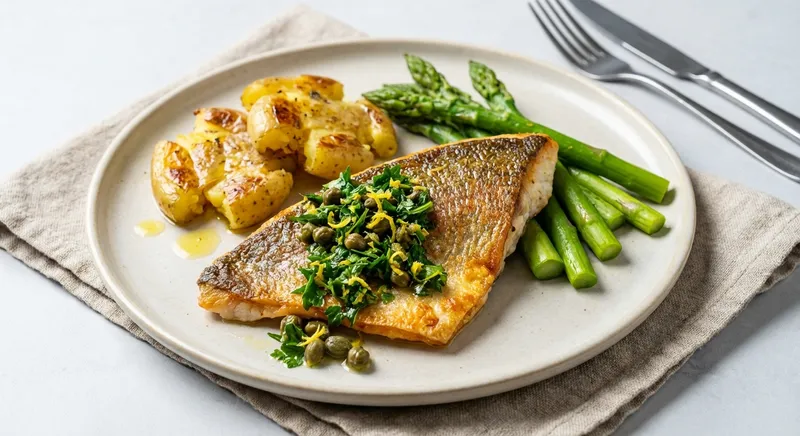
Crisp-skinned rainbow trout finished with a bright, punchy herb gremolata sits atop golden smashed new potatoes with tender-blanched asparagus. The contrast of textures — the crunchy trout skin, buttery potato edges and vibrant, acidic gremolata — makes this a light yet satisfying spring dinner with Mediterranean brightness.
Bring a large pot of salted water to a boil for the potatoes. Salted water seasons potatoes from the inside as they cook; use about 1 tbsp salt per 2 liters of water so the potatoes taste properly seasoned.
Prep potatoes: Trim any large eyes from the new potatoes but leave skins on — the skins add flavor and texture. Place 1.2 kg of baby potatoes in the boiling water and simmer until fork-tender, about 12–18 minutes depending on size. They should be soft enough to smash but not falling apart; testing with a small knife gives the right doneness.
Trim and blanch asparagus: While potatoes cook, trim the woody ends of 480 g asparagus (snap or cut about the bottom 2–3 cm). Bring a medium pot of water to a boil and have an ice bath ready. Blanch asparagus for 1.5–2.5 minutes until bright green and just tender — this preserves color, crisply cooks them, and keeps vibrant flavor. Immediately transfer to the ice bath to stop cooking and set color.
Make the gremolata: In a small bowl combine 4 tbsp finely chopped flat-leaf parsley, 2 tsp lemon zest, 4 tsp rinsed & chopped capers, 2 tsp extra-virgin olive oil and 2 cloves of minced garlic (you can use 1 clove here and 1 reserved for potatoes if you prefer a milder profile). Mix and season lightly with salt and pepper. The gremolata is a bright, acidic finish that cuts through the richness of the fish and butter — capers add briny depth.
Drain potatoes and prepare to smash: Once tender, drain well and return the potatoes to the hot pot for 30–60 seconds to evaporate excess surface moisture — this helps them form crisp edges when smashed. Place the potatoes on a tray or baking sheet and gently press each with the bottom of a glass or a potato masher to flatten to about 1–1.5 cm thick; don’t pulverize — you want pieces with intact centers and exposed edges.
Season and oil the smashed potatoes: Heat a large nonstick or heavy skillet over medium-high heat. Add 4 tsp unsalted butter (or olive oil if preferred) and 1 tsp minced garlic (if you chose to reserve one garlic clove for potatoes). When the butter foams, add smashed potatoes in a single layer (work in batches if necessary). Sear without moving for 3–4 minutes to develop golden brown, crispy edges — this Maillard reaction creates nutty, complex flavors. Flip and crisp the other side for 2–3 minutes. Transfer to a warm plate and keep in a low oven (80–90°C / 175–200°F) while finishing the fish.
Pat the trout fillets dry with paper towels — moisture prevents a good sear. Season skin and flesh with salt and cracked pepper. Dry skin crisps more readily and releases from the pan cleanly when it's properly seared.
Heat a large nonstick or stainless steel skillet over medium-high heat until shimmering. Add 1 tsp olive oil per fillet (4 tsp total) and heat until the oil is hot but not smoking; this ensures immediate contact heat for a crisp skin. Lay the trout fillets skin-side down, pressing gently with a spatula for 10–15 seconds so the skin makes full contact with the pan and doesn't curl.
Cook the trout mostly on the skin side: Sear skin-side down for 3.5–4.5 minutes depending on thickness — you want the skin deeply crisped and the flesh cooked about two-thirds of the way through. Flip the fillets and cook for just 30–60 seconds on the flesh side to finish; this gentle finish keeps the fillets moist. Cooking this way renders the skin fat, crisps it and protects the delicate flesh from overcooking.
Finish the trout: After flipping, you can spoon a little of the pan fat over the fillets (basting) for extra gloss and flavor; add a squeeze of lemon if desired. Remove the trout to a warm plate and rest for 1–2 minutes — short rest lets juices redistribute and avoids the fish drying out.
Warm asparagus and finish: Drain the asparagus from the ice bath, pat dry, and briefly warm in a lightly oiled skillet for 30–45 seconds — you only need to take the chill off so it’s warm for plating. Season with salt, pepper and a drizzle of the remaining olive oil (about 1/2 tsp per serving across all).
Plate: Place 3–4 smashed potato pieces in the center of each plate, arrange 4–6 asparagus spears alongside, and top the potatoes with the trout fillet, skin-side up to preserve crispness. Spoon 1 tbsp gremolata over each fillet and serve with a lemon wedge. The gremolata should be bright and fresh; it’s the final flavor lift.
Serve immediately: This dish is best served right away while the trout skin is still crisp and the potatoes are warm. Remind diners to squeeze the lemon over the fish to brighten every bite.
640
Calories
41g
Protein
65g
Carbs
24g
Fat
8g
Fiber
How did this recipe turn out? Let others know!
to rate this recipe
By emensah m
Crisp-skinned rainbow trout finished with a bright, punchy herb gremolata sits atop golden smashed new potatoes with tender-blanched asparagus. The contrast of textures — the crunchy trout skin, buttery potato edges and vibrant, acidic gremolata — makes this a light yet satisfying spring dinner with Mediterranean brightness.
Bring a large pot of salted water to a boil for the potatoes. Salted water seasons potatoes from the inside as they cook; use about 1 tbsp salt per 2 liters of water so the potatoes taste properly seasoned.
Prep potatoes: Trim any large eyes from the new potatoes but leave skins on — the skins add flavor and texture. Place 1.2 kg of baby potatoes in the boiling water and simmer until fork-tender, about 12–18 minutes depending on size. They should be soft enough to smash but not falling apart; testing with a small knife gives the right doneness.
Trim and blanch asparagus: While potatoes cook, trim the woody ends of 480 g asparagus (snap or cut about the bottom 2–3 cm). Bring a medium pot of water to a boil and have an ice bath ready. Blanch asparagus for 1.5–2.5 minutes until bright green and just tender — this preserves color, crisply cooks them, and keeps vibrant flavor. Immediately transfer to the ice bath to stop cooking and set color.
Make the gremolata: In a small bowl combine 4 tbsp finely chopped flat-leaf parsley, 2 tsp lemon zest, 4 tsp rinsed & chopped capers, 2 tsp extra-virgin olive oil and 2 cloves of minced garlic (you can use 1 clove here and 1 reserved for potatoes if you prefer a milder profile). Mix and season lightly with salt and pepper. The gremolata is a bright, acidic finish that cuts through the richness of the fish and butter — capers add briny depth.
Drain potatoes and prepare to smash: Once tender, drain well and return the potatoes to the hot pot for 30–60 seconds to evaporate excess surface moisture — this helps them form crisp edges when smashed. Place the potatoes on a tray or baking sheet and gently press each with the bottom of a glass or a potato masher to flatten to about 1–1.5 cm thick; don’t pulverize — you want pieces with intact centers and exposed edges.
Season and oil the smashed potatoes: Heat a large nonstick or heavy skillet over medium-high heat. Add 4 tsp unsalted butter (or olive oil if preferred) and 1 tsp minced garlic (if you chose to reserve one garlic clove for potatoes). When the butter foams, add smashed potatoes in a single layer (work in batches if necessary). Sear without moving for 3–4 minutes to develop golden brown, crispy edges — this Maillard reaction creates nutty, complex flavors. Flip and crisp the other side for 2–3 minutes. Transfer to a warm plate and keep in a low oven (80–90°C / 175–200°F) while finishing the fish.
Pat the trout fillets dry with paper towels — moisture prevents a good sear. Season skin and flesh with salt and cracked pepper. Dry skin crisps more readily and releases from the pan cleanly when it's properly seared.
Heat a large nonstick or stainless steel skillet over medium-high heat until shimmering. Add 1 tsp olive oil per fillet (4 tsp total) and heat until the oil is hot but not smoking; this ensures immediate contact heat for a crisp skin. Lay the trout fillets skin-side down, pressing gently with a spatula for 10–15 seconds so the skin makes full contact with the pan and doesn't curl.
Cook the trout mostly on the skin side: Sear skin-side down for 3.5–4.5 minutes depending on thickness — you want the skin deeply crisped and the flesh cooked about two-thirds of the way through. Flip the fillets and cook for just 30–60 seconds on the flesh side to finish; this gentle finish keeps the fillets moist. Cooking this way renders the skin fat, crisps it and protects the delicate flesh from overcooking.
Finish the trout: After flipping, you can spoon a little of the pan fat over the fillets (basting) for extra gloss and flavor; add a squeeze of lemon if desired. Remove the trout to a warm plate and rest for 1–2 minutes — short rest lets juices redistribute and avoids the fish drying out.
Warm asparagus and finish: Drain the asparagus from the ice bath, pat dry, and briefly warm in a lightly oiled skillet for 30–45 seconds — you only need to take the chill off so it’s warm for plating. Season with salt, pepper and a drizzle of the remaining olive oil (about 1/2 tsp per serving across all).
Plate: Place 3–4 smashed potato pieces in the center of each plate, arrange 4–6 asparagus spears alongside, and top the potatoes with the trout fillet, skin-side up to preserve crispness. Spoon 1 tbsp gremolata over each fillet and serve with a lemon wedge. The gremolata should be bright and fresh; it’s the final flavor lift.
Serve immediately: This dish is best served right away while the trout skin is still crisp and the potatoes are warm. Remind diners to squeeze the lemon over the fish to brighten every bite.
640
Calories
41g
Protein
65g
Carbs
24g
Fat
8g
Fiber
Your Rating:
