By Kayla Alaniz
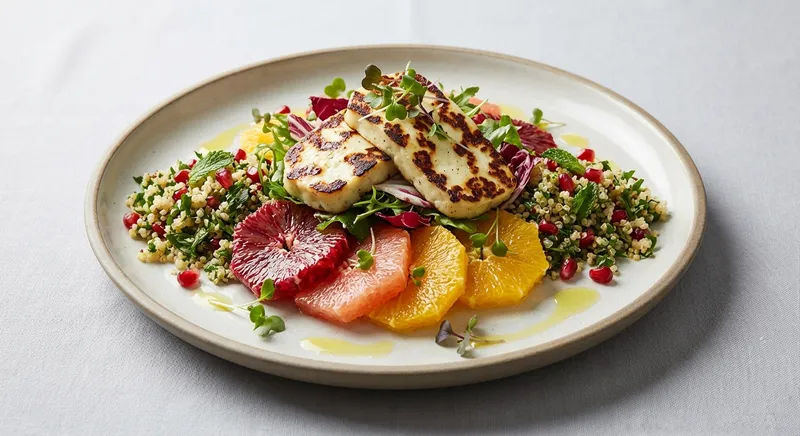
A vibrant Mediterranean-inspired salad that pairs salty, squeaky grilled halloumi with bright winter citrus and a herby quinoa tabbouleh. Textures pop — crisp, peppery arugula, tender citrus segments, nutty quinoa and a caramelized halloumi crust — all tied together with a citrus-sumac dressing for a balanced, elegant plate.
Rinse the quinoa thoroughly under cold running water in a fine-mesh sieve to remove the natural saponins that can taste bitter. Drain well. Rinsing gives the finished quinoa a cleaner, brighter flavor and prevents any residual bitterness.
Toast the drained quinoa dry in a medium saucepan over medium heat for 2–3 minutes, stirring constantly until it smells nutty. Toasting removes any remaining moisture and intensifies quinoa’s nutty aroma — it’s a small step that adds big flavor.
Add 480 ml water and a pinch of salt, bring to a vigorous boil, then reduce to the lowest simmer, cover tightly and cook for 12 minutes. Turn off the heat and let the covered pot steam for 8–10 minutes. Cooking at a gentle simmer and then letting it steam produces fluffy, fully-cooked grains rather than mushy or undercooked quinoa.
While the quinoa cooks, pat the halloumi slices dry with paper towel and cut into 1 cm (about 1/3–1/2 in) slices. Drying removes surface moisture so the cheese will sear instead of steam — that golden, slightly caramelized crust is critical for texture and flavor.
Heat a heavy frying pan or cast-iron skillet over medium-high heat until very hot. Brush the halloumi lightly with 1 tablespoon of olive oil and season very lightly with black pepper and 1/4 teaspoon of sumac (or a light dusting of lemon zest). Place the slices in the pan without crowding and sear 2–3 minutes per side until a deep golden crust forms. High heat creates the Maillard reaction that gives halloumi its irresistible savory crust while keeping the interior springy.
Segment the citrus over a bowl using a sharp knife: cut off top and bottom, slice away the peel and pith, then cut between membranes to release the segments and catch the juices. Reserve any collected juice for the dressing. Segmenting yields clean, membrane-free pieces that burst with juice on the fork and look elegant on the plate.
Make the dressing: whisk together the reserved citrus juice (about 2–3 tbsp depending on fruit), 3 tablespoons of olive oil, 3/4 teaspoon sumac (or 3/4 tsp lemon zest), a pinch of salt (be cautious — halloumi is naturally salty) and a generous grind of black pepper. The acidity from the citrus brightens the rich halloumi and oil; sumac amplifies that lemony tang and contributes a beautiful color.
Fluff the rested quinoa with a fork and spread it on a tray or wide bowl to let steam escape and cool slightly — this prevents the herbs and arugula from wilting when mixed in. While still warm (not hot), fold in the chopped mint and very finely diced red onion or shallot (if using). Warm quinoa holds aromatics better and helps marry flavors without cooking the herbs.
Toss the baby arugula with 1 tablespoon of the dressing (reserve the rest) and arrange on four plates as a vibrant base. Dressing the greens separately prevents the salad from becoming soggy and ensures evenly coated leaves.
Divide the quinoa tabbouleh among the plates on top of the arugula. Scatter the citrus segments around and top each portion with 80 g of the hot, grilled halloumi. Drizzle remaining dressing over the assembled salad and finish each plate with a light dusting of sumac or extra lemon zest and a final crack of black pepper. Assemble just before serving so the halloumi stays warm and crisp.
Optional finish: for extra texture, sprinkle with toasted pine nuts or chopped pistachios, or add a few torn mint leaves for aromatics. Serve immediately.
639
Calories
27g
Protein
50g
Carbs
38g
Fat
7g
Fiber
How did this recipe turn out? Let others know!
to rate this recipe
By Kayla Alaniz
A vibrant Mediterranean-inspired salad that pairs salty, squeaky grilled halloumi with bright winter citrus and a herby quinoa tabbouleh. Textures pop — crisp, peppery arugula, tender citrus segments, nutty quinoa and a caramelized halloumi crust — all tied together with a citrus-sumac dressing for a balanced, elegant plate.
Rinse the quinoa thoroughly under cold running water in a fine-mesh sieve to remove the natural saponins that can taste bitter. Drain well. Rinsing gives the finished quinoa a cleaner, brighter flavor and prevents any residual bitterness.
Toast the drained quinoa dry in a medium saucepan over medium heat for 2–3 minutes, stirring constantly until it smells nutty. Toasting removes any remaining moisture and intensifies quinoa’s nutty aroma — it’s a small step that adds big flavor.
Add 480 ml water and a pinch of salt, bring to a vigorous boil, then reduce to the lowest simmer, cover tightly and cook for 12 minutes. Turn off the heat and let the covered pot steam for 8–10 minutes. Cooking at a gentle simmer and then letting it steam produces fluffy, fully-cooked grains rather than mushy or undercooked quinoa.
While the quinoa cooks, pat the halloumi slices dry with paper towel and cut into 1 cm (about 1/3–1/2 in) slices. Drying removes surface moisture so the cheese will sear instead of steam — that golden, slightly caramelized crust is critical for texture and flavor.
Heat a heavy frying pan or cast-iron skillet over medium-high heat until very hot. Brush the halloumi lightly with 1 tablespoon of olive oil and season very lightly with black pepper and 1/4 teaspoon of sumac (or a light dusting of lemon zest). Place the slices in the pan without crowding and sear 2–3 minutes per side until a deep golden crust forms. High heat creates the Maillard reaction that gives halloumi its irresistible savory crust while keeping the interior springy.
Segment the citrus over a bowl using a sharp knife: cut off top and bottom, slice away the peel and pith, then cut between membranes to release the segments and catch the juices. Reserve any collected juice for the dressing. Segmenting yields clean, membrane-free pieces that burst with juice on the fork and look elegant on the plate.
Make the dressing: whisk together the reserved citrus juice (about 2–3 tbsp depending on fruit), 3 tablespoons of olive oil, 3/4 teaspoon sumac (or 3/4 tsp lemon zest), a pinch of salt (be cautious — halloumi is naturally salty) and a generous grind of black pepper. The acidity from the citrus brightens the rich halloumi and oil; sumac amplifies that lemony tang and contributes a beautiful color.
Fluff the rested quinoa with a fork and spread it on a tray or wide bowl to let steam escape and cool slightly — this prevents the herbs and arugula from wilting when mixed in. While still warm (not hot), fold in the chopped mint and very finely diced red onion or shallot (if using). Warm quinoa holds aromatics better and helps marry flavors without cooking the herbs.
Toss the baby arugula with 1 tablespoon of the dressing (reserve the rest) and arrange on four plates as a vibrant base. Dressing the greens separately prevents the salad from becoming soggy and ensures evenly coated leaves.
Divide the quinoa tabbouleh among the plates on top of the arugula. Scatter the citrus segments around and top each portion with 80 g of the hot, grilled halloumi. Drizzle remaining dressing over the assembled salad and finish each plate with a light dusting of sumac or extra lemon zest and a final crack of black pepper. Assemble just before serving so the halloumi stays warm and crisp.
Optional finish: for extra texture, sprinkle with toasted pine nuts or chopped pistachios, or add a few torn mint leaves for aromatics. Serve immediately.
639
Calories
27g
Protein
50g
Carbs
38g
Fat
7g
Fiber
Your Rating:
