By j
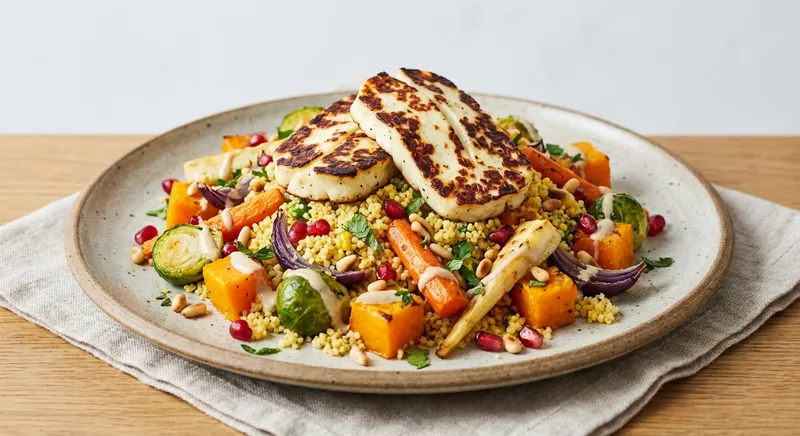
A bright, textural Mediterranean salad that pairs salty, squeaky grilled halloumi with sweet pan-roasted winter vegetables and fluffy couscous. Lemon and mint lift the rich cheese and olive oil, while pomegranate arils add jewel-like bursts of acidity and crunch — a restaurant-quality composed salad that comes together in under 25 minutes.
Bring ingredients together and prep: Pat the halloumi slices dry with paper towel (this helps achieve a golden crust rather than steaming), zest or measure the lemon, chop the mint, and have the cooked couscous and sliced vegetables ready. Doing mise en place keeps the fast cooking steps smooth and prevents overcooking delicate components.
Warm a nonstick or cast-iron skillet over medium-high heat. Add half (about 1/2 tbsp) of the olive oil and swirl to coat. Heat until the oil shimmers but is not smoking — this gives a hot surface for a quick sear that develops a caramelized crust on the halloumi without burning it.
Grill the halloumi: Place the halloumi slices in a single layer and press lightly so each slice contacts the pan. Sear 1.5–2 minutes per side until deep golden brown with clear char lines. Flip once. Why: high-heat searing creates the Maillard crust that contrasts the cheese’s salty, squeaky interior and prevents a rubbery texture from overcooking.
Remove the halloumi to a plate and tent loosely with foil to keep warm. Do not overcrowd the pan — if the slices touch, they will steam and won’t brown properly.
Pan-roast the winter vegetables: In the same skillet (add the remaining ~1/2 tbsp olive oil if the pan is dry), add the thinly sliced fennel, carrot, and beet. Spread them out so they have contact with the hot surface and cook undisturbed for 1.5–2 minutes to let them caramelize, then toss and cook another 2–3 minutes until edges are golden and vegetables are tender but still have bite. Why: quick, high-heat roasting concentrates sweetness and adds savory caramelized notes that balance the salty halloumi.
Season the vegetables lightly with salt and several grinds of black pepper while they cook — salt draws out a little moisture and helps caramelization; pepper adds background warmth.
Combine couscous and dressing: In a mixing bowl, add the cooked couscous, lemon juice, chopped mint, and pomegranate arils. Toss to combine so the couscous absorbs the lemon and mint flavor. Why: mixing the couscous with bright, acidic components while warm helps flavor absorption and keeps the salad lively.
Fold in the roasted vegetables while they are still warm so their juices mingle with the couscous. Taste and adjust seasoning with salt and pepper. Why: warm vegetables will loosen and carry more flavor into the couscous than cold ones.
Finish the dressing and assemble: Drizzle any pan fond (if there are brown bits in the skillet) and the remaining olive oil over the couscous-vegetable mix for an extra savory boost. Arrange the warm grilled halloumi over the bed of couscous and scatter the remaining pomegranate arils and mint on top. Squeeze a little extra lemon if desired. Why: assembling while components are warm maximizes aroma and melds flavors without wilting the mint or diluting the pomegranate’s pop.
Serve immediately: This salad is best eaten warm-to-room-temperature to enjoy the contrast between hot, salty halloumi and the fresh, acidic elements. Leftovers can be refrigerated for 1–2 days and are pleasant cold, though the halloumi’s texture will firm up.
530
Calories
23g
Protein
35g
Carbs
35g
Fat
5g
Fiber
How did this recipe turn out? Let others know!
to rate this recipe
By j
A bright, textural Mediterranean salad that pairs salty, squeaky grilled halloumi with sweet pan-roasted winter vegetables and fluffy couscous. Lemon and mint lift the rich cheese and olive oil, while pomegranate arils add jewel-like bursts of acidity and crunch — a restaurant-quality composed salad that comes together in under 25 minutes.
Bring ingredients together and prep: Pat the halloumi slices dry with paper towel (this helps achieve a golden crust rather than steaming), zest or measure the lemon, chop the mint, and have the cooked couscous and sliced vegetables ready. Doing mise en place keeps the fast cooking steps smooth and prevents overcooking delicate components.
Warm a nonstick or cast-iron skillet over medium-high heat. Add half (about 1/2 tbsp) of the olive oil and swirl to coat. Heat until the oil shimmers but is not smoking — this gives a hot surface for a quick sear that develops a caramelized crust on the halloumi without burning it.
Grill the halloumi: Place the halloumi slices in a single layer and press lightly so each slice contacts the pan. Sear 1.5–2 minutes per side until deep golden brown with clear char lines. Flip once. Why: high-heat searing creates the Maillard crust that contrasts the cheese’s salty, squeaky interior and prevents a rubbery texture from overcooking.
Remove the halloumi to a plate and tent loosely with foil to keep warm. Do not overcrowd the pan — if the slices touch, they will steam and won’t brown properly.
Pan-roast the winter vegetables: In the same skillet (add the remaining ~1/2 tbsp olive oil if the pan is dry), add the thinly sliced fennel, carrot, and beet. Spread them out so they have contact with the hot surface and cook undisturbed for 1.5–2 minutes to let them caramelize, then toss and cook another 2–3 minutes until edges are golden and vegetables are tender but still have bite. Why: quick, high-heat roasting concentrates sweetness and adds savory caramelized notes that balance the salty halloumi.
Season the vegetables lightly with salt and several grinds of black pepper while they cook — salt draws out a little moisture and helps caramelization; pepper adds background warmth.
Combine couscous and dressing: In a mixing bowl, add the cooked couscous, lemon juice, chopped mint, and pomegranate arils. Toss to combine so the couscous absorbs the lemon and mint flavor. Why: mixing the couscous with bright, acidic components while warm helps flavor absorption and keeps the salad lively.
Fold in the roasted vegetables while they are still warm so their juices mingle with the couscous. Taste and adjust seasoning with salt and pepper. Why: warm vegetables will loosen and carry more flavor into the couscous than cold ones.
Finish the dressing and assemble: Drizzle any pan fond (if there are brown bits in the skillet) and the remaining olive oil over the couscous-vegetable mix for an extra savory boost. Arrange the warm grilled halloumi over the bed of couscous and scatter the remaining pomegranate arils and mint on top. Squeeze a little extra lemon if desired. Why: assembling while components are warm maximizes aroma and melds flavors without wilting the mint or diluting the pomegranate’s pop.
Serve immediately: This salad is best eaten warm-to-room-temperature to enjoy the contrast between hot, salty halloumi and the fresh, acidic elements. Leftovers can be refrigerated for 1–2 days and are pleasant cold, though the halloumi’s texture will firm up.
530
Calories
23g
Protein
35g
Carbs
35g
Fat
5g
Fiber
Your Rating:
