By Ben Ludke
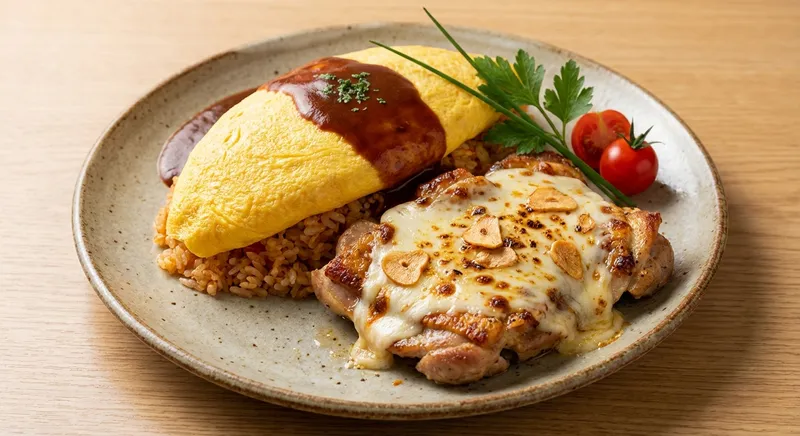
A comfort-forward yoshoku (Japanese-Western) classic elevated with juicy, garlic-scented chicken and a blanket of molten cheddar. Tender rice tossed in a tangy ketchup-soy glaze is wrapped in a silky, pillowy omelette—when cut, the cheese and garlic chicken meld with warm rice for a creamy, savory cascade.
Prep your mise en place: dice the onion, mince the garlic, cut the chicken into 3/4-inch pieces, shred the cheese (if not pre-shredded), and break the eggs into a wide shallow bowl. Having everything ready speeds the fast, high-heat cooking stages and prevents overcooking the eggs.
Season the chicken lightly with 1/2 tsp kosher salt and 1/4 tsp black pepper. Seasoning early builds flavor in the meat and ensures even seasoning across the dish.
Heat a 12-inch skillet over medium-high heat and add 1 tbsp oil. When the oil shimmers, add the chicken in a single layer (do not crowd). Sear without moving for 2–3 minutes to develop golden color, then stir and cook another 1–2 minutes until mostly cooked through. Searing creates Maillard flavors that are the backbone of the dish.
Push the chicken to one side of the pan, add the remaining 1 tbsp oil and 1 tbsp butter, then add the diced onion. Sauté until translucent and soft, about 3–4 minutes. Onions sweat and release sugars; cooking them into translucency adds sweetness that complements the ketchup base.
Add the minced garlic and cook for 30–45 seconds until fragrant — don’t brown it. Garlic becomes bitter if overcooked; a short burst will release its aromatics without harshness.
Stir the chicken back together with the onions, then add the cooked rice, ketchup, soy sauce, remaining 1/2 tsp kosher salt (adjust later), 1 tsp sugar (optional), and 1/4 tsp black pepper. Toss over medium heat until the rice is evenly coated and heated through, about 3–4 minutes. The ketchup-soy glaze should cling to the grains; the sugar tames ketchup acidity and rounds the flavor.
Taste and adjust seasoning — more salt, soy, or ketchup as needed. Stir in half of the shredded cheddar (about 1/2 cup) so each bite has pockets of melty cheese. Mixing cheese into the rice imparts creaminess and helps bind the omurice filling.
Transfer the rice-and-chicken filling to a warm platter and wipe out the skillet quickly with a paper towel. Keeping the pan hot but clean ensures you get the best texture and temperature for the omelettes.
Beat two eggs per omelette (2 eggs per serving) gently with a pinch of salt — do not over-whisk; you want some air but not froth. Over-whisking makes the omelette too airy and prone to tearing; gentle mixing yields a tender curd.
Heat a nonstick 8-inch skillet over medium-low and add 1/2 tbsp butter. When the butter melts and the surface is glossy, pour in two beaten eggs and immediately swirl to form a thin, even layer. Cooking on medium-low gives you control to make a silky, barely set omelette rather than a dry rubbery one.
When the eggs are mostly set but still slightly glossy on top (about 45–60 seconds), slide 1/4 of the rice mixture into the center of the omelette and sprinkle a tablespoon of the remaining cheddar on top of the filling. Leaving the eggs slightly undercooked allows the residual heat to finish them while keeping the interior creamy.
Fold the sides of the omelette over the filling with a spatula, creating an oblong parcel. Carefully invert the omelette onto a plate seam-side down, so the glossy side is up for an attractive finish. Repeat to make four omurice parcels.
Finish: dot each omelette with the remaining 1/2 tbsp butter while still warm so it melts and gives a sheen. Garnish with sliced green onions and toasted sesame seeds. The melted butter adds gloss and a rounded, buttery note.
To serve: slice across the middle to show the cheesy interior, or serve whole for an elegant presentation. Encourage diners to break the omelette to let the cheese and rice mingle—the moment the omelette is cut is the signature experience of omurice.
915
Calories
55g
Protein
69g
Carbs
45g
Fat
1g
Fiber
How did this recipe turn out? Let others know!
to rate this recipe
By Ben Ludke
A comfort-forward yoshoku (Japanese-Western) classic elevated with juicy, garlic-scented chicken and a blanket of molten cheddar. Tender rice tossed in a tangy ketchup-soy glaze is wrapped in a silky, pillowy omelette—when cut, the cheese and garlic chicken meld with warm rice for a creamy, savory cascade.
Prep your mise en place: dice the onion, mince the garlic, cut the chicken into 3/4-inch pieces, shred the cheese (if not pre-shredded), and break the eggs into a wide shallow bowl. Having everything ready speeds the fast, high-heat cooking stages and prevents overcooking the eggs.
Season the chicken lightly with 1/2 tsp kosher salt and 1/4 tsp black pepper. Seasoning early builds flavor in the meat and ensures even seasoning across the dish.
Heat a 12-inch skillet over medium-high heat and add 1 tbsp oil. When the oil shimmers, add the chicken in a single layer (do not crowd). Sear without moving for 2–3 minutes to develop golden color, then stir and cook another 1–2 minutes until mostly cooked through. Searing creates Maillard flavors that are the backbone of the dish.
Push the chicken to one side of the pan, add the remaining 1 tbsp oil and 1 tbsp butter, then add the diced onion. Sauté until translucent and soft, about 3–4 minutes. Onions sweat and release sugars; cooking them into translucency adds sweetness that complements the ketchup base.
Add the minced garlic and cook for 30–45 seconds until fragrant — don’t brown it. Garlic becomes bitter if overcooked; a short burst will release its aromatics without harshness.
Stir the chicken back together with the onions, then add the cooked rice, ketchup, soy sauce, remaining 1/2 tsp kosher salt (adjust later), 1 tsp sugar (optional), and 1/4 tsp black pepper. Toss over medium heat until the rice is evenly coated and heated through, about 3–4 minutes. The ketchup-soy glaze should cling to the grains; the sugar tames ketchup acidity and rounds the flavor.
Taste and adjust seasoning — more salt, soy, or ketchup as needed. Stir in half of the shredded cheddar (about 1/2 cup) so each bite has pockets of melty cheese. Mixing cheese into the rice imparts creaminess and helps bind the omurice filling.
Transfer the rice-and-chicken filling to a warm platter and wipe out the skillet quickly with a paper towel. Keeping the pan hot but clean ensures you get the best texture and temperature for the omelettes.
Beat two eggs per omelette (2 eggs per serving) gently with a pinch of salt — do not over-whisk; you want some air but not froth. Over-whisking makes the omelette too airy and prone to tearing; gentle mixing yields a tender curd.
Heat a nonstick 8-inch skillet over medium-low and add 1/2 tbsp butter. When the butter melts and the surface is glossy, pour in two beaten eggs and immediately swirl to form a thin, even layer. Cooking on medium-low gives you control to make a silky, barely set omelette rather than a dry rubbery one.
When the eggs are mostly set but still slightly glossy on top (about 45–60 seconds), slide 1/4 of the rice mixture into the center of the omelette and sprinkle a tablespoon of the remaining cheddar on top of the filling. Leaving the eggs slightly undercooked allows the residual heat to finish them while keeping the interior creamy.
Fold the sides of the omelette over the filling with a spatula, creating an oblong parcel. Carefully invert the omelette onto a plate seam-side down, so the glossy side is up for an attractive finish. Repeat to make four omurice parcels.
Finish: dot each omelette with the remaining 1/2 tbsp butter while still warm so it melts and gives a sheen. Garnish with sliced green onions and toasted sesame seeds. The melted butter adds gloss and a rounded, buttery note.
To serve: slice across the middle to show the cheesy interior, or serve whole for an elegant presentation. Encourage diners to break the omelette to let the cheese and rice mingle—the moment the omelette is cut is the signature experience of omurice.
915
Calories
55g
Protein
69g
Carbs
45g
Fat
1g
Fiber
Your Rating:
