By Chevon Flores
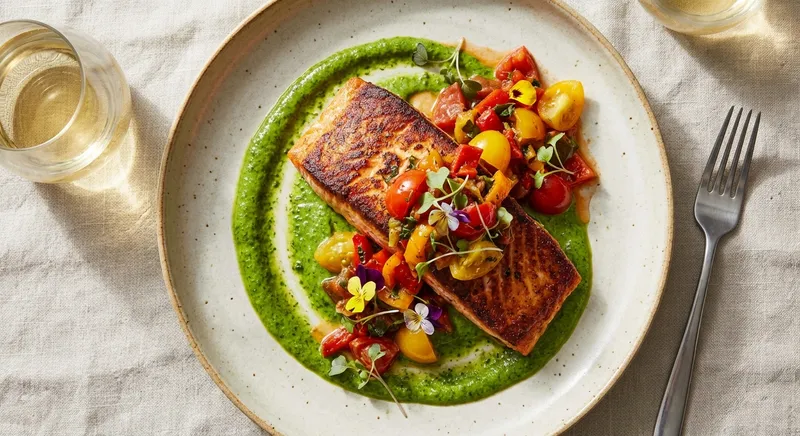
Seared salmon fillets glazed with a bright, creamy Peruvian aji verde and served on a warm tomato–pepper compote. The dish balances the salmon’s rich, buttery texture with a herbaceous, tangy aji verde and a caramelized, slightly sweet vegetable base — vivid, fresh and restaurant-level without fuss.
Pat the salmon dry and season both sides with 1 tsp kosher salt and 1/2 tsp freshly ground black pepper. Drying the skin removes surface moisture so the skin crisps rather than steams when it hits the hot pan.
Blend the aji verde: in a food processor or blender add the cilantro, jalapeño (seeded if you want milder heat), 2 cloves garlic, 1/3 cup mayonnaise, 2 tbsp Greek yogurt, 2 tbsp lime juice, 2 tbsp extra virgin olive oil, 3/4 tsp kosher salt and 1/4 tsp black pepper. Pulse until smooth, then taste and adjust acidity or salt. If the sauce is too thick, blend in 1 tsp milk at a time to reach a loose, drizzleable consistency. Making the sauce first allows flavors to meld while you cook the salmon and gives you time to adjust heat and acidity.
Prepare the tomato–pepper compote: heat 1 tbsp olive oil in a wide skillet over medium heat. Add the diced onion and a pinch of salt; cook, stirring occasionally, for 6–8 minutes until the onion is translucent and beginning to brown. Sweating the onion at moderate heat extracts sweetness and builds the base flavor without burning.
Add 2 minced garlic cloves and cook for 30–45 seconds until fragrant — you want the raw edge of the garlic to soften and flavor the oil but not burn it, which would turn bitter.
Increase heat to medium-high, add the diced bell pepper and cook 3–4 minutes until it softens and the edges take on a little color. Then add the diced tomatoes, 1/2 tsp smoked paprika, and 1/2 tsp sugar (if using). Cook the mixture, stirring occasionally, for 6–8 minutes until the tomatoes break down and the compote is glossy but still slightly chunky. Reducing the compote concentrates flavor and gives a pleasant contrast to the bright aji verde.
Taste the compote and adjust salt and a pinch of black pepper. Turn the compote to low and keep warm while you sear the salmon. Keeping it warm lets the flavors marry without over-reducing.
Heat a large skillet (preferably cast-iron) over medium-high heat until hot. Add 2 tbsp olive oil and swirl to coat. A hot pan creates an immediate sear on contact, which locks flavor into a golden crust.
Place the salmon fillets skin-side down, pressing gently for 10 seconds so the skin makes even contact with the pan (this prevents cupping). Cook skin-side down for 4–5 minutes without moving them, until the skin is crisp and the fish is cooked about two-thirds of the way through as seen on the side.
Flip the fillets and cook for an additional 1–2 minutes depending on thickness for medium doneness (internal temperature ~125–130°F / 52–54°C). If you prefer well done, cook to 140°F (60°C). A quick flip finishes the fish and preserves a tender center; overcooking dries salmon and blunts the flavors.
Rest the salmon on a warm plate for 2 minutes. Resting allows juices and the residual heat to finish gently cooking the center and keeps the fillet moist.
To serve: spoon a generous bed of the warm tomato–pepper compote onto each plate, place a salmon fillet on top (skin-side up for presentation if crisp), and drizzle or spoon 2–3 tbsp of aji verde over the fish. Garnish with a small cilantro sprig and a lime wedge. The warm compote and cool, tangy aji verde create a dynamic temperature and flavor contrast.
If you made homemade mayonnaise (optional): whisk 1 large egg yolk with 1/2 tsp lemon juice or vinegar, then drizzle in up to 1/2 cup neutral oil while whisking to emulsify (or use a blender). Use 1/3 cup of that mayo in the aji verde and refrigerate the remainder. Homemade mayo brightens the sauce and uses the egg from your ingredient list; ensure eggs are fresh and handled safely.
678
Calories
36.5g
Protein
10.8g
Carbs
54.4g
Fat
2.44g
Fiber
How did this recipe turn out? Let others know!
to rate this recipe
By Chevon Flores
Seared salmon fillets glazed with a bright, creamy Peruvian aji verde and served on a warm tomato–pepper compote. The dish balances the salmon’s rich, buttery texture with a herbaceous, tangy aji verde and a caramelized, slightly sweet vegetable base — vivid, fresh and restaurant-level without fuss.
Pat the salmon dry and season both sides with 1 tsp kosher salt and 1/2 tsp freshly ground black pepper. Drying the skin removes surface moisture so the skin crisps rather than steams when it hits the hot pan.
Blend the aji verde: in a food processor or blender add the cilantro, jalapeño (seeded if you want milder heat), 2 cloves garlic, 1/3 cup mayonnaise, 2 tbsp Greek yogurt, 2 tbsp lime juice, 2 tbsp extra virgin olive oil, 3/4 tsp kosher salt and 1/4 tsp black pepper. Pulse until smooth, then taste and adjust acidity or salt. If the sauce is too thick, blend in 1 tsp milk at a time to reach a loose, drizzleable consistency. Making the sauce first allows flavors to meld while you cook the salmon and gives you time to adjust heat and acidity.
Prepare the tomato–pepper compote: heat 1 tbsp olive oil in a wide skillet over medium heat. Add the diced onion and a pinch of salt; cook, stirring occasionally, for 6–8 minutes until the onion is translucent and beginning to brown. Sweating the onion at moderate heat extracts sweetness and builds the base flavor without burning.
Add 2 minced garlic cloves and cook for 30–45 seconds until fragrant — you want the raw edge of the garlic to soften and flavor the oil but not burn it, which would turn bitter.
Increase heat to medium-high, add the diced bell pepper and cook 3–4 minutes until it softens and the edges take on a little color. Then add the diced tomatoes, 1/2 tsp smoked paprika, and 1/2 tsp sugar (if using). Cook the mixture, stirring occasionally, for 6–8 minutes until the tomatoes break down and the compote is glossy but still slightly chunky. Reducing the compote concentrates flavor and gives a pleasant contrast to the bright aji verde.
Taste the compote and adjust salt and a pinch of black pepper. Turn the compote to low and keep warm while you sear the salmon. Keeping it warm lets the flavors marry without over-reducing.
Heat a large skillet (preferably cast-iron) over medium-high heat until hot. Add 2 tbsp olive oil and swirl to coat. A hot pan creates an immediate sear on contact, which locks flavor into a golden crust.
Place the salmon fillets skin-side down, pressing gently for 10 seconds so the skin makes even contact with the pan (this prevents cupping). Cook skin-side down for 4–5 minutes without moving them, until the skin is crisp and the fish is cooked about two-thirds of the way through as seen on the side.
Flip the fillets and cook for an additional 1–2 minutes depending on thickness for medium doneness (internal temperature ~125–130°F / 52–54°C). If you prefer well done, cook to 140°F (60°C). A quick flip finishes the fish and preserves a tender center; overcooking dries salmon and blunts the flavors.
Rest the salmon on a warm plate for 2 minutes. Resting allows juices and the residual heat to finish gently cooking the center and keeps the fillet moist.
To serve: spoon a generous bed of the warm tomato–pepper compote onto each plate, place a salmon fillet on top (skin-side up for presentation if crisp), and drizzle or spoon 2–3 tbsp of aji verde over the fish. Garnish with a small cilantro sprig and a lime wedge. The warm compote and cool, tangy aji verde create a dynamic temperature and flavor contrast.
If you made homemade mayonnaise (optional): whisk 1 large egg yolk with 1/2 tsp lemon juice or vinegar, then drizzle in up to 1/2 cup neutral oil while whisking to emulsify (or use a blender). Use 1/3 cup of that mayo in the aji verde and refrigerate the remainder. Homemade mayo brightens the sauce and uses the egg from your ingredient list; ensure eggs are fresh and handled safely.
678
Calories
36.5g
Protein
10.8g
Carbs
54.4g
Fat
2.44g
Fiber
Your Rating:
