By Amanda Yapejian
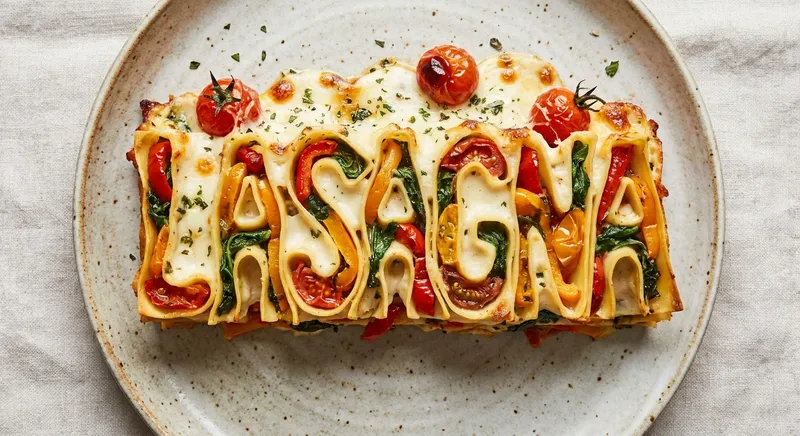
A sun-ripe, vegetable-forward lasagna that layers sweet roasted peppers, caramelized onions and a robust fresh tomato ragù with a silky béchamel and three cheeses. The result is a deeply savory, slightly sweet, and satisfyingly creamy lasagna with bright herb notes — a restaurant-quality centerpiece that celebrates tomatoes and peppers in every tender bite.
Roast the peppers: preheat your oven to 450°F (230°C). Halve and seed the peppers, rub with 1 tbsp olive oil, place cut-side down on a sheet pan and roast until the skins blister and blacken (18–25 minutes). Why: high-heat roasting chars the skins and concentrates the pepper’s natural sugars for a smoky-sweet flavor; cooling and peeling keeps the flesh tender and prevents bitterness from the charred skin.
Prepare the tomatoes: while peppers roast, score a small X on the bottom of each tomato and blanch them in boiling water for 30–45 seconds, then shock in an ice bath. Peel, core, and roughly chop (you should have roughly 1.2 kg after trimming). Why: blanching makes peeling quick and preserves bright tomato flavor; using fresh tomatoes keeps the ragù bright and slightly chunky rather than one-note canned acidity.
Caramelize the onions and garlic: in a large sauté pan, heat 2 tbsp olive oil over medium heat. Add the sliced onions with a pinch of salt and cook, stirring occasionally, until deeply golden and aromatic — about 15–18 minutes. Add the minced garlic during the last 2 minutes to soften and release flavor without burning. Why: slow caramelization develops sweet, savory complexity that gives the tomato sauce depth without adding meat.
Build the tomato–pepper ragù: push the onions to the side, increase heat to medium-high, add 1 tbsp olive oil and the tomato paste; toast the paste 30–45 seconds to deepen its flavor (this blooms the concentrated sugars). Deglaze with the red wine (if using) to lift fond from the pan. Add the chopped tomatoes and roasted, peeled, sliced peppers, oregano, sugar, 1 tsp salt and 1/2 tsp black pepper. Simmer gently, uncovered, for 25–30 minutes until the sauce thickens and flavors concentrate; taste and adjust salt/sugar. Why: to reduce and concentrate water-heavy fresh tomatoes into a stickier ragù that won’t make the lasagna watery — and to allow the pepper and tomato flavors to marry.
Preheat oven and prepare pasta: preheat oven to 375°F (190°C). If using no-boil noodles, you can use directly; if dry noodles recommend boiling for 6–8 minutes until very al dente, then drain and lay flat on a sheet to cool slightly. Why: partially cooking noodles ensures the center of the lasagna cooks through without over-softening the top layers.
Make the béchamel (cream sauce): in a medium saucepan melt the butter over medium heat. Whisk in the flour and cook 1–2 minutes to form a blond roux (this removes raw flour taste). Slowly whisk in the milk in a steady stream, scraping the bottom until smooth. Simmer gently until thick enough to coat the back of a spoon (6–8 minutes). Season with 1/2 tsp salt, a generous grind of black pepper and 1/4 tsp freshly grated nutmeg if desired. Why: béchamel adds silkiness and body that balances the bright tomato ragù and provides a luscious mouthfeel.
Mix the ricotta filling: in a bowl combine the ricotta with 1/2 cup (about 50 g) of the grated Parmesan, 1/2 tsp salt, 1/4 tsp black pepper and half of the torn basil. Stir to loosen the ricotta so it’s easy to spread. Why: seasoning ricotta before assembly ensures every layer is flavorful; mixing with a little Parmesan adds umami and helps the filling set.
Assemble the lasagna: spread a thin layer (about 1 cup) of the tomato–pepper ragù on the bottom of a 9x13-inch (23x33 cm) baking dish (this prevents sticking and ensures even moisture). Layer 3–4 lasagna sheets in a single layer (cut to fit if necessary), smear 1/3 of the ricotta mixture over the noodles, drizzle about 1/3 of the béchamel (about 3–4 tbsp), sprinkle with 1/3 of the shredded mozzarella, and ladle 1 cup of ragù. Repeat two more times to create 3 layers, finishing with béchamel, remaining mozzarella and the reserved Parmesan. Scatter the remaining basil on top and a light drizzle of olive oil. Why: building in thin layers controls moisture and prevents a soggy or collapsing lasagna; the top béchamel promotes a golden, creamy crust while the Parmesan aids in caramelization.
Cover and bake: tent the dish with foil (shiny side toward the lasagna to avoid over-browning) and bake at 375°F (190°C) for 25 minutes. Remove the foil and bake another 20–25 minutes until the top is bubbly and golden. Why: starting covered lets the internal temperature rise and prevents the top from drying while uncovered baking finishes the color and forms a pleasing crust.
Rest before serving: remove from oven and allow the lasagna to rest 15–20 minutes before slicing. Why: resting lets the sauces set and the layers firm up, so slices hold together and flavors meld.
Serve: cut into 6 generous pieces. Garnish with extra torn basil and a light grating of Parmigiano-Reggiano. Why: the fresh herb lifts the rich flavors and the last dusting of Parmesan adds bright umami as you present.
803
Calories
41g
Protein
59g
Carbs
43g
Fat
6g
Fiber
How did this recipe turn out? Let others know!
to rate this recipe
By Amanda Yapejian
A sun-ripe, vegetable-forward lasagna that layers sweet roasted peppers, caramelized onions and a robust fresh tomato ragù with a silky béchamel and three cheeses. The result is a deeply savory, slightly sweet, and satisfyingly creamy lasagna with bright herb notes — a restaurant-quality centerpiece that celebrates tomatoes and peppers in every tender bite.
Roast the peppers: preheat your oven to 450°F (230°C). Halve and seed the peppers, rub with 1 tbsp olive oil, place cut-side down on a sheet pan and roast until the skins blister and blacken (18–25 minutes). Why: high-heat roasting chars the skins and concentrates the pepper’s natural sugars for a smoky-sweet flavor; cooling and peeling keeps the flesh tender and prevents bitterness from the charred skin.
Prepare the tomatoes: while peppers roast, score a small X on the bottom of each tomato and blanch them in boiling water for 30–45 seconds, then shock in an ice bath. Peel, core, and roughly chop (you should have roughly 1.2 kg after trimming). Why: blanching makes peeling quick and preserves bright tomato flavor; using fresh tomatoes keeps the ragù bright and slightly chunky rather than one-note canned acidity.
Caramelize the onions and garlic: in a large sauté pan, heat 2 tbsp olive oil over medium heat. Add the sliced onions with a pinch of salt and cook, stirring occasionally, until deeply golden and aromatic — about 15–18 minutes. Add the minced garlic during the last 2 minutes to soften and release flavor without burning. Why: slow caramelization develops sweet, savory complexity that gives the tomato sauce depth without adding meat.
Build the tomato–pepper ragù: push the onions to the side, increase heat to medium-high, add 1 tbsp olive oil and the tomato paste; toast the paste 30–45 seconds to deepen its flavor (this blooms the concentrated sugars). Deglaze with the red wine (if using) to lift fond from the pan. Add the chopped tomatoes and roasted, peeled, sliced peppers, oregano, sugar, 1 tsp salt and 1/2 tsp black pepper. Simmer gently, uncovered, for 25–30 minutes until the sauce thickens and flavors concentrate; taste and adjust salt/sugar. Why: to reduce and concentrate water-heavy fresh tomatoes into a stickier ragù that won’t make the lasagna watery — and to allow the pepper and tomato flavors to marry.
Preheat oven and prepare pasta: preheat oven to 375°F (190°C). If using no-boil noodles, you can use directly; if dry noodles recommend boiling for 6–8 minutes until very al dente, then drain and lay flat on a sheet to cool slightly. Why: partially cooking noodles ensures the center of the lasagna cooks through without over-softening the top layers.
Make the béchamel (cream sauce): in a medium saucepan melt the butter over medium heat. Whisk in the flour and cook 1–2 minutes to form a blond roux (this removes raw flour taste). Slowly whisk in the milk in a steady stream, scraping the bottom until smooth. Simmer gently until thick enough to coat the back of a spoon (6–8 minutes). Season with 1/2 tsp salt, a generous grind of black pepper and 1/4 tsp freshly grated nutmeg if desired. Why: béchamel adds silkiness and body that balances the bright tomato ragù and provides a luscious mouthfeel.
Mix the ricotta filling: in a bowl combine the ricotta with 1/2 cup (about 50 g) of the grated Parmesan, 1/2 tsp salt, 1/4 tsp black pepper and half of the torn basil. Stir to loosen the ricotta so it’s easy to spread. Why: seasoning ricotta before assembly ensures every layer is flavorful; mixing with a little Parmesan adds umami and helps the filling set.
Assemble the lasagna: spread a thin layer (about 1 cup) of the tomato–pepper ragù on the bottom of a 9x13-inch (23x33 cm) baking dish (this prevents sticking and ensures even moisture). Layer 3–4 lasagna sheets in a single layer (cut to fit if necessary), smear 1/3 of the ricotta mixture over the noodles, drizzle about 1/3 of the béchamel (about 3–4 tbsp), sprinkle with 1/3 of the shredded mozzarella, and ladle 1 cup of ragù. Repeat two more times to create 3 layers, finishing with béchamel, remaining mozzarella and the reserved Parmesan. Scatter the remaining basil on top and a light drizzle of olive oil. Why: building in thin layers controls moisture and prevents a soggy or collapsing lasagna; the top béchamel promotes a golden, creamy crust while the Parmesan aids in caramelization.
Cover and bake: tent the dish with foil (shiny side toward the lasagna to avoid over-browning) and bake at 375°F (190°C) for 25 minutes. Remove the foil and bake another 20–25 minutes until the top is bubbly and golden. Why: starting covered lets the internal temperature rise and prevents the top from drying while uncovered baking finishes the color and forms a pleasing crust.
Rest before serving: remove from oven and allow the lasagna to rest 15–20 minutes before slicing. Why: resting lets the sauces set and the layers firm up, so slices hold together and flavors meld.
Serve: cut into 6 generous pieces. Garnish with extra torn basil and a light grating of Parmigiano-Reggiano. Why: the fresh herb lifts the rich flavors and the last dusting of Parmesan adds bright umami as you present.
803
Calories
41g
Protein
59g
Carbs
43g
Fat
6g
Fiber
Your Rating:
