By emensah m
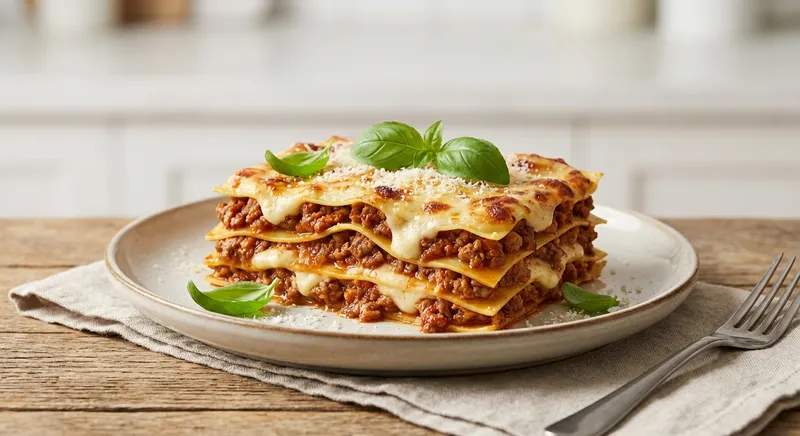
This is a restaurant-quality Italian lasagna that layers tender, freshly rolled pasta sheets with a savory slow-cooked meat ragu, creamy ricotta mix and a silky béchamel. The combination of homemade pasta (for delicate texture), a wine-laced tomato ragu (for depth), and a nutmeg-kissed béchamel (for richness) creates a balanced, luxurious lasagna with comfort-house flavor and lift.
Make the fresh pasta dough: on a clean work surface mound 300 g all-purpose flour and make a large well. Crack 4 large eggs into the well, add 1 tbsp olive oil and 1 tsp salt. Using a fork, gently whisk the eggs and gradually draw flour from the inside edges into the eggs until a shaggy dough forms. Why: the well method lets you control hydration and develop gluten slowly for pasta that’s tender but elastic — essential for rolling thin sheets that won’t crack in the oven.
Knead the dough for 8–10 minutes until smooth and elastic (it should spring back when pressed). If the dough is sticky add a few grams of flour; if dry add a teaspoon of water. Shape into a ball, coat lightly with oil and cover with plastic wrap. Rest at room temperature 30 minutes. Why: kneading develops the gluten network that gives sheets structure, and resting relaxes the gluten so the dough rolls out smoothly without snapping back.
While the dough rests, start the ragu: heat 2 tbsp olive oil in a heavy-bottomed sauté pan over medium heat. Add the diced onion and a pinch of salt and sweat until translucent (5–7 minutes) to coax out sweetness. Add the minced garlic and cook 30–45 seconds until fragrant—don’t brown it. Why: sweating the onion builds a sweet base; browning garlic would add bitterness, but a quick toast releases its aroma.
Increase heat to medium-high. Add the ground beef, breaking it up with a spoon. Brown it until you have small caramelized bits (6–8 minutes). Why: properly browning creates Maillard compounds that give the ragu a deeper, savory profile — don’t rush this step or the sauce will taste flat.
If using, add 1/2 cup red wine and briskly boil for 2–3 minutes to reduce and concentrate the flavor; scrape any browned bits from the pan. Why: reducing wine intensifies its flavor and cooks off alcohol, leaving acidity and depth that lift the tomatoes.
Stir in the tomato paste and cook 1 minute to caramelize it slightly (this intensifies tomato flavor). Add the crushed tomatoes, 1 tsp sugar, 1 tsp oregano, 1 tsp basil, and a bay leaf if you like. Season with salt and pepper. Bring to a gentle simmer, reduce heat and cook uncovered 30–40 minutes, stirring occasionally, until the sauce reduces and flavors concentrate. Why: a longer simmer allows tomato acidity to mellow and meld with the meat.
Make the béchamel: in a saucepan melt 4 tbsp (56 g) unsalted butter over medium heat. Whisk in 4 tbsp flour and cook 1–2 minutes to make a blond roux (this eliminates the raw flour taste and begins thickening). Slowly whisk in 4 cups warm milk in a steady stream to avoid lumps. Cook, whisking, until the sauce thickens to a pourable, creamy consistency (about 6–8 minutes). Season with salt, pepper and a pinch of freshly grated nutmeg. Why: the roux + warm milk creates a silkier béchamel; nutmeg brightens dairy flavors and is a classic pairing with creamy sauces.
Prepare the cheese layer: in a bowl combine 15 oz ricotta, 1 large egg, 1/2 cup grated Parmesan, 2 tbsp chopped parsley, and a pinch of salt and pepper. Why: the egg binds the ricotta so it holds shape when baked; Parmesan adds umami and salt without making the layer grainy.
Roll and precook pasta sheets: divide dough into 4 portions. Keep unused portions covered. Using a pasta machine or rolling pin, roll each portion into long thin sheets (target thickness 1–1.5 mm or setting 5–6 on many machines). Cut sheets to fit a 9x13-inch baking dish (you’ll need 3–4 sheets per layer depending on overlap). Blanche the sheets in salted boiling water 30–45 seconds until they just soften (they’ll finish cooking in the oven), then transfer to an ice-bath briefly and lay flat on a towel. Why: blanching removes the raw flour taste and prevents sheets from swelling in the oven; cooling stops cooking so they won’t become mushy.
Preheat oven to 375°F (190°C). Lightly butter a 9x13-inch baking dish. Why: a properly preheated oven and greased dish ensure even baking and prevent sticking.
Assemble the lasagna: spoon a thin layer of ragu on the bottom (this prevents sticking), then a light drizzle of béchamel. Lay 3–4 pasta sheets to cover. Spread one-third of the ricotta mixture, then 1 cup ragu, 1/2 cup béchamel, and sprinkle about 1 cup mozzarella. Repeat two more times (3 layers total), finishing with pasta topped with remaining béchamel and the rest of the mozzarella and a generous dusting of Parmesan. Why: layering in this order ensures each bite has balanced meat, cream and cheese; béchamel on top creates a silky top crust and prevents over-browning of the cheeses underneath.
Cover tightly with foil (shiny side to the food) and bake 25 minutes. Remove foil and bake an additional 15–20 minutes until cheese is golden and bubbling. If the top browns too quickly, tent with foil. Why: foil traps steam to finish cooking without drying; removing it toward the end lets the top caramelize and develop color.
Rest 15–20 minutes before slicing. Garnish with fresh basil leaves and a drizzle of good olive oil. Why: resting allows sauces to settle so slices hold shape and flavors rediscover balance — impatient cutting yields a runny, messy dish.
1080
Calories
65g
Protein
67g
Carbs
62g
Fat
4g
Fiber
How did this recipe turn out? Let others know!
to rate this recipe
By emensah m
This is a restaurant-quality Italian lasagna that layers tender, freshly rolled pasta sheets with a savory slow-cooked meat ragu, creamy ricotta mix and a silky béchamel. The combination of homemade pasta (for delicate texture), a wine-laced tomato ragu (for depth), and a nutmeg-kissed béchamel (for richness) creates a balanced, luxurious lasagna with comfort-house flavor and lift.
Make the fresh pasta dough: on a clean work surface mound 300 g all-purpose flour and make a large well. Crack 4 large eggs into the well, add 1 tbsp olive oil and 1 tsp salt. Using a fork, gently whisk the eggs and gradually draw flour from the inside edges into the eggs until a shaggy dough forms. Why: the well method lets you control hydration and develop gluten slowly for pasta that’s tender but elastic — essential for rolling thin sheets that won’t crack in the oven.
Knead the dough for 8–10 minutes until smooth and elastic (it should spring back when pressed). If the dough is sticky add a few grams of flour; if dry add a teaspoon of water. Shape into a ball, coat lightly with oil and cover with plastic wrap. Rest at room temperature 30 minutes. Why: kneading develops the gluten network that gives sheets structure, and resting relaxes the gluten so the dough rolls out smoothly without snapping back.
While the dough rests, start the ragu: heat 2 tbsp olive oil in a heavy-bottomed sauté pan over medium heat. Add the diced onion and a pinch of salt and sweat until translucent (5–7 minutes) to coax out sweetness. Add the minced garlic and cook 30–45 seconds until fragrant—don’t brown it. Why: sweating the onion builds a sweet base; browning garlic would add bitterness, but a quick toast releases its aroma.
Increase heat to medium-high. Add the ground beef, breaking it up with a spoon. Brown it until you have small caramelized bits (6–8 minutes). Why: properly browning creates Maillard compounds that give the ragu a deeper, savory profile — don’t rush this step or the sauce will taste flat.
If using, add 1/2 cup red wine and briskly boil for 2–3 minutes to reduce and concentrate the flavor; scrape any browned bits from the pan. Why: reducing wine intensifies its flavor and cooks off alcohol, leaving acidity and depth that lift the tomatoes.
Stir in the tomato paste and cook 1 minute to caramelize it slightly (this intensifies tomato flavor). Add the crushed tomatoes, 1 tsp sugar, 1 tsp oregano, 1 tsp basil, and a bay leaf if you like. Season with salt and pepper. Bring to a gentle simmer, reduce heat and cook uncovered 30–40 minutes, stirring occasionally, until the sauce reduces and flavors concentrate. Why: a longer simmer allows tomato acidity to mellow and meld with the meat.
Make the béchamel: in a saucepan melt 4 tbsp (56 g) unsalted butter over medium heat. Whisk in 4 tbsp flour and cook 1–2 minutes to make a blond roux (this eliminates the raw flour taste and begins thickening). Slowly whisk in 4 cups warm milk in a steady stream to avoid lumps. Cook, whisking, until the sauce thickens to a pourable, creamy consistency (about 6–8 minutes). Season with salt, pepper and a pinch of freshly grated nutmeg. Why: the roux + warm milk creates a silkier béchamel; nutmeg brightens dairy flavors and is a classic pairing with creamy sauces.
Prepare the cheese layer: in a bowl combine 15 oz ricotta, 1 large egg, 1/2 cup grated Parmesan, 2 tbsp chopped parsley, and a pinch of salt and pepper. Why: the egg binds the ricotta so it holds shape when baked; Parmesan adds umami and salt without making the layer grainy.
Roll and precook pasta sheets: divide dough into 4 portions. Keep unused portions covered. Using a pasta machine or rolling pin, roll each portion into long thin sheets (target thickness 1–1.5 mm or setting 5–6 on many machines). Cut sheets to fit a 9x13-inch baking dish (you’ll need 3–4 sheets per layer depending on overlap). Blanche the sheets in salted boiling water 30–45 seconds until they just soften (they’ll finish cooking in the oven), then transfer to an ice-bath briefly and lay flat on a towel. Why: blanching removes the raw flour taste and prevents sheets from swelling in the oven; cooling stops cooking so they won’t become mushy.
Preheat oven to 375°F (190°C). Lightly butter a 9x13-inch baking dish. Why: a properly preheated oven and greased dish ensure even baking and prevent sticking.
Assemble the lasagna: spoon a thin layer of ragu on the bottom (this prevents sticking), then a light drizzle of béchamel. Lay 3–4 pasta sheets to cover. Spread one-third of the ricotta mixture, then 1 cup ragu, 1/2 cup béchamel, and sprinkle about 1 cup mozzarella. Repeat two more times (3 layers total), finishing with pasta topped with remaining béchamel and the rest of the mozzarella and a generous dusting of Parmesan. Why: layering in this order ensures each bite has balanced meat, cream and cheese; béchamel on top creates a silky top crust and prevents over-browning of the cheeses underneath.
Cover tightly with foil (shiny side to the food) and bake 25 minutes. Remove foil and bake an additional 15–20 minutes until cheese is golden and bubbling. If the top browns too quickly, tent with foil. Why: foil traps steam to finish cooking without drying; removing it toward the end lets the top caramelize and develop color.
Rest 15–20 minutes before slicing. Garnish with fresh basil leaves and a drizzle of good olive oil. Why: resting allows sauces to settle so slices hold shape and flavors rediscover balance — impatient cutting yields a runny, messy dish.
1080
Calories
65g
Protein
67g
Carbs
62g
Fat
4g
Fiber
Your Rating:
