By Amanda Yapejian
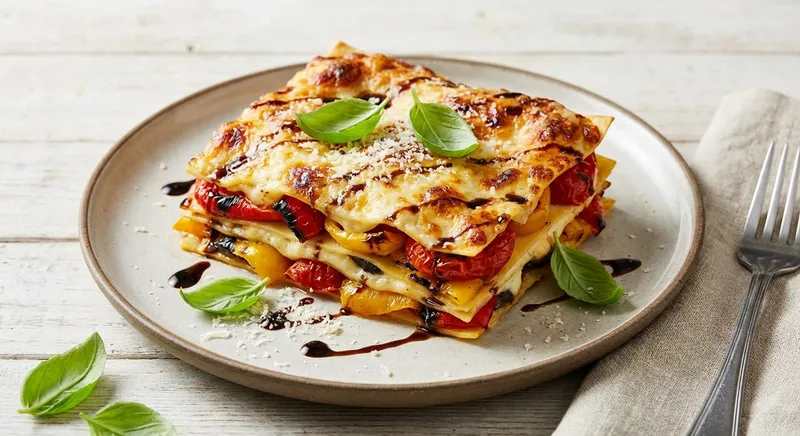
A deeply flavorful, vegetable-forward lasagna that layers sweet roasted bell peppers and oven-roasted tomatoes with caramelized onions, a bright garlic-tomato ragu and a silk-smooth béchamel. Cheesy, saucy and hearty — this Italian-American classic is elevated by slow-roasting to concentrate the tomato flavor, and a rosemary-scented béchamel that adds luxurious creaminess.
Preheat and prep: Preheat the oven to 425°F (220°C). Halve the tomatoes and core the peppers; place the tomatoes (cut-side up) and peppers (skin-side up) on a rimmed baking sheet, drizzle 1 tbsp olive oil, sprinkle with 1 tsp salt and roast for 25–30 minutes until the tomatoes have collapsed and the pepper skins are blistered and charred in spots. WHY: Roasting concentrates the tomatoes’ natural sugars and softens peppers, producing a sweeter, richer base sauce than raw tomatoes.
Steam the peppers and peel: Transfer the hot peppers to a bowl and cover tightly with plastic wrap or a lid for 10 minutes to steam. This loosens the skins and makes peeling effortless. WHY: Removing the bitter blistered skins yields a silkier texture and cleaner pepper flavor in the sauce.
Caramelize the onions: While peppers steam, thinly slice the onions. Heat 1 tbsp olive oil in a wide skillet over medium heat, add the onions with a pinch of salt and cook, stirring occasionally, until deep golden and sweet — about 12–15 minutes. Lower the heat if they begin to burn. WHY: Caramelized onions add depth, umami and a sweet backbone that balances tomato acidity.
Build the tomato-pepper ragu: Once roasted and peeled, roughly chop the peppers. In the skillet with the caramelized onions, add the sliced garlic and cook 30–45 seconds until fragrant (don’t brown). Add the chopped roasted tomatoes, chopped roasted peppers, tomato paste, vegetable stock, oregano, red pepper flakes, a pinch of salt and 1 tsp sugar. Simmer gently 12–15 minutes to meld flavors and thicken slightly. Finish with half the chopped basil. WHY: Simmering the roasted vegetables with tomato paste concentrates flavor and helps the sauce cling to pasta; the sugar and caramelized onions correct brightness and round acidity.
Prepare the béchamel: In a saucepan, melt butter over medium heat. Whisk in flour and cook for 1–2 minutes (this raw flour taste must cook off). Slowly whisk in warm milk in a steady stream to avoid lumps, bringing the sauce to a gentle simmer until it coats the back of a spoon — about 6–8 minutes. Season with 1/2 tsp salt and a few grinds of pepper. WHY: A properly made roux and gradual addition of milk creates a smooth, silky béchamel that adds creaminess and lifts the lasagna without making it heavy.
Mix the ricotta filling: In a bowl, combine ricotta with 1/3 cup (about 25 g) of grated Parmesan, 1/4 cup of the shredded mozzarella, a pinch of salt, pepper and the remaining chopped basil. Stir to a loose, spreadable consistency. WHY: Folding herbs and a little cheese into ricotta seasons the filling and keeps it creamy rather than grainy.
Preheat oven for assembly: Reduce oven to 375°F (190°C). If using dry traditional noodles that require boiling, cook them in salted water until al dente per package instructions, rinse under cool water and set aside (draining well). WHY: Par-cooking ensures the sheets will finish tender in the oven; oven-ready noodles eliminate this step but watch sauce volume.
Assemble the lasagna: Spread 1 cup of the tomato-pepper ragu on the bottom of a 9x13-inch (23 x 33 cm) baking dish to prevent sticking. Arrange a single layer of 3–4 lasagna sheets (depending on shape). Spread about one-third of the ricotta mixture over the noodles, dollop 1/2 cup of béchamel and sprinkle 1/2 cup shredded mozzarella. Spoon another cup of ragu and repeat layers (noodles → ricotta → béchamel → mozzarella → ragu) until you have three layers, finishing with the remaining béchamel, the rest of the mozzarella and the remaining Parmesan. WHY: Building layers in this order (sauce, pasta, cheese, sauce) ensures every bite has balance — not dry noodles and not soupy middle.
Rest and bake: Let the assembled pan rest uncovered for 10 minutes (this allows liquids to settle and layers to ‘marry’). Cover loosely with foil (shiny side out) and bake at 375°F (190°C) for 25 minutes. Remove foil and bake another 15–20 minutes to brown the top and allow edges to bubble. WHY: Resting before baking avoids disturbing layers; the covered bake steams the pasta into tenderness, then the final uncovered bake caramelizes the cheese and concentrates flavor.
Finish and rest: Remove from oven and let the lasagna rest 15–20 minutes before slicing. Garnish with remaining fresh basil. WHY: Resting lets residual steam redistribute so slices hold their shape and layers set — slicing too soon causes a soupy, collapsing lasagna.
Serve: Cut into 6 generous pieces and serve warm with a green salad and a splash of good extra-virgin olive oil or a few grinds of black pepper. WHY: Acidic greens cut the richness and make this a balanced, restaurant-style plate.
733
Calories
36g
Protein
61g
Carbs
40g
Fat
6g
Fiber
How did this recipe turn out? Let others know!
to rate this recipe
By Amanda Yapejian
A deeply flavorful, vegetable-forward lasagna that layers sweet roasted bell peppers and oven-roasted tomatoes with caramelized onions, a bright garlic-tomato ragu and a silk-smooth béchamel. Cheesy, saucy and hearty — this Italian-American classic is elevated by slow-roasting to concentrate the tomato flavor, and a rosemary-scented béchamel that adds luxurious creaminess.
Preheat and prep: Preheat the oven to 425°F (220°C). Halve the tomatoes and core the peppers; place the tomatoes (cut-side up) and peppers (skin-side up) on a rimmed baking sheet, drizzle 1 tbsp olive oil, sprinkle with 1 tsp salt and roast for 25–30 minutes until the tomatoes have collapsed and the pepper skins are blistered and charred in spots. WHY: Roasting concentrates the tomatoes’ natural sugars and softens peppers, producing a sweeter, richer base sauce than raw tomatoes.
Steam the peppers and peel: Transfer the hot peppers to a bowl and cover tightly with plastic wrap or a lid for 10 minutes to steam. This loosens the skins and makes peeling effortless. WHY: Removing the bitter blistered skins yields a silkier texture and cleaner pepper flavor in the sauce.
Caramelize the onions: While peppers steam, thinly slice the onions. Heat 1 tbsp olive oil in a wide skillet over medium heat, add the onions with a pinch of salt and cook, stirring occasionally, until deep golden and sweet — about 12–15 minutes. Lower the heat if they begin to burn. WHY: Caramelized onions add depth, umami and a sweet backbone that balances tomato acidity.
Build the tomato-pepper ragu: Once roasted and peeled, roughly chop the peppers. In the skillet with the caramelized onions, add the sliced garlic and cook 30–45 seconds until fragrant (don’t brown). Add the chopped roasted tomatoes, chopped roasted peppers, tomato paste, vegetable stock, oregano, red pepper flakes, a pinch of salt and 1 tsp sugar. Simmer gently 12–15 minutes to meld flavors and thicken slightly. Finish with half the chopped basil. WHY: Simmering the roasted vegetables with tomato paste concentrates flavor and helps the sauce cling to pasta; the sugar and caramelized onions correct brightness and round acidity.
Prepare the béchamel: In a saucepan, melt butter over medium heat. Whisk in flour and cook for 1–2 minutes (this raw flour taste must cook off). Slowly whisk in warm milk in a steady stream to avoid lumps, bringing the sauce to a gentle simmer until it coats the back of a spoon — about 6–8 minutes. Season with 1/2 tsp salt and a few grinds of pepper. WHY: A properly made roux and gradual addition of milk creates a smooth, silky béchamel that adds creaminess and lifts the lasagna without making it heavy.
Mix the ricotta filling: In a bowl, combine ricotta with 1/3 cup (about 25 g) of grated Parmesan, 1/4 cup of the shredded mozzarella, a pinch of salt, pepper and the remaining chopped basil. Stir to a loose, spreadable consistency. WHY: Folding herbs and a little cheese into ricotta seasons the filling and keeps it creamy rather than grainy.
Preheat oven for assembly: Reduce oven to 375°F (190°C). If using dry traditional noodles that require boiling, cook them in salted water until al dente per package instructions, rinse under cool water and set aside (draining well). WHY: Par-cooking ensures the sheets will finish tender in the oven; oven-ready noodles eliminate this step but watch sauce volume.
Assemble the lasagna: Spread 1 cup of the tomato-pepper ragu on the bottom of a 9x13-inch (23 x 33 cm) baking dish to prevent sticking. Arrange a single layer of 3–4 lasagna sheets (depending on shape). Spread about one-third of the ricotta mixture over the noodles, dollop 1/2 cup of béchamel and sprinkle 1/2 cup shredded mozzarella. Spoon another cup of ragu and repeat layers (noodles → ricotta → béchamel → mozzarella → ragu) until you have three layers, finishing with the remaining béchamel, the rest of the mozzarella and the remaining Parmesan. WHY: Building layers in this order (sauce, pasta, cheese, sauce) ensures every bite has balance — not dry noodles and not soupy middle.
Rest and bake: Let the assembled pan rest uncovered for 10 minutes (this allows liquids to settle and layers to ‘marry’). Cover loosely with foil (shiny side out) and bake at 375°F (190°C) for 25 minutes. Remove foil and bake another 15–20 minutes to brown the top and allow edges to bubble. WHY: Resting before baking avoids disturbing layers; the covered bake steams the pasta into tenderness, then the final uncovered bake caramelizes the cheese and concentrates flavor.
Finish and rest: Remove from oven and let the lasagna rest 15–20 minutes before slicing. Garnish with remaining fresh basil. WHY: Resting lets residual steam redistribute so slices hold their shape and layers set — slicing too soon causes a soupy, collapsing lasagna.
Serve: Cut into 6 generous pieces and serve warm with a green salad and a splash of good extra-virgin olive oil or a few grinds of black pepper. WHY: Acidic greens cut the richness and make this a balanced, restaurant-style plate.
733
Calories
36g
Protein
61g
Carbs
40g
Fat
6g
Fiber
Your Rating:
