By Melissa Samples
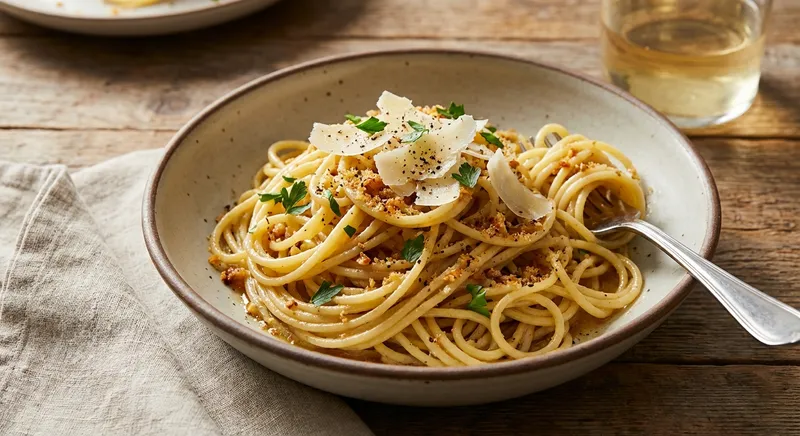
Silky spaghetti tossed in fragrant brown butter, gently toasted garlic, and starchy pasta water for a glossy, nutty sauce. The butter’s caramelized notes and the slight crunch of browned garlic elevate this pantry-simple dish into a restaurant-quality plate—comforting, deeply savory, and impossibly easy to make.
Bring a large pot of water to a rolling boil (about 4–5 quarts). Salt it generously — about 1 1/2 teaspoons kosher salt for the water in this recipe — so the pasta seasons from the inside out. The hot, salted water is the first key to well-flavored pasta.
Add the 12 oz (340 g) dried spaghetti and cook until just shy of al dente (follow package times and remove 1–2 minutes early). Why: slightly undercooking lets the pasta finish in the sauce and absorb flavor without becoming mushy.
About 2 minutes before the pasta is done, scoop and reserve 1 cup of the starchy cooking water and set aside. Why: the starchy water acts as a natural emulsifier to bind butter to pasta and make a silky sauce.
While the pasta cooks, thinly slice 3 garlic cloves. Heat a large heavy skillet over medium heat and add 6 tablespoons (about 85 g) unsalted butter. Why a heavy skillet: it conducts heat evenly, allowing controlled browning for nutty flavor.
Melt the butter and watch closely. It will foam, then the milk solids will turn pale-golden and begin to brown. Swirl the pan and continue for 2–3 minutes until the butter is fragrant and has a deep amber color with brown flecks on the bottom. Remove from direct heat when it reaches this color; carryover heat will continue browning. Why: browning creates caramelized, nutty flavors (Maillard reaction) that transform simple butter into a complex sauce base.
If using the optional 1 tablespoon olive oil, add it now along with the sliced garlic and return the skillet to medium-low. The oil slightly raises the smoke point and prevents the garlic from burning. Gently cook the garlic in the brown butter for 30–60 seconds until fragrant and just turning golden — don’t overbrown it or it will taste bitter. Why: toasted garlic adds an aromatic, slightly sweet note that balances the buttered richness.
Add a ladle (about 1/2 cup) of the reserved pasta water to the skillet and bring to a gentle simmer. Scrape any brown bits from the bottom with a wooden spoon to incorporate that flavor. Why: the starchy water both cools the butter slightly and helps form an emulsion so the sauce clings to the pasta.
Drain the pasta quickly (do not rinse), reserve one more splash of water if needed, and immediately transfer the hot pasta into the skillet with the butter-garlic emulsion. Why: heat and starch help the sauce adhere; tossing in the skillet ensures even coating.
Toss the pasta vigorously with tongs or two forks for 1–2 minutes, adding additional reserved pasta water by tablespoonfuls as necessary to achieve a glossy, silky sauce that just clings to each strand. Finish with 1/2 teaspoon freshly ground black pepper and taste for salt; add a small pinch if needed. Why: vigorous tossing emulsifies the butter with starch, producing a restaurant-silky finish rather than a greasy film.
Turn off the heat and stir in 2 tablespoons finely chopped parsley for freshness and color. Plate immediately in warm bowls. Serve hot. Why: adding herbs off heat preserves their bright flavor and prevents wilting.
Optional final flourish: a light drizzle of extra-virgin olive oil or a crack of extra black pepper at the table. Serve immediately for the best texture — the sauce will tighten as it cools.
502
Calories
11g
Protein
65g
Carbs
22g
Fat
3g
Fiber
How did this recipe turn out? Let others know!
to rate this recipe
By Melissa Samples
Silky spaghetti tossed in fragrant brown butter, gently toasted garlic, and starchy pasta water for a glossy, nutty sauce. The butter’s caramelized notes and the slight crunch of browned garlic elevate this pantry-simple dish into a restaurant-quality plate—comforting, deeply savory, and impossibly easy to make.
Bring a large pot of water to a rolling boil (about 4–5 quarts). Salt it generously — about 1 1/2 teaspoons kosher salt for the water in this recipe — so the pasta seasons from the inside out. The hot, salted water is the first key to well-flavored pasta.
Add the 12 oz (340 g) dried spaghetti and cook until just shy of al dente (follow package times and remove 1–2 minutes early). Why: slightly undercooking lets the pasta finish in the sauce and absorb flavor without becoming mushy.
About 2 minutes before the pasta is done, scoop and reserve 1 cup of the starchy cooking water and set aside. Why: the starchy water acts as a natural emulsifier to bind butter to pasta and make a silky sauce.
While the pasta cooks, thinly slice 3 garlic cloves. Heat a large heavy skillet over medium heat and add 6 tablespoons (about 85 g) unsalted butter. Why a heavy skillet: it conducts heat evenly, allowing controlled browning for nutty flavor.
Melt the butter and watch closely. It will foam, then the milk solids will turn pale-golden and begin to brown. Swirl the pan and continue for 2–3 minutes until the butter is fragrant and has a deep amber color with brown flecks on the bottom. Remove from direct heat when it reaches this color; carryover heat will continue browning. Why: browning creates caramelized, nutty flavors (Maillard reaction) that transform simple butter into a complex sauce base.
If using the optional 1 tablespoon olive oil, add it now along with the sliced garlic and return the skillet to medium-low. The oil slightly raises the smoke point and prevents the garlic from burning. Gently cook the garlic in the brown butter for 30–60 seconds until fragrant and just turning golden — don’t overbrown it or it will taste bitter. Why: toasted garlic adds an aromatic, slightly sweet note that balances the buttered richness.
Add a ladle (about 1/2 cup) of the reserved pasta water to the skillet and bring to a gentle simmer. Scrape any brown bits from the bottom with a wooden spoon to incorporate that flavor. Why: the starchy water both cools the butter slightly and helps form an emulsion so the sauce clings to the pasta.
Drain the pasta quickly (do not rinse), reserve one more splash of water if needed, and immediately transfer the hot pasta into the skillet with the butter-garlic emulsion. Why: heat and starch help the sauce adhere; tossing in the skillet ensures even coating.
Toss the pasta vigorously with tongs or two forks for 1–2 minutes, adding additional reserved pasta water by tablespoonfuls as necessary to achieve a glossy, silky sauce that just clings to each strand. Finish with 1/2 teaspoon freshly ground black pepper and taste for salt; add a small pinch if needed. Why: vigorous tossing emulsifies the butter with starch, producing a restaurant-silky finish rather than a greasy film.
Turn off the heat and stir in 2 tablespoons finely chopped parsley for freshness and color. Plate immediately in warm bowls. Serve hot. Why: adding herbs off heat preserves their bright flavor and prevents wilting.
Optional final flourish: a light drizzle of extra-virgin olive oil or a crack of extra black pepper at the table. Serve immediately for the best texture — the sauce will tighten as it cools.
502
Calories
11g
Protein
65g
Carbs
22g
Fat
3g
Fiber
Your Rating:
