By Stephanie Richardson
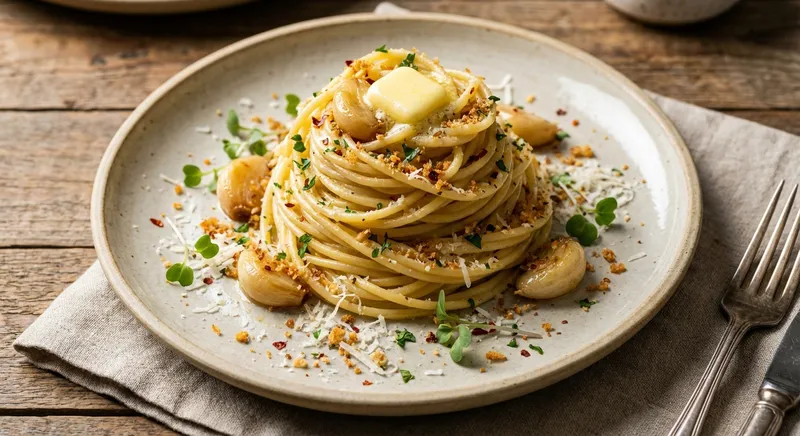
Heady, silky and deeply savory — this is garlic turned into a plush pasta sauce. Slow-roasted garlic becomes sweet and spreadable, caramelized onion and browned butter add nutty depth, and plenty of olive oil emulsified with starchy pasta water creates a glossy, restaurant-quality sauce that clings to every strand.
Roast the garlic to create sweet, mellow flavor: Preheat the oven to 400°F (205°C). Peel enough outer papery layers so two whole bulbs (about 90 g total) sit with their root end intact; slice off the top 1/4–1/2 inch to expose the cloves. Place the bulbs on a piece of foil, drizzle 1 tbsp (15 ml) of olive oil over them, wrap tightly and roast 30–35 minutes until cloves are very soft and caramelized. Why: Roasting transforms raw garlic’s sharp sulfur notes into round, honeyed sweetness and makes it easy to mash into a silky purée that will form the backbone of the sauce.
Bring a large pot of water to a rolling boil and add 1 tbsp kosher salt. Cook 400 g spaghetti until just shy of al dente (follow package for timing, typically 8–10 minutes; I pull it 60–90 seconds earlier). Reserve 1 to 1 1/2 cups (240–360 ml) of the starchy pasta cooking water before draining. Why: Salting the water seasons the pasta from the inside; reserving cooking water supplies the starch needed to emulsify the oil and butter into a glossy sauce that clings to the noodles.
While pasta cooks, slice the onion very thin. In a large wide skillet set over medium heat, add 2 tbsp (30 ml) olive oil and the butter. When the butter melts and begins to foam, add the sliced onion and a pinch of salt. Sweat the onion, stirring occasionally, until it is soft and beginning to take on light golden edges (8–10 minutes). Why: Sweating the onion in a butter/olive-oil blend builds a sweet, savory base — the butter adds richness and a nutty note when it browns slightly, while the oil raises the smoke point and keeps the butter from burning.
Thinly slice 2–3 raw garlic cloves (from the 90 g total) and add them to the pan with the onions once they are soft. Add 1/2 tsp red pepper flakes and cook 30–45 seconds until fragrant — do not let the garlic brown. Why: Slicing and briefly cooking a little raw garlic releases a bright, immediate garlic aroma that layers with the round roasted garlic — but if you let it burn it will taste bitter, so keep a close watch and a moderate heat.
Squeeze the roasted garlic cloves from their skins into a small bowl and mash with a fork into a smooth purée (you should have roughly 6–8 tsp of purée). Add this purée to the skillet and stir to combine with the onions. Why: Adding the roasted garlic purée now integrates its sweet, caramelized flavor so every bite of pasta picks it up; purée dissolves into the sauce and avoids stringy garlic pieces.
Add the drained pasta to the skillet (or return pasta to the pot and add the sauce to it) and toss over medium-low heat. Gradually add 1/2 to 1 cup (120–240 ml) reserved pasta water, a splash at a time, tossing vigorously to create an emulsion between the starch, oil and butter. Add the grated Parmesan (about 50 g) and toss until a creamy, glossy sauce forms and the pasta is al dente. Why: The starchy pasta water is the emulsifier — it allows the oil, butter and cheese to bind into a silky coating rather than pooling. Parmesan adds umami and helps bind the sauce; adding it with heat melts it smoothly into the emulsion.
Finish and season: Stir in the chopped parsley, adjust salt and pepper to taste, and add a final 1 tbsp (15 ml) drizzle of olive oil for shine. If you’d like a little texture contrast, thinly slice 2 cloves of garlic and fry them in 1 tbsp olive oil in a small skillet over medium heat until golden and crisp (about 40–60 seconds); drain on paper towel and scatter over the pasta. Why: Fresh herbs brighten the dish; the finishing oil enhances mouthfeel and sheen; crisped garlic provides an irresistible textural counterpoint to the soft roasted purée.
Serve immediately with extra grated Parmesan at the table. Why: Pasta is best hot — the emulsion will tighten as it cools and the sauce can become less glossy; serving immediately guarantees the ideal silky texture.
661
Calories
19g
Protein
85g
Carbs
27g
Fat
4g
Fiber
How did this recipe turn out? Let others know!
to rate this recipe
By Stephanie Richardson
Heady, silky and deeply savory — this is garlic turned into a plush pasta sauce. Slow-roasted garlic becomes sweet and spreadable, caramelized onion and browned butter add nutty depth, and plenty of olive oil emulsified with starchy pasta water creates a glossy, restaurant-quality sauce that clings to every strand.
Roast the garlic to create sweet, mellow flavor: Preheat the oven to 400°F (205°C). Peel enough outer papery layers so two whole bulbs (about 90 g total) sit with their root end intact; slice off the top 1/4–1/2 inch to expose the cloves. Place the bulbs on a piece of foil, drizzle 1 tbsp (15 ml) of olive oil over them, wrap tightly and roast 30–35 minutes until cloves are very soft and caramelized. Why: Roasting transforms raw garlic’s sharp sulfur notes into round, honeyed sweetness and makes it easy to mash into a silky purée that will form the backbone of the sauce.
Bring a large pot of water to a rolling boil and add 1 tbsp kosher salt. Cook 400 g spaghetti until just shy of al dente (follow package for timing, typically 8–10 minutes; I pull it 60–90 seconds earlier). Reserve 1 to 1 1/2 cups (240–360 ml) of the starchy pasta cooking water before draining. Why: Salting the water seasons the pasta from the inside; reserving cooking water supplies the starch needed to emulsify the oil and butter into a glossy sauce that clings to the noodles.
While pasta cooks, slice the onion very thin. In a large wide skillet set over medium heat, add 2 tbsp (30 ml) olive oil and the butter. When the butter melts and begins to foam, add the sliced onion and a pinch of salt. Sweat the onion, stirring occasionally, until it is soft and beginning to take on light golden edges (8–10 minutes). Why: Sweating the onion in a butter/olive-oil blend builds a sweet, savory base — the butter adds richness and a nutty note when it browns slightly, while the oil raises the smoke point and keeps the butter from burning.
Thinly slice 2–3 raw garlic cloves (from the 90 g total) and add them to the pan with the onions once they are soft. Add 1/2 tsp red pepper flakes and cook 30–45 seconds until fragrant — do not let the garlic brown. Why: Slicing and briefly cooking a little raw garlic releases a bright, immediate garlic aroma that layers with the round roasted garlic — but if you let it burn it will taste bitter, so keep a close watch and a moderate heat.
Squeeze the roasted garlic cloves from their skins into a small bowl and mash with a fork into a smooth purée (you should have roughly 6–8 tsp of purée). Add this purée to the skillet and stir to combine with the onions. Why: Adding the roasted garlic purée now integrates its sweet, caramelized flavor so every bite of pasta picks it up; purée dissolves into the sauce and avoids stringy garlic pieces.
Add the drained pasta to the skillet (or return pasta to the pot and add the sauce to it) and toss over medium-low heat. Gradually add 1/2 to 1 cup (120–240 ml) reserved pasta water, a splash at a time, tossing vigorously to create an emulsion between the starch, oil and butter. Add the grated Parmesan (about 50 g) and toss until a creamy, glossy sauce forms and the pasta is al dente. Why: The starchy pasta water is the emulsifier — it allows the oil, butter and cheese to bind into a silky coating rather than pooling. Parmesan adds umami and helps bind the sauce; adding it with heat melts it smoothly into the emulsion.
Finish and season: Stir in the chopped parsley, adjust salt and pepper to taste, and add a final 1 tbsp (15 ml) drizzle of olive oil for shine. If you’d like a little texture contrast, thinly slice 2 cloves of garlic and fry them in 1 tbsp olive oil in a small skillet over medium heat until golden and crisp (about 40–60 seconds); drain on paper towel and scatter over the pasta. Why: Fresh herbs brighten the dish; the finishing oil enhances mouthfeel and sheen; crisped garlic provides an irresistible textural counterpoint to the soft roasted purée.
Serve immediately with extra grated Parmesan at the table. Why: Pasta is best hot — the emulsion will tighten as it cools and the sauce can become less glossy; serving immediately guarantees the ideal silky texture.
661
Calories
19g
Protein
85g
Carbs
27g
Fat
4g
Fiber
Your Rating:
