By Recipe AI
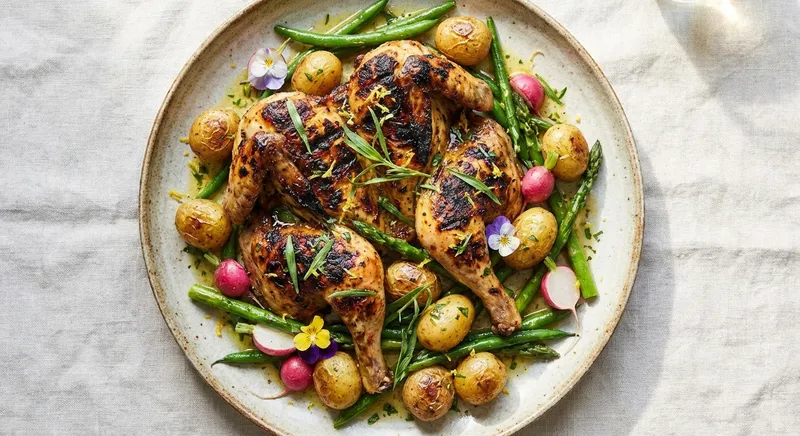
A bright, restaurant-style spring salad: tender, thin-sliced grilled chicken and lemony halved baby potatoes tossed with peppery arugula, sweet cherry tomatoes and a silky tarragon-lemon Dijon vinaigrette. Textures range from crisp-edged chicken and creamy potato to juicy tomatoes and crisp greens, while the tarragon and lemon lift the dish with an elegant anise-citrus aroma.
Bring the potatoes to room temperature and par-cook: Place the halved baby potatoes in a medium saucepan and cover with cold water by 1 inch; add a generous pinch of salt. Bring to a boil, then simmer for 10–12 minutes until just tender when pierced with a knife but not falling apart. Why: par-cooking gives the potatoes a creamy interior while allowing you to finish them in a hot pan or on the grill to develop flavorful browning without overcooking the chicken.
Drain and cool the potatoes slightly, then toss with 1 tsp (of the reserved) olive oil and a small pinch of salt and pepper. Spread on a sheet pan cut-side down and roast or sear in a hot skillet for 8–10 minutes until golden-brown and a little crisp on the edges. Why: browning (Maillard reaction) adds savory depth and a pleasant textural contrast to the salad.
Season the thin-sliced chicken breasts lightly with salt and cracked pepper. If slices are uneven, pound gently between plastic wrap to uniform thickness (about 4–6 mm). Why: even thickness ensures the chicken cooks quickly and evenly without drying.
Preheat a grill pan or outdoor grill to medium-high. Brush the chicken with the 1 tsp olive oil to prevent sticking and encourage a golden crust. Grill the slices 1.5–2.5 minutes per side (depending on thickness) until just cooked through and grill marks form. Internal temperature should reach 74°C (165°F). Why: quick, high-heat grilling seals the exterior for flavor while thin slices cook fast so they stay tender and juicy.
Rest the chicken on a cutting board for 5 minutes, then slice crosswise into bite-sized ribbons or leave whole for the plate. Why: resting allows juices to redistribute; slicing while warm keeps the texture luscious and integrates better with the salad.
Make the tarragon-lemon Dijon vinaigrette: In a bowl or small jar combine the 8 tsp extra-virgin olive oil, 4 tbsp fresh lemon juice, 2 tsp Dijon mustard, 1 finely grated garlic clove, and 4 tbsp chopped fresh tarragon. Whisk or shake vigorously until emulsified; season with salt and pepper to taste. Why: whisking mustard into the acid before adding oil helps the emulsion form; bright lemon and aromatic tarragon are a classic pairing that cuts through the richness of the oil and chicken.
Assemble the salad: In a large bowl, add the roasted baby potatoes and warm sliced chicken — warm components hold the dressing better — then pour about two-thirds of the vinaigrette over them and toss gently to coat. Add the arugula and halved cherry tomatoes and toss once more (add remaining dressing to taste). Why: dressing warm potatoes and chicken allows flavors to meld; adding most but not all dressing lets each diner adjust, and tossing gently keeps arugula from wilting excessively.
Plate family-style or individually: divide onto 4 plates, finish with a sprinkle of extra chopped tarragon, a few grinds of cracked black pepper, and an optional lemon wedge. Taste and adjust salt if needed. Why: finishing touches heighten aroma and freshness; a lemon wedge lets guests add an extra lift if desired.
Serve immediately while chicken and potatoes are still slightly warm. Why: contrasts between warm protein/potato and cool peppery arugula make the dish most vibrant; this is best eaten the day it’s made for texture and flavor.
520
Calories
52g
Protein
40g
Carbs
16g
Fat
6g
Fiber
How did this recipe turn out? Let others know!
to rate this recipe
By Recipe AI
A bright, restaurant-style spring salad: tender, thin-sliced grilled chicken and lemony halved baby potatoes tossed with peppery arugula, sweet cherry tomatoes and a silky tarragon-lemon Dijon vinaigrette. Textures range from crisp-edged chicken and creamy potato to juicy tomatoes and crisp greens, while the tarragon and lemon lift the dish with an elegant anise-citrus aroma.
Bring the potatoes to room temperature and par-cook: Place the halved baby potatoes in a medium saucepan and cover with cold water by 1 inch; add a generous pinch of salt. Bring to a boil, then simmer for 10–12 minutes until just tender when pierced with a knife but not falling apart. Why: par-cooking gives the potatoes a creamy interior while allowing you to finish them in a hot pan or on the grill to develop flavorful browning without overcooking the chicken.
Drain and cool the potatoes slightly, then toss with 1 tsp (of the reserved) olive oil and a small pinch of salt and pepper. Spread on a sheet pan cut-side down and roast or sear in a hot skillet for 8–10 minutes until golden-brown and a little crisp on the edges. Why: browning (Maillard reaction) adds savory depth and a pleasant textural contrast to the salad.
Season the thin-sliced chicken breasts lightly with salt and cracked pepper. If slices are uneven, pound gently between plastic wrap to uniform thickness (about 4–6 mm). Why: even thickness ensures the chicken cooks quickly and evenly without drying.
Preheat a grill pan or outdoor grill to medium-high. Brush the chicken with the 1 tsp olive oil to prevent sticking and encourage a golden crust. Grill the slices 1.5–2.5 minutes per side (depending on thickness) until just cooked through and grill marks form. Internal temperature should reach 74°C (165°F). Why: quick, high-heat grilling seals the exterior for flavor while thin slices cook fast so they stay tender and juicy.
Rest the chicken on a cutting board for 5 minutes, then slice crosswise into bite-sized ribbons or leave whole for the plate. Why: resting allows juices to redistribute; slicing while warm keeps the texture luscious and integrates better with the salad.
Make the tarragon-lemon Dijon vinaigrette: In a bowl or small jar combine the 8 tsp extra-virgin olive oil, 4 tbsp fresh lemon juice, 2 tsp Dijon mustard, 1 finely grated garlic clove, and 4 tbsp chopped fresh tarragon. Whisk or shake vigorously until emulsified; season with salt and pepper to taste. Why: whisking mustard into the acid before adding oil helps the emulsion form; bright lemon and aromatic tarragon are a classic pairing that cuts through the richness of the oil and chicken.
Assemble the salad: In a large bowl, add the roasted baby potatoes and warm sliced chicken — warm components hold the dressing better — then pour about two-thirds of the vinaigrette over them and toss gently to coat. Add the arugula and halved cherry tomatoes and toss once more (add remaining dressing to taste). Why: dressing warm potatoes and chicken allows flavors to meld; adding most but not all dressing lets each diner adjust, and tossing gently keeps arugula from wilting excessively.
Plate family-style or individually: divide onto 4 plates, finish with a sprinkle of extra chopped tarragon, a few grinds of cracked black pepper, and an optional lemon wedge. Taste and adjust salt if needed. Why: finishing touches heighten aroma and freshness; a lemon wedge lets guests add an extra lift if desired.
Serve immediately while chicken and potatoes are still slightly warm. Why: contrasts between warm protein/potato and cool peppery arugula make the dish most vibrant; this is best eaten the day it’s made for texture and flavor.
520
Calories
52g
Protein
40g
Carbs
16g
Fat
6g
Fiber
Your Rating:
