By Kayla
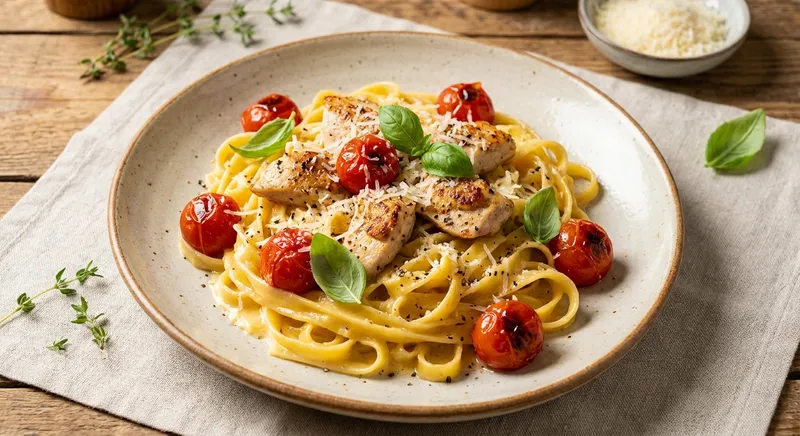
A silky, restaurant-style pasta that marries tender garlic-scented chicken and bright sautéed tomatoes with a lusciously creamy, egg-and-Parmesan sauce. The sauce is emulsified with starchy pasta water (no heavy cream) for a glossy, velvety coating that clings to every strand — rich, savory, and balanced by fresh tomato and basil.
Bring a large pot of water to a rolling boil, add a tablespoon of kosher salt (it should taste like seawater). Cook the pasta 1–2 minutes shy of package al dente (usually 8–9 minutes for dried spaghetti). Reserve 1 1/2 cups of the starchy pasta water before draining. Why: salt seasons the pasta from within; reserving starchy water gives you the emulsifying liquid that will make the sauce glossy and cling to the noodles without cream.
While the pasta water heats, pat the chicken dry and slice into 1/2-inch strips. Season with 1 tsp kosher salt and 1/2 tsp freshly ground black pepper. Why: drying the chicken ensures a good sear; thin strips cook evenly and quickly so the chicken stays juicy.
Heat a large skillet (12-inch) over medium-high heat. Add 1 tbsp olive oil. When the oil shimmers, add the chicken in a single layer and sear undisturbed for 2–3 minutes to form a golden crust, then flip and cook 1–2 more minutes until just cooked through (internal temp ~160°F/71°C). Transfer chicken to a plate and tent loosely with foil to rest. Why: a hot pan creates Maillard browning for flavor; resting keeps the juices locked in and prevents drying while you finish the sauce.
Reduce the heat to medium, add the remaining 1 tbsp olive oil and 1 tbsp butter to the skillet. Add the diced onion and cook, stirring, until translucent and slightly softened, about 4–5 minutes. Why: rendering the onion gently releases sweetness and builds a flavor base without browning, which would make the sauce bitter.
Add the minced garlic and red pepper flakes; cook 30–45 seconds until fragrant. Add the diced tomatoes and a pinch of salt. Sauté 3–4 minutes until the tomatoes have softened but still hold some shape. Why: quick-cooked tomatoes keep freshness and acidity to balance the rich egg-cheese sauce; toasting the garlic briefly blooms its aromatic oils and removes raw sharpness.
Return the rested chicken to the skillet and stir to combine with the tomato mixture, coating the pieces in the pan juices. Add a few tablespoons of the reserved hot pasta water to deglaze the pan, scraping up any browned bits with a wooden spoon. Why: deglazing pulls concentrated flavor into the sauce and the bits on the pan (fond) deepen the overall taste.
In a medium bowl, whisk together the 2 whole eggs, 1 extra yolk, grated Parmesan, and 1/2 tsp freshly ground black pepper until smooth. Add 1/4 cup of the reserved hot pasta water and whisk again to temper the eggs. Why: whisking the cheese into the eggs distributes the salt/fat for an even sauce; tempering with hot water raises the egg mixture's temperature gradually so it won’t scramble when combined with the hot pasta.
Add the drained pasta directly to the skillet (or add the tomato-chicken mixture to the pasta pot) and toss over low heat for 30 seconds so the noodles pick up flavor. Remove pan from direct heat. Why: combining pasta and sauce off high heat prevents the eggs from curdling and allows the sauce to emulsify gently.
Pour the egg-parmesan mixture over the pasta, using tongs to toss quickly and continuously. Add more reserved pasta water a tablespoon at a time to reach a silky, clingy consistency. The residual heat will thicken the eggs into a creamy emulsion without scrambling. Why: rapid tossing and starchy water create a stable emulsion — glossy, creamy, and light, unlike heavy cream which can weigh the dish down.
Taste and adjust seasoning with salt and pepper. If the sauce needs more richness, stir in the reserved 1 tbsp butter off the heat for shine. Finish with torn basil leaves and an extra sprinkle of grated Parmesan. Serve immediately. Why: finishing with butter adds silk and gloss; fresh basil brightens the dish and balances the richness.
778
Calories
61g
Protein
72g
Carbs
26g
Fat
4g
Fiber
How did this recipe turn out? Let others know!
to rate this recipe
By Kayla
A silky, restaurant-style pasta that marries tender garlic-scented chicken and bright sautéed tomatoes with a lusciously creamy, egg-and-Parmesan sauce. The sauce is emulsified with starchy pasta water (no heavy cream) for a glossy, velvety coating that clings to every strand — rich, savory, and balanced by fresh tomato and basil.
Bring a large pot of water to a rolling boil, add a tablespoon of kosher salt (it should taste like seawater). Cook the pasta 1–2 minutes shy of package al dente (usually 8–9 minutes for dried spaghetti). Reserve 1 1/2 cups of the starchy pasta water before draining. Why: salt seasons the pasta from within; reserving starchy water gives you the emulsifying liquid that will make the sauce glossy and cling to the noodles without cream.
While the pasta water heats, pat the chicken dry and slice into 1/2-inch strips. Season with 1 tsp kosher salt and 1/2 tsp freshly ground black pepper. Why: drying the chicken ensures a good sear; thin strips cook evenly and quickly so the chicken stays juicy.
Heat a large skillet (12-inch) over medium-high heat. Add 1 tbsp olive oil. When the oil shimmers, add the chicken in a single layer and sear undisturbed for 2–3 minutes to form a golden crust, then flip and cook 1–2 more minutes until just cooked through (internal temp ~160°F/71°C). Transfer chicken to a plate and tent loosely with foil to rest. Why: a hot pan creates Maillard browning for flavor; resting keeps the juices locked in and prevents drying while you finish the sauce.
Reduce the heat to medium, add the remaining 1 tbsp olive oil and 1 tbsp butter to the skillet. Add the diced onion and cook, stirring, until translucent and slightly softened, about 4–5 minutes. Why: rendering the onion gently releases sweetness and builds a flavor base without browning, which would make the sauce bitter.
Add the minced garlic and red pepper flakes; cook 30–45 seconds until fragrant. Add the diced tomatoes and a pinch of salt. Sauté 3–4 minutes until the tomatoes have softened but still hold some shape. Why: quick-cooked tomatoes keep freshness and acidity to balance the rich egg-cheese sauce; toasting the garlic briefly blooms its aromatic oils and removes raw sharpness.
Return the rested chicken to the skillet and stir to combine with the tomato mixture, coating the pieces in the pan juices. Add a few tablespoons of the reserved hot pasta water to deglaze the pan, scraping up any browned bits with a wooden spoon. Why: deglazing pulls concentrated flavor into the sauce and the bits on the pan (fond) deepen the overall taste.
In a medium bowl, whisk together the 2 whole eggs, 1 extra yolk, grated Parmesan, and 1/2 tsp freshly ground black pepper until smooth. Add 1/4 cup of the reserved hot pasta water and whisk again to temper the eggs. Why: whisking the cheese into the eggs distributes the salt/fat for an even sauce; tempering with hot water raises the egg mixture's temperature gradually so it won’t scramble when combined with the hot pasta.
Add the drained pasta directly to the skillet (or add the tomato-chicken mixture to the pasta pot) and toss over low heat for 30 seconds so the noodles pick up flavor. Remove pan from direct heat. Why: combining pasta and sauce off high heat prevents the eggs from curdling and allows the sauce to emulsify gently.
Pour the egg-parmesan mixture over the pasta, using tongs to toss quickly and continuously. Add more reserved pasta water a tablespoon at a time to reach a silky, clingy consistency. The residual heat will thicken the eggs into a creamy emulsion without scrambling. Why: rapid tossing and starchy water create a stable emulsion — glossy, creamy, and light, unlike heavy cream which can weigh the dish down.
Taste and adjust seasoning with salt and pepper. If the sauce needs more richness, stir in the reserved 1 tbsp butter off the heat for shine. Finish with torn basil leaves and an extra sprinkle of grated Parmesan. Serve immediately. Why: finishing with butter adds silk and gloss; fresh basil brightens the dish and balances the richness.
778
Calories
61g
Protein
72g
Carbs
26g
Fat
4g
Fiber
Your Rating:
