By Melissa Samples
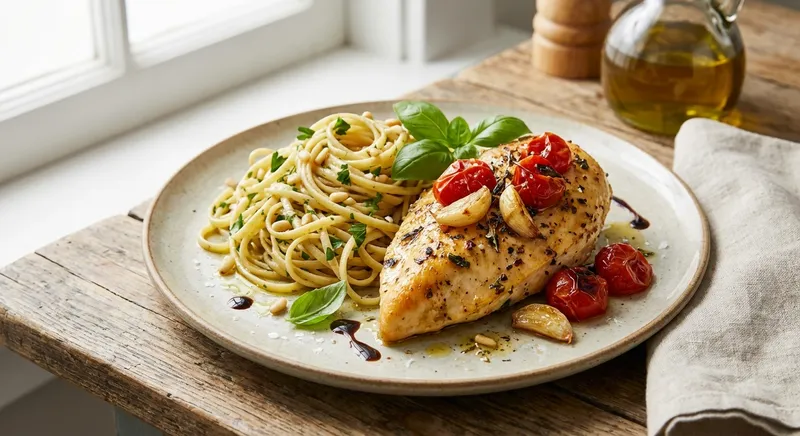
Sun-ripened tomatoes are roasted until their sugars concentrate and turned into a glossy, garlicky sauce that clings to al dente pasta. Tender, seared chicken strips add savory richness while bright herbs and a finish of extra virgin olive oil lift the dish — a restaurant-quality, Mediterranean-inspired pasta that's dairy-free by default and built from simple pantry ingredients.
Preheat and prep: Preheat your oven to 430°F (220°C). Slice the tomatoes in half if large (or leave cherry tomatoes whole). Coarsely slice the onion and mince the garlic. Why: high-heat roasting quickly concentrates tomato sugars and caramelizes edges for deeper flavor; prepping everything first keeps the cook flow smooth and prevents burned garlic or overcooked chicken.
Season and sear the chicken: Pat the chicken dry with paper towels and season both sides with 3/4 teaspoon salt and 1/2 teaspoon black pepper. Heat 1 tablespoon olive oil in a large ovenproof skillet over medium-high heat until shimmering. Sear the chicken 2–3 minutes per side until golden (it will not be fully cooked). Transfer to a plate. Why: drying and searing develops Maillard crust — those browned bits add savory depth to the finished sauce. Leaving the chicken slightly underdone prevents it from overcooking in the oven.
Roast the tomatoes and soften aromatics: In the same skillet, lower heat to medium and add 2 tablespoons extra-virgin olive oil. Add the sliced onion and cook 4–5 minutes until translucent and beginning to caramelize (this builds sweetness). Stir in garlic and cook 30–45 seconds until fragrant — don’t let it brown. Add the chopped tomatoes, 3/4 teaspoon salt, dried oregano and red pepper flakes; toss to combine. Spread into an even layer and transfer to the preheated oven for 12–15 minutes until the tomato juices are bubbling and edges are caramelized. Why: roasting concentrates tomato flavor and the brief pre-roast sauté of onion and garlic mellows sharpness and layers flavor.
Finish chicken in the oven: Remove the skillet from the oven, nestle the seared chicken into the tomatoes, drizzle 1 tablespoon olive oil over the chicken and return to the oven for another 8–10 minutes (until chicken registers 155–160°F / 68–71°C). Why: finishing the chicken in the tomato bath lets it steam gently and absorb flavor without drying out; pulling it at 155–160°F allows carryover cooking to reach safe temperature while keeping the meat juicy.
Cook the pasta: While the tomatoes roast, bring a large pot of well-salted water (1 tablespoon salt per 4–5 quarts) to a boil. Cook the pasta one minute less than package directions for al dente (about 8–10 minutes for many shapes). Reserve 1/2 cup of the starchy pasta water before draining. Why: slightly undercooking plus starchy pasta water helps the sauce cling to the pasta and finish cooking together in the pan so the flavors marry.
Break down the sauce and build emulsion: Remove the skillet from oven. If you prefer a smoother sauce, use a potato masher or fork to crush some of the roasted tomatoes in the pan — leave plenty of chunky pieces for texture. Taste and adjust seasoning (add remaining 3/4 teaspoon salt if needed). Add the reserved pasta water and simmer on medium for 1–2 minutes to loosen and slightly thicken. Why: mashing releases tomato juices and breaking down tomatoes with starchy water creates an emulsion that coats pasta beautifully.
Slice and rest the chicken: Transfer the chicken to a cutting board and let it rest 4–5 minutes (this keeps juices locked in). Slice the chicken into bite-sized strips against the grain and return to the skillet, nestling pieces into the sauce. Why: resting prevents juices from running out when you slice, keeping bites moist; returning them to the sauce rewarms and seasons the slices.
Finish pasta in the sauce: Add the drained pasta directly into the skillet with the tomatoes and chicken. Toss vigorously over medium heat for 1–2 minutes until pasta is glossy and the sauce clings. If the mixture seems dry, add up to 2 tablespoons more reserved pasta water at a time. Drizzle 1–2 tablespoons extra-virgin olive oil and toss to finish. Why: finishing pasta in the pan builds a silky coating of sauce on each strand — the oil loosens and shines the sauce for a restaurant-style finish.
Plate and garnish: Divide among warm plates. Tear basil leaves and sprinkle with chopped parsley, a grind of black pepper and a light pinch of sea salt to taste. Serve immediately. Why: bright herbs and a final seasoning lift the savory base and add contrast to the roasted, sweet tomatoes.
If you'd like it creamier (optional Lactaid finish): After step 6 add 1/2 cup Lactaid milk to the tomato sauce and simmer 1–2 minutes to warm; then proceed with chicken and pasta steps. Why: Lactaid milk adds creaminess without lactose issues for those who tolerate Lactaid; add sparingly to avoid diluting tomato intensity.
633
Calories
47g
Protein
71g
Carbs
16g
Fat
5g
Fiber
How did this recipe turn out? Let others know!
to rate this recipe
By Melissa Samples
Sun-ripened tomatoes are roasted until their sugars concentrate and turned into a glossy, garlicky sauce that clings to al dente pasta. Tender, seared chicken strips add savory richness while bright herbs and a finish of extra virgin olive oil lift the dish — a restaurant-quality, Mediterranean-inspired pasta that's dairy-free by default and built from simple pantry ingredients.
Preheat and prep: Preheat your oven to 430°F (220°C). Slice the tomatoes in half if large (or leave cherry tomatoes whole). Coarsely slice the onion and mince the garlic. Why: high-heat roasting quickly concentrates tomato sugars and caramelizes edges for deeper flavor; prepping everything first keeps the cook flow smooth and prevents burned garlic or overcooked chicken.
Season and sear the chicken: Pat the chicken dry with paper towels and season both sides with 3/4 teaspoon salt and 1/2 teaspoon black pepper. Heat 1 tablespoon olive oil in a large ovenproof skillet over medium-high heat until shimmering. Sear the chicken 2–3 minutes per side until golden (it will not be fully cooked). Transfer to a plate. Why: drying and searing develops Maillard crust — those browned bits add savory depth to the finished sauce. Leaving the chicken slightly underdone prevents it from overcooking in the oven.
Roast the tomatoes and soften aromatics: In the same skillet, lower heat to medium and add 2 tablespoons extra-virgin olive oil. Add the sliced onion and cook 4–5 minutes until translucent and beginning to caramelize (this builds sweetness). Stir in garlic and cook 30–45 seconds until fragrant — don’t let it brown. Add the chopped tomatoes, 3/4 teaspoon salt, dried oregano and red pepper flakes; toss to combine. Spread into an even layer and transfer to the preheated oven for 12–15 minutes until the tomato juices are bubbling and edges are caramelized. Why: roasting concentrates tomato flavor and the brief pre-roast sauté of onion and garlic mellows sharpness and layers flavor.
Finish chicken in the oven: Remove the skillet from the oven, nestle the seared chicken into the tomatoes, drizzle 1 tablespoon olive oil over the chicken and return to the oven for another 8–10 minutes (until chicken registers 155–160°F / 68–71°C). Why: finishing the chicken in the tomato bath lets it steam gently and absorb flavor without drying out; pulling it at 155–160°F allows carryover cooking to reach safe temperature while keeping the meat juicy.
Cook the pasta: While the tomatoes roast, bring a large pot of well-salted water (1 tablespoon salt per 4–5 quarts) to a boil. Cook the pasta one minute less than package directions for al dente (about 8–10 minutes for many shapes). Reserve 1/2 cup of the starchy pasta water before draining. Why: slightly undercooking plus starchy pasta water helps the sauce cling to the pasta and finish cooking together in the pan so the flavors marry.
Break down the sauce and build emulsion: Remove the skillet from oven. If you prefer a smoother sauce, use a potato masher or fork to crush some of the roasted tomatoes in the pan — leave plenty of chunky pieces for texture. Taste and adjust seasoning (add remaining 3/4 teaspoon salt if needed). Add the reserved pasta water and simmer on medium for 1–2 minutes to loosen and slightly thicken. Why: mashing releases tomato juices and breaking down tomatoes with starchy water creates an emulsion that coats pasta beautifully.
Slice and rest the chicken: Transfer the chicken to a cutting board and let it rest 4–5 minutes (this keeps juices locked in). Slice the chicken into bite-sized strips against the grain and return to the skillet, nestling pieces into the sauce. Why: resting prevents juices from running out when you slice, keeping bites moist; returning them to the sauce rewarms and seasons the slices.
Finish pasta in the sauce: Add the drained pasta directly into the skillet with the tomatoes and chicken. Toss vigorously over medium heat for 1–2 minutes until pasta is glossy and the sauce clings. If the mixture seems dry, add up to 2 tablespoons more reserved pasta water at a time. Drizzle 1–2 tablespoons extra-virgin olive oil and toss to finish. Why: finishing pasta in the pan builds a silky coating of sauce on each strand — the oil loosens and shines the sauce for a restaurant-style finish.
Plate and garnish: Divide among warm plates. Tear basil leaves and sprinkle with chopped parsley, a grind of black pepper and a light pinch of sea salt to taste. Serve immediately. Why: bright herbs and a final seasoning lift the savory base and add contrast to the roasted, sweet tomatoes.
If you'd like it creamier (optional Lactaid finish): After step 6 add 1/2 cup Lactaid milk to the tomato sauce and simmer 1–2 minutes to warm; then proceed with chicken and pasta steps. Why: Lactaid milk adds creaminess without lactose issues for those who tolerate Lactaid; add sparingly to avoid diluting tomato intensity.
633
Calories
47g
Protein
71g
Carbs
16g
Fat
5g
Fiber
Your Rating:
