By Jordan Choate
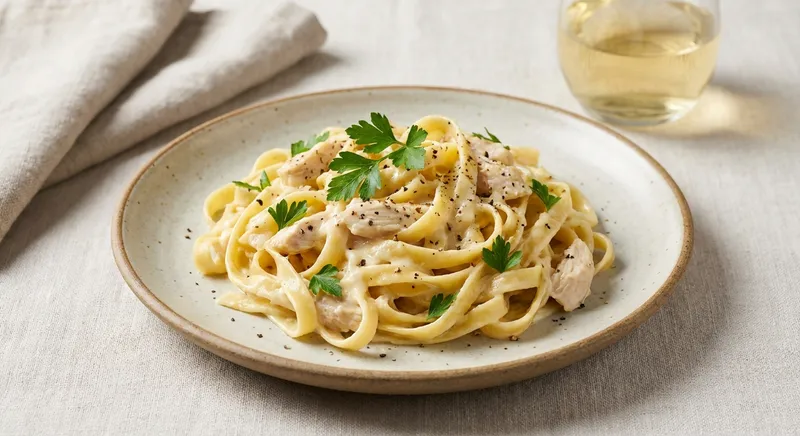
Silky, cheese-forward fettuccine tossed with seared, herb-seasoned chicken and a glossy, butter-pasta-water emulsion made from melting Fontina and Parmigiano-Reggiano. Bright lemon zest and garlic lift the rich, silky sauce so each forkful feels indulgent but balanced — restaurant-quality comfort with home-kitchen simplicity.
Prep the chicken and cheese: pat the chicken breasts dry and cut into 1-inch strips or bite-sized pieces so they sear quickly and evenly; season both sides with 1/2 tsp kosher salt and 1/2 tsp freshly ground black pepper. Grate the Fontina and Parmigiano and set aside in separate bowls so they’re ready to work into the sauce — pre-grated cheese won’t melt as smoothly.
Bring a large pot of water to a rolling boil and generously salt it (about 1 tbsp kosher salt per 4–6 quarts). Thick pasta like fettuccine needs plenty of salted water to season the starch; reserving pasta water later is essential to build a silky emulsion with the cheeses.
Cook the fettuccine 1–2 minutes shy of package instructions (about 9 minutes for most brands). Undercooking by a little (al dente) means the pasta will finish cooking in the sauce and absorb flavor without becoming mushy. Reserve 1½ cups (360 ml) of pasta water before draining, then drain the pasta and set it aside.
While the pasta cooks, heat a large skillet over medium-high heat and add 1 tbsp olive oil. Add the seasoned chicken in a single layer; don’t overcrowd the pan so the pieces sear instead of steam. Sear without moving for 2–3 minutes to develop a golden crust, then flip and cook until just cooked through (internal temperature 160–165°F / 71–74°C), another 2–3 minutes depending on thickness. Remove the chicken to a plate and tent loosely with foil to rest; resting redistributes juices and keeps the meat moist.
Lower the heat to medium, add the remaining 1 tbsp olive oil and 1 tbsp butter to the same pan. Add the diced onion and a pinch of salt; sweat the onion 4–5 minutes until translucent and slightly sweet. Sautéing in the fond left from the chicken picks up those browned bits (flavor) and builds a savory base for the sauce.
Add the minced garlic and crushed red pepper (if using) and cook 30–45 seconds until fragrant — don’t let garlic burn or it will turn bitter. Stir to loosen any stuck bits from the pan so those flavors incorporate into the sauce.
Lower the heat to medium-low and add the remaining 2 tbsp butter. Pour in 1 cup of the reserved hot pasta water and bring to a gentle simmer; the warm starchy water helps melt the cheeses and create an emulsion rather than a curdled, oily mess. Simmer 1–2 minutes so the butter and water marry.
Turn the heat to low and add the Fontina in two handfuls, stirring after each addition until melted and smooth. Fontina provides creaminess and stretch; adding it gradually prevents clumping. If the mixture looks too thin, add up to 1/2 cup more pasta water; if too thick, a splash more butter or water will loosen it.
Remove the pan from heat and quickly stir in the Parmigiano a little at a time to finish the emulsion. Parm adds salty, nutty umami and helps thicken the sauce. Working off the heat prevents the Parm from seizing into grainy lumps.
Add the drained fettuccine and seared chicken to the pan. Toss vigorously for 1–2 minutes so the pasta starch and hot sauce emulsify into a glossy coating on each strand; the motion and heat bind the butter, cheese, and water together into a silky sauce. Add a splash of reserved pasta water if needed to reach the desired consistency.
Finish with lemon zest, the remaining 1/2 tsp kosher salt (adjust to taste), remaining 1/2 tsp black pepper, and chopped parsley. The lemon zest brightens and cuts the richness while parsley adds freshness and color.
Serve immediately, passing extra grated Parmigiano and crushed red pepper at the table. This dish is best eaten hot — the sauce will firm up as it cools.
868
Calories
68g
Protein
67g
Carbs
34g
Fat
3g
Fiber
How did this recipe turn out? Let others know!
to rate this recipe
By Jordan Choate
Silky, cheese-forward fettuccine tossed with seared, herb-seasoned chicken and a glossy, butter-pasta-water emulsion made from melting Fontina and Parmigiano-Reggiano. Bright lemon zest and garlic lift the rich, silky sauce so each forkful feels indulgent but balanced — restaurant-quality comfort with home-kitchen simplicity.
Prep the chicken and cheese: pat the chicken breasts dry and cut into 1-inch strips or bite-sized pieces so they sear quickly and evenly; season both sides with 1/2 tsp kosher salt and 1/2 tsp freshly ground black pepper. Grate the Fontina and Parmigiano and set aside in separate bowls so they’re ready to work into the sauce — pre-grated cheese won’t melt as smoothly.
Bring a large pot of water to a rolling boil and generously salt it (about 1 tbsp kosher salt per 4–6 quarts). Thick pasta like fettuccine needs plenty of salted water to season the starch; reserving pasta water later is essential to build a silky emulsion with the cheeses.
Cook the fettuccine 1–2 minutes shy of package instructions (about 9 minutes for most brands). Undercooking by a little (al dente) means the pasta will finish cooking in the sauce and absorb flavor without becoming mushy. Reserve 1½ cups (360 ml) of pasta water before draining, then drain the pasta and set it aside.
While the pasta cooks, heat a large skillet over medium-high heat and add 1 tbsp olive oil. Add the seasoned chicken in a single layer; don’t overcrowd the pan so the pieces sear instead of steam. Sear without moving for 2–3 minutes to develop a golden crust, then flip and cook until just cooked through (internal temperature 160–165°F / 71–74°C), another 2–3 minutes depending on thickness. Remove the chicken to a plate and tent loosely with foil to rest; resting redistributes juices and keeps the meat moist.
Lower the heat to medium, add the remaining 1 tbsp olive oil and 1 tbsp butter to the same pan. Add the diced onion and a pinch of salt; sweat the onion 4–5 minutes until translucent and slightly sweet. Sautéing in the fond left from the chicken picks up those browned bits (flavor) and builds a savory base for the sauce.
Add the minced garlic and crushed red pepper (if using) and cook 30–45 seconds until fragrant — don’t let garlic burn or it will turn bitter. Stir to loosen any stuck bits from the pan so those flavors incorporate into the sauce.
Lower the heat to medium-low and add the remaining 2 tbsp butter. Pour in 1 cup of the reserved hot pasta water and bring to a gentle simmer; the warm starchy water helps melt the cheeses and create an emulsion rather than a curdled, oily mess. Simmer 1–2 minutes so the butter and water marry.
Turn the heat to low and add the Fontina in two handfuls, stirring after each addition until melted and smooth. Fontina provides creaminess and stretch; adding it gradually prevents clumping. If the mixture looks too thin, add up to 1/2 cup more pasta water; if too thick, a splash more butter or water will loosen it.
Remove the pan from heat and quickly stir in the Parmigiano a little at a time to finish the emulsion. Parm adds salty, nutty umami and helps thicken the sauce. Working off the heat prevents the Parm from seizing into grainy lumps.
Add the drained fettuccine and seared chicken to the pan. Toss vigorously for 1–2 minutes so the pasta starch and hot sauce emulsify into a glossy coating on each strand; the motion and heat bind the butter, cheese, and water together into a silky sauce. Add a splash of reserved pasta water if needed to reach the desired consistency.
Finish with lemon zest, the remaining 1/2 tsp kosher salt (adjust to taste), remaining 1/2 tsp black pepper, and chopped parsley. The lemon zest brightens and cuts the richness while parsley adds freshness and color.
Serve immediately, passing extra grated Parmigiano and crushed red pepper at the table. This dish is best eaten hot — the sauce will firm up as it cools.
868
Calories
68g
Protein
67g
Carbs
34g
Fat
3g
Fiber
Your Rating:
