By Celina Saiz
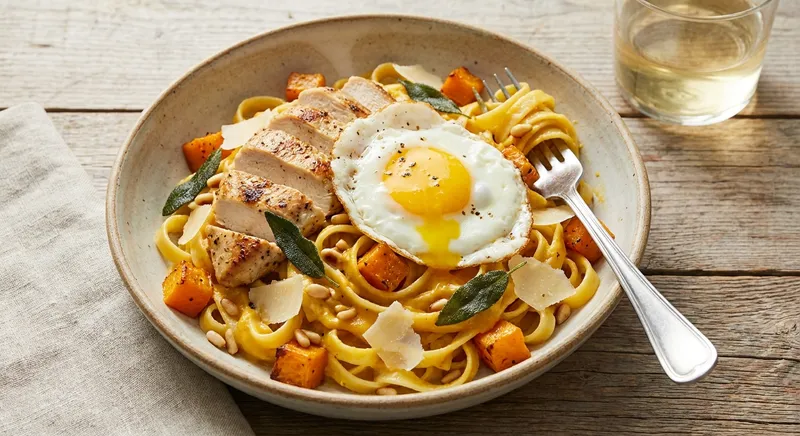
Silky roasted butternut squash pureed into a glossy, savory pasta sauce coats ribbons of al dente fettuccine, topped with a perfectly seared, herb-brushed chicken breast and a soft-poached egg whose golden yolk adds luxurious richness. Notes of caramelized squash, nutty Parmesan, sage and a touch of lemon make this an elegant yet home-friendly Italian-American fall dish.
Preheat the oven to 425°F (220°C). Toss the cubed butternut squash with 1 tablespoon of olive oil, a generous pinch of salt and a few turns of black pepper. Spread the cubes in a single layer on a rimmed baking sheet. Roast for 25–30 minutes, turning once, until the edges are deeply caramelized and the centers are very tender. Why: High heat and single-layer roasting concentrate the squash's natural sugars through caramelization, producing a sweet, nutty flavor that becomes the backbone of the sauce.
While the squash roasts, season the chicken breasts on both sides with salt, pepper and half the chopped sage. In a large skillet over medium-high heat, add 1 tablespoon of olive oil. Sear the chicken 3–4 minutes per side until golden-brown. Reduce heat to medium, add 1 tablespoon butter and a few thyme sprigs, and spoon the butter over the chicken (basting) for 1–2 minutes to flavor and keep moist. Transfer the skillet to the oven for 6–8 minutes to finish (internal temp 155–160°F / 68–71°C). Let rest 6 minutes before slicing. Why: Searing develops a flavorful Maillard crust; finishing in the oven cooks the chicken evenly without burning the exterior. Resting redistributes juices so the meat stays juicy when sliced.
Bring a large pot of water to a rolling boil. Salt generously (about 1 tablespoon salt per 4–5 liters / 1 gallon) — it should taste like seawater. Add the pasta and cook until just shy of al dente (check package for timing; usually 9–10 minutes for fettuccine — remove at ~1 minute before al dente). Reserve 1½ cups (360 ml) of starchy pasta water, then drain the pasta. Why: Salting the cooking water seasons the pasta from within. Reserving pasta water gives you a starchy liquid to loosen and emulsify the sauce without adding cream.
While pasta cooks, melt remaining 1 tablespoon butter in a medium sauté pan over medium heat. Add the diced onion and cook gently until translucent, 4–5 minutes. Add minced garlic and red pepper flakes and cook 30–45 seconds to bloom the aromatics. Why: Sweating the onion (rather than browning) builds a sweet base without bitterness; briefly toasting garlic releases aroma but prevents burning, which would produce off-flavors.
When the squash is done, transfer about 2 cups (about 330 g) of roasted squash to a blender or food processor. Add the sautéed onion-garlic mixture, ½ cup (120 ml) chicken stock, 2 tablespoons butter, half the grated Parmesan, the remaining sage and thyme, a pinch of salt, a grind of pepper and the optional lemon zest. Blend to a smooth, velvety purée, adding reserved pasta water a little at a time (start with ¼ cup) until the texture is glossy and saucy. Why: Puréeing roasted squash with a little stock and cheese creates a silky sauce; adding hot starchy pasta water helps emulsify the fats into a lustrous, clingy sauce without cream.
Return the puréed sauce to the sauté pan over low heat. Add the drained pasta and toss vigorously with tongs for 1–2 minutes, adding up to 1 cup of reserved pasta water as needed to reach a sauce that lightly coats the pasta. Taste and correct seasoning with salt, pepper and more lemon zest if desired. Why: Tossing pasta in the pan with the sauce and hot water allows the starches to marry with the sauce, ensuring each strand is evenly coated and the sauce has the right silkiness.
Poach or soft-fry the eggs: For poaching, bring a shallow saucepan of water with 1 tablespoon white vinegar to a gentle simmer, swirl the water and slip in each egg, cooking 3 minutes for a soft set white and runny yolk. For frying, heat 1 tablespoon olive oil in a nonstick skillet over medium heat and fry 2–3 minutes until the whites are set but yolks remain runny. Why: A runny yolk melds with the squash sauce to create an instant, velvety emulsion on the plate; the method is flexible to your comfort level with eggs.
Thinly slice the rested chicken across the grain. To serve, divide the pasta among four warm plates, arrange sliced chicken on top, place a poached/fried egg on each, and finish with the remaining Parmesan, a drizzle of extra-virgin olive oil, a few torn sage leaves and a crack of black pepper. Why: Slicing across the grain ensures tender bites; finishing touches (herbs, olive oil, cheese) add aroma, richness and visual contrast.
Optional final flourish: sprinkle toasted walnuts or pine nuts for crunch and a scattering of microgreens for freshness. Serve immediately so the egg yolk can enrich the sauce at the table.
927
Calories
71g
Protein
89g
Carbs
32g
Fat
7g
Fiber
How did this recipe turn out? Let others know!
to rate this recipe
By Celina Saiz
Silky roasted butternut squash pureed into a glossy, savory pasta sauce coats ribbons of al dente fettuccine, topped with a perfectly seared, herb-brushed chicken breast and a soft-poached egg whose golden yolk adds luxurious richness. Notes of caramelized squash, nutty Parmesan, sage and a touch of lemon make this an elegant yet home-friendly Italian-American fall dish.
Preheat the oven to 425°F (220°C). Toss the cubed butternut squash with 1 tablespoon of olive oil, a generous pinch of salt and a few turns of black pepper. Spread the cubes in a single layer on a rimmed baking sheet. Roast for 25–30 minutes, turning once, until the edges are deeply caramelized and the centers are very tender. Why: High heat and single-layer roasting concentrate the squash's natural sugars through caramelization, producing a sweet, nutty flavor that becomes the backbone of the sauce.
While the squash roasts, season the chicken breasts on both sides with salt, pepper and half the chopped sage. In a large skillet over medium-high heat, add 1 tablespoon of olive oil. Sear the chicken 3–4 minutes per side until golden-brown. Reduce heat to medium, add 1 tablespoon butter and a few thyme sprigs, and spoon the butter over the chicken (basting) for 1–2 minutes to flavor and keep moist. Transfer the skillet to the oven for 6–8 minutes to finish (internal temp 155–160°F / 68–71°C). Let rest 6 minutes before slicing. Why: Searing develops a flavorful Maillard crust; finishing in the oven cooks the chicken evenly without burning the exterior. Resting redistributes juices so the meat stays juicy when sliced.
Bring a large pot of water to a rolling boil. Salt generously (about 1 tablespoon salt per 4–5 liters / 1 gallon) — it should taste like seawater. Add the pasta and cook until just shy of al dente (check package for timing; usually 9–10 minutes for fettuccine — remove at ~1 minute before al dente). Reserve 1½ cups (360 ml) of starchy pasta water, then drain the pasta. Why: Salting the cooking water seasons the pasta from within. Reserving pasta water gives you a starchy liquid to loosen and emulsify the sauce without adding cream.
While pasta cooks, melt remaining 1 tablespoon butter in a medium sauté pan over medium heat. Add the diced onion and cook gently until translucent, 4–5 minutes. Add minced garlic and red pepper flakes and cook 30–45 seconds to bloom the aromatics. Why: Sweating the onion (rather than browning) builds a sweet base without bitterness; briefly toasting garlic releases aroma but prevents burning, which would produce off-flavors.
When the squash is done, transfer about 2 cups (about 330 g) of roasted squash to a blender or food processor. Add the sautéed onion-garlic mixture, ½ cup (120 ml) chicken stock, 2 tablespoons butter, half the grated Parmesan, the remaining sage and thyme, a pinch of salt, a grind of pepper and the optional lemon zest. Blend to a smooth, velvety purée, adding reserved pasta water a little at a time (start with ¼ cup) until the texture is glossy and saucy. Why: Puréeing roasted squash with a little stock and cheese creates a silky sauce; adding hot starchy pasta water helps emulsify the fats into a lustrous, clingy sauce without cream.
Return the puréed sauce to the sauté pan over low heat. Add the drained pasta and toss vigorously with tongs for 1–2 minutes, adding up to 1 cup of reserved pasta water as needed to reach a sauce that lightly coats the pasta. Taste and correct seasoning with salt, pepper and more lemon zest if desired. Why: Tossing pasta in the pan with the sauce and hot water allows the starches to marry with the sauce, ensuring each strand is evenly coated and the sauce has the right silkiness.
Poach or soft-fry the eggs: For poaching, bring a shallow saucepan of water with 1 tablespoon white vinegar to a gentle simmer, swirl the water and slip in each egg, cooking 3 minutes for a soft set white and runny yolk. For frying, heat 1 tablespoon olive oil in a nonstick skillet over medium heat and fry 2–3 minutes until the whites are set but yolks remain runny. Why: A runny yolk melds with the squash sauce to create an instant, velvety emulsion on the plate; the method is flexible to your comfort level with eggs.
Thinly slice the rested chicken across the grain. To serve, divide the pasta among four warm plates, arrange sliced chicken on top, place a poached/fried egg on each, and finish with the remaining Parmesan, a drizzle of extra-virgin olive oil, a few torn sage leaves and a crack of black pepper. Why: Slicing across the grain ensures tender bites; finishing touches (herbs, olive oil, cheese) add aroma, richness and visual contrast.
Optional final flourish: sprinkle toasted walnuts or pine nuts for crunch and a scattering of microgreens for freshness. Serve immediately so the egg yolk can enrich the sauce at the table.
927
Calories
71g
Protein
89g
Carbs
32g
Fat
7g
Fiber
Your Rating:
