By emensah m
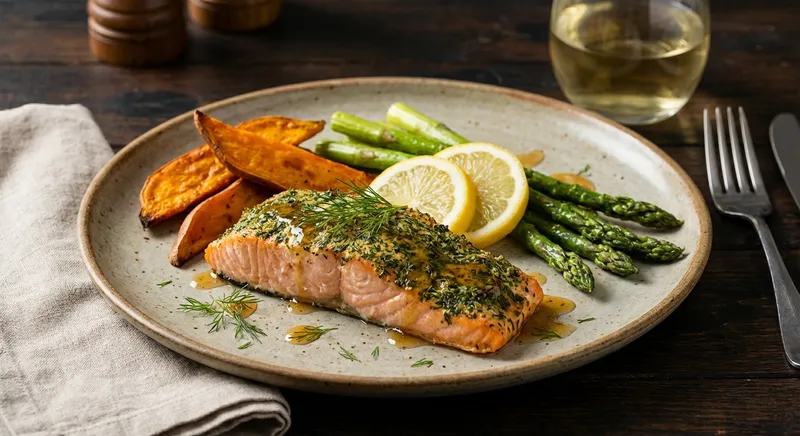
A bright, restaurant-quality sheet-pan dinner: tender, flaky salmon with a crisped lemon-garlic crust, caramelized sweet potato cubes and tender-crisp asparagus. Fresh herbs and a lemon-garlic vinaigrette tie the dish together, balancing the salmon’s richness with sweet, earthy and citrus notes—simple to execute but elevated in flavor and presentation.
Preheat and organize: Preheat the oven to 425°F (220°C). Line a large rimmed baking sheet with foil or parchment for easier clean-up and to promote even browning. Hot oven and a single sheet mean the sweet potatoes will caramelize while the salmon grills gently on the same tray.
Cut and season the sweet potatoes: Toss the 1/2-inch sweet potato cubes with 2 tablespoons of the olive oil, 1 tsp kosher salt and 1/4 tsp black pepper. Spread them out in a single layer on one half of the baking sheet. Cubing the potatoes uniformly ensures even roasting; the initial higher oil helps them develop a golden crust without drying.
Roast the sweet potatoes alone for 12–15 minutes: Slide the tray into the hot oven and roast for 12–15 minutes until the edges begin to brown and the centers are just tender. Starting the sweet potatoes first gives them a head start because they take longer than asparagus and salmon to caramelize.
Prep the salmon and asparagus while the potatoes roast: Pat the salmon fillets dry with paper towels (dry surface = better browning). Season both sides with the remaining 1/2 tsp kosher salt and 1/4 tsp black pepper. In a small bowl whisk together: 2 tbsp olive oil, juice and zest of 1 lemon, and the minced garlic. Brush or spoon half of this lemon-garlic mixture over the salmon (this adds bright flavor and helps form a light glaze while baking). Toss asparagus with the remaining 1 tbsp olive oil and a pinch of salt — oil helps convey heat evenly so the asparagus becomes tender and slightly charred rather than dried out.
Arrange salmon and asparagus on the sheet: Remove the sheet from the oven and move the sweet potatoes slightly to make room. Place salmon fillets skin-side down on the tray (skin keeps the fish intact and crisps up), leaving space between fillets for air circulation. Place asparagus in a single layer alongside the salmon. Spoon any remaining lemon-garlic oil over the asparagus.
Return to the oven and roast 10–14 minutes: Roast everything at 425°F (220°C) for 10–14 minutes depending on salmon thickness (approx. 10–12 minutes for 1-inch / 2.5 cm thick fillets). Why: salmon cooks quickly — this high heat gives the exterior a lightly baked glaze while keeping the interior moist. Check doneness by flaking with a fork or using an instant-read thermometer: 52–54°C (125–130°F) yields medium, very moist salmon; 60°C (140°F) is fully opaque and flakier for those who prefer fully cooked fish.
Finish with herbs and rest: Remove the sheet from the oven. Immediately spoon the remaining lemon-garlic juices from the tray over the salmon and vegetables; the hot juices carry flavor. Scatter the chopped dill or parsley and a little lemon zest on top; loosely tent with foil and rest for 3 minutes. Resting allows residual heat to finish cooking gently and the juices to redistribute.
Plate and serve: Transfer a salmon fillet to each plate with a portion of roasted sweet potatoes and asparagus. Serve with lemon wedges for extra brightness. The contrast of crisped sweet potato edges, silky salmon and slightly charred asparagus gives a restaurant-style balance of textures.
692
Calories
42g
Protein
46g
Carbs
38g
Fat
8g
Fiber
How did this recipe turn out? Let others know!
to rate this recipe
By emensah m
A bright, restaurant-quality sheet-pan dinner: tender, flaky salmon with a crisped lemon-garlic crust, caramelized sweet potato cubes and tender-crisp asparagus. Fresh herbs and a lemon-garlic vinaigrette tie the dish together, balancing the salmon’s richness with sweet, earthy and citrus notes—simple to execute but elevated in flavor and presentation.
Preheat and organize: Preheat the oven to 425°F (220°C). Line a large rimmed baking sheet with foil or parchment for easier clean-up and to promote even browning. Hot oven and a single sheet mean the sweet potatoes will caramelize while the salmon grills gently on the same tray.
Cut and season the sweet potatoes: Toss the 1/2-inch sweet potato cubes with 2 tablespoons of the olive oil, 1 tsp kosher salt and 1/4 tsp black pepper. Spread them out in a single layer on one half of the baking sheet. Cubing the potatoes uniformly ensures even roasting; the initial higher oil helps them develop a golden crust without drying.
Roast the sweet potatoes alone for 12–15 minutes: Slide the tray into the hot oven and roast for 12–15 minutes until the edges begin to brown and the centers are just tender. Starting the sweet potatoes first gives them a head start because they take longer than asparagus and salmon to caramelize.
Prep the salmon and asparagus while the potatoes roast: Pat the salmon fillets dry with paper towels (dry surface = better browning). Season both sides with the remaining 1/2 tsp kosher salt and 1/4 tsp black pepper. In a small bowl whisk together: 2 tbsp olive oil, juice and zest of 1 lemon, and the minced garlic. Brush or spoon half of this lemon-garlic mixture over the salmon (this adds bright flavor and helps form a light glaze while baking). Toss asparagus with the remaining 1 tbsp olive oil and a pinch of salt — oil helps convey heat evenly so the asparagus becomes tender and slightly charred rather than dried out.
Arrange salmon and asparagus on the sheet: Remove the sheet from the oven and move the sweet potatoes slightly to make room. Place salmon fillets skin-side down on the tray (skin keeps the fish intact and crisps up), leaving space between fillets for air circulation. Place asparagus in a single layer alongside the salmon. Spoon any remaining lemon-garlic oil over the asparagus.
Return to the oven and roast 10–14 minutes: Roast everything at 425°F (220°C) for 10–14 minutes depending on salmon thickness (approx. 10–12 minutes for 1-inch / 2.5 cm thick fillets). Why: salmon cooks quickly — this high heat gives the exterior a lightly baked glaze while keeping the interior moist. Check doneness by flaking with a fork or using an instant-read thermometer: 52–54°C (125–130°F) yields medium, very moist salmon; 60°C (140°F) is fully opaque and flakier for those who prefer fully cooked fish.
Finish with herbs and rest: Remove the sheet from the oven. Immediately spoon the remaining lemon-garlic juices from the tray over the salmon and vegetables; the hot juices carry flavor. Scatter the chopped dill or parsley and a little lemon zest on top; loosely tent with foil and rest for 3 minutes. Resting allows residual heat to finish cooking gently and the juices to redistribute.
Plate and serve: Transfer a salmon fillet to each plate with a portion of roasted sweet potatoes and asparagus. Serve with lemon wedges for extra brightness. The contrast of crisped sweet potato edges, silky salmon and slightly charred asparagus gives a restaurant-style balance of textures.
692
Calories
42g
Protein
46g
Carbs
38g
Fat
8g
Fiber
Your Rating:
