By emensah m
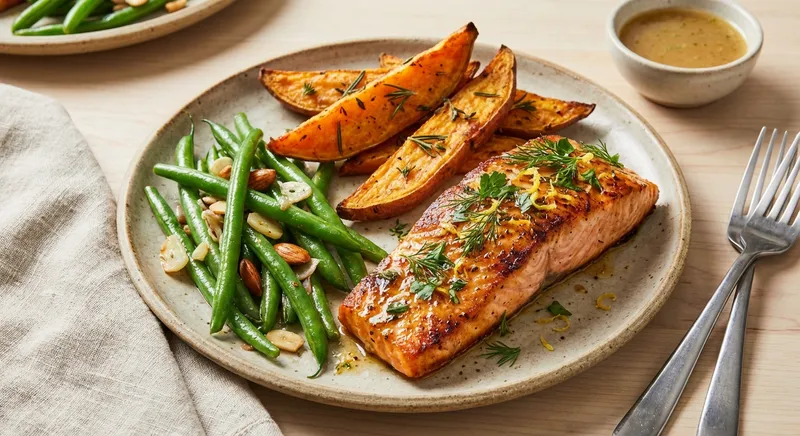
A bright, Mediterranean-inspired weeknight plate: flaky, oven-roasted salmon paired with crisp-edged herbed sweet potato wedges and garlicky sautéed green beans. High-heat roasting caramelizes the sweet potatoes and concentrates sweetness while fresh rosemary (or thyme) and lemon lift the rich salmon — a simple yet restaurant-quality meal that feels special without fuss.
Preheat and prep — Preheat the oven to 220°C / 425°F. Line a rimmed baking sheet with parchment or a thin layer of oil to prevent sticking. High, dry heat at 425°F encourages Maillard browning on the sweet potato edges while cooking the salmon quickly without drying it.
Cut and season the sweet potatoes — Cut the 500 g of sweet potatoes into even wedges (about 1–1.5 cm thick). Even size ensures uniform cooking. Toss the wedges with 1 tbsp (3 tsp) of the olive oil, 3/4 tsp kosher salt, 1 tsp chopped rosemary or thyme, and a generous grind of black pepper. Spread them cut-side down on the prepared sheet in a single layer so they crisp instead of steam.
Roast the sweet potatoes first — Roast the wedges for 15 minutes, turning once halfway. Starting the wedges first gives them time to caramelize; they need more time than the salmon and will develop golden, slightly crisp edges that contrast the tender interior.
Prepare the salmon while the potatoes start roasting — Pat the salmon dry with paper towels (removing surface moisture promotes browning). Season both sides with 1/2 tsp kosher salt, freshly ground black pepper, a light dusting of lemon zest, and the remaining chopped herb. Reserve about 1 tsp (≈1/3 tbsp) of the olive oil and brush lightly over the flesh or skin to prevent sticking and help the herb adhere.
Add salmon to the sheet pan — After the sweet potatoes have roasted 15 minutes and have some color, make room on the sheet pan and place the salmon fillets skin-side down (if skin-on) or presentation-side down. Return the pan to the oven and roast everything together for 10–12 minutes. Roasting the salmon alongside the potatoes allows the flavors to mingle and uses the oven’s dry heat to cook the fish gently without excessive hands-on time.
Check salmon for doneness — Salmon is best at 52–55°C / 125–130°F for medium-rare to medium. If you don't have a thermometer, look for opaque pink throughout and test by gently pressing the thickest part: it should flake but still feel moist. Remove the salmon from the oven when it’s slightly under your target as it will continue to cook while resting.
Rest the salmon and finish potatoes — Transfer the salmon to a warm plate and tent loosely with foil to rest for 3–4 minutes (resting allows juices to redistribute). Return the sheet with sweet potatoes to the oven for an extra 3–5 minutes if they need more color and crispness — they should be tender inside and caramelized on the edges.
Sauté the green beans — While the salmon rests, heat a medium skillet over medium-high heat. Add the remaining 2 tsp (≈2/3 tbsp) of olive oil (or 1 tsp if you reserved 1 tsp for salmon) and when shimmering, add the trimmed 300 g green beans. Let them sit undisturbed for 1–2 minutes to get a light sear — this develops flavor. Then add the minced garlic and sauté, tossing constantly, for 2–3 more minutes until the beans are bright green and crisp-tender.
Finish the beans — Finish the green beans with the last pinch of salt (about 1/4 tsp), a squeeze of lemon juice, and 1 tsp butter if using. The acid wakes the dish; butter adds a silky gloss. Taste and adjust seasoning. Cooking the garlic only briefly prevents it from burning and turning bitter.
Plate and serve — Divide the herbed sweet potato wedges between two plates, top with the roasted salmon fillets, and spoon the garlicky green beans alongside. Serve with lemon wedges to squeeze over the fish. A final drizzle of good olive oil or a few extra herb leaves makes the presentation restaurant-worthy.
738
Calories
42g
Protein
62g
Carbs
37g
Fat
13g
Fiber
How did this recipe turn out? Let others know!
to rate this recipe
By emensah m
A bright, Mediterranean-inspired weeknight plate: flaky, oven-roasted salmon paired with crisp-edged herbed sweet potato wedges and garlicky sautéed green beans. High-heat roasting caramelizes the sweet potatoes and concentrates sweetness while fresh rosemary (or thyme) and lemon lift the rich salmon — a simple yet restaurant-quality meal that feels special without fuss.
Preheat and prep — Preheat the oven to 220°C / 425°F. Line a rimmed baking sheet with parchment or a thin layer of oil to prevent sticking. High, dry heat at 425°F encourages Maillard browning on the sweet potato edges while cooking the salmon quickly without drying it.
Cut and season the sweet potatoes — Cut the 500 g of sweet potatoes into even wedges (about 1–1.5 cm thick). Even size ensures uniform cooking. Toss the wedges with 1 tbsp (3 tsp) of the olive oil, 3/4 tsp kosher salt, 1 tsp chopped rosemary or thyme, and a generous grind of black pepper. Spread them cut-side down on the prepared sheet in a single layer so they crisp instead of steam.
Roast the sweet potatoes first — Roast the wedges for 15 minutes, turning once halfway. Starting the wedges first gives them time to caramelize; they need more time than the salmon and will develop golden, slightly crisp edges that contrast the tender interior.
Prepare the salmon while the potatoes start roasting — Pat the salmon dry with paper towels (removing surface moisture promotes browning). Season both sides with 1/2 tsp kosher salt, freshly ground black pepper, a light dusting of lemon zest, and the remaining chopped herb. Reserve about 1 tsp (≈1/3 tbsp) of the olive oil and brush lightly over the flesh or skin to prevent sticking and help the herb adhere.
Add salmon to the sheet pan — After the sweet potatoes have roasted 15 minutes and have some color, make room on the sheet pan and place the salmon fillets skin-side down (if skin-on) or presentation-side down. Return the pan to the oven and roast everything together for 10–12 minutes. Roasting the salmon alongside the potatoes allows the flavors to mingle and uses the oven’s dry heat to cook the fish gently without excessive hands-on time.
Check salmon for doneness — Salmon is best at 52–55°C / 125–130°F for medium-rare to medium. If you don't have a thermometer, look for opaque pink throughout and test by gently pressing the thickest part: it should flake but still feel moist. Remove the salmon from the oven when it’s slightly under your target as it will continue to cook while resting.
Rest the salmon and finish potatoes — Transfer the salmon to a warm plate and tent loosely with foil to rest for 3–4 minutes (resting allows juices to redistribute). Return the sheet with sweet potatoes to the oven for an extra 3–5 minutes if they need more color and crispness — they should be tender inside and caramelized on the edges.
Sauté the green beans — While the salmon rests, heat a medium skillet over medium-high heat. Add the remaining 2 tsp (≈2/3 tbsp) of olive oil (or 1 tsp if you reserved 1 tsp for salmon) and when shimmering, add the trimmed 300 g green beans. Let them sit undisturbed for 1–2 minutes to get a light sear — this develops flavor. Then add the minced garlic and sauté, tossing constantly, for 2–3 more minutes until the beans are bright green and crisp-tender.
Finish the beans — Finish the green beans with the last pinch of salt (about 1/4 tsp), a squeeze of lemon juice, and 1 tsp butter if using. The acid wakes the dish; butter adds a silky gloss. Taste and adjust seasoning. Cooking the garlic only briefly prevents it from burning and turning bitter.
Plate and serve — Divide the herbed sweet potato wedges between two plates, top with the roasted salmon fillets, and spoon the garlicky green beans alongside. Serve with lemon wedges to squeeze over the fish. A final drizzle of good olive oil or a few extra herb leaves makes the presentation restaurant-worthy.
738
Calories
42g
Protein
62g
Carbs
37g
Fat
13g
Fiber
Your Rating:
