By emensah m
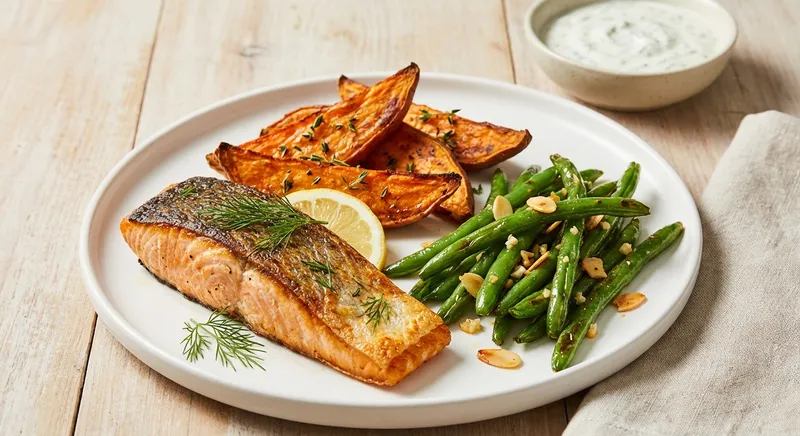
A restaurant-style weeknight plate that balances rich, flaky salmon with sweet, caramelized potato wedges and bright, garlicky green beans. The salmon is oven-roasted to a tender, buttery finish while the sweet potatoes develop a crisp, caramelized exterior; a quick pan-sauté of green beans with garlic and lemon adds freshness and snap—together they create a textural and flavor contrast that feels both comforting and refined.
Preheat and prep: Preheat the oven to 425°F (220°C). Line a large rimmed baking sheet with parchment or a thin layer of oil—high heat is used to caramelize the sweet potatoes quickly so they crisp on the outside while staying tender inside. Bring the salmon to room temperature for 10 minutes so it cooks evenly (cold fish straight from the fridge results in uneven doneness).
Season the sweet potato wedges: Toss the 400 g sweet potato wedges with 1 tablespoon (15 ml) of the olive oil, 1/2 tsp sea salt, 1/4 tsp freshly ground black pepper and 1/2 tsp smoked paprika. Coating them in oil and seasoning promotes Maillard browning—the oil carries heat and helps the natural sugars in the potato caramelize.
Arrange and roast the sweet potatoes: Spread the wedges in a single layer on one side of the prepared baking sheet with a little space between pieces for air circulation—crowding causes steaming instead of browning. Roast at 425°F (220°C) for 15 minutes.
Prepare the salmon: While the potatoes begin roasting, pat the salmon fillets dry with paper towels (removes surface moisture so the flesh can brown). Mix the remaining 1 tablespoon (15 ml) olive oil with the remaining 1/2 tsp salt, 1/4 tsp black pepper and 1/2 tsp smoked paprika. Rub a thin layer on both sides of each fillet; if skin-on, pat the skin dry so it crisps. Mince 1 garlic clove and mix a little with the oil rub and brush on the flesh side—this will add gentle garlic flavor without burning in the oven.
Add the salmon to the sheet and continue roasting: After the potatoes have roasted 15 minutes, flip each wedge so the cut side is down to maximize contact for browning. Move the potatoes to one side and place the salmon fillets skin-side down on the cleared part of the sheet (or use a second sheet if necessary). Return to the oven and roast everything another 10–12 minutes, depending on thickness—this finish time will cook a 170 g (≈1-inch) fillet to medium (about 125–130°F / 52–54°C internal). The high initial heat gives the potatoes that crisp edge while the shorter final bake cooks the salmon gently to flaky tenderness.
Start the green beans: While the salmon and potatoes finish, heat a large skillet over medium-high heat. Add the skillet to heat 30 seconds then add the remaining minced garlic clove and a small splash (about 1/2 tsp) of the remaining oil to the pan to bloom the garlic for 10–15 seconds—this releases aroma without burning. Add the 300 g trimmed green beans and toss to coat; sauté for 4–6 minutes, stirring frequently so they char lightly in spots and turn bright green. Add a splash (2–3 tbsp) of water or a squeeze of lemon if the pan gets too dry—this steams them slightly so they finish tender-crisp.
Finish and season the green beans: Finish the pan with 1 tsp butter (optional) for silkiness, a pinch of salt and pepper, and a squeeze of 1 lemon wedge to brighten the flavor. The acidity from lemon cuts through the oil and pairs with the salmon for balance.
Check doneness and rest the salmon: Salmon is best when pulled from the oven slightly before it looks fully opaque—carryover cooking will raise the internal temperature a few degrees while it rests. For 170 g fillets, aim for 125–130°F (52–54°C) for medium; if you prefer well-done, allow to reach 140°F (60°C). Let the salmon rest 2–3 minutes on the tray to allow juices to redistribute and for the skin to crisp slightly as it cools.
Plate and serve: Divide the roasted sweet potato wedges between two plates, add a salmon fillet to each, and pile the garlicky green beans alongside. Finish each fillet with a fresh squeeze of lemon and an extra crack of black pepper. Serve immediately—hot, crisp potatoes and still-warm green beans make the best textural contrast with the tender salmon.
701
Calories
41g
Protein
52g
Carbs
37g
Fat
11g
Fiber
How did this recipe turn out? Let others know!
to rate this recipe
By emensah m
A restaurant-style weeknight plate that balances rich, flaky salmon with sweet, caramelized potato wedges and bright, garlicky green beans. The salmon is oven-roasted to a tender, buttery finish while the sweet potatoes develop a crisp, caramelized exterior; a quick pan-sauté of green beans with garlic and lemon adds freshness and snap—together they create a textural and flavor contrast that feels both comforting and refined.
Preheat and prep: Preheat the oven to 425°F (220°C). Line a large rimmed baking sheet with parchment or a thin layer of oil—high heat is used to caramelize the sweet potatoes quickly so they crisp on the outside while staying tender inside. Bring the salmon to room temperature for 10 minutes so it cooks evenly (cold fish straight from the fridge results in uneven doneness).
Season the sweet potato wedges: Toss the 400 g sweet potato wedges with 1 tablespoon (15 ml) of the olive oil, 1/2 tsp sea salt, 1/4 tsp freshly ground black pepper and 1/2 tsp smoked paprika. Coating them in oil and seasoning promotes Maillard browning—the oil carries heat and helps the natural sugars in the potato caramelize.
Arrange and roast the sweet potatoes: Spread the wedges in a single layer on one side of the prepared baking sheet with a little space between pieces for air circulation—crowding causes steaming instead of browning. Roast at 425°F (220°C) for 15 minutes.
Prepare the salmon: While the potatoes begin roasting, pat the salmon fillets dry with paper towels (removes surface moisture so the flesh can brown). Mix the remaining 1 tablespoon (15 ml) olive oil with the remaining 1/2 tsp salt, 1/4 tsp black pepper and 1/2 tsp smoked paprika. Rub a thin layer on both sides of each fillet; if skin-on, pat the skin dry so it crisps. Mince 1 garlic clove and mix a little with the oil rub and brush on the flesh side—this will add gentle garlic flavor without burning in the oven.
Add the salmon to the sheet and continue roasting: After the potatoes have roasted 15 minutes, flip each wedge so the cut side is down to maximize contact for browning. Move the potatoes to one side and place the salmon fillets skin-side down on the cleared part of the sheet (or use a second sheet if necessary). Return to the oven and roast everything another 10–12 minutes, depending on thickness—this finish time will cook a 170 g (≈1-inch) fillet to medium (about 125–130°F / 52–54°C internal). The high initial heat gives the potatoes that crisp edge while the shorter final bake cooks the salmon gently to flaky tenderness.
Start the green beans: While the salmon and potatoes finish, heat a large skillet over medium-high heat. Add the skillet to heat 30 seconds then add the remaining minced garlic clove and a small splash (about 1/2 tsp) of the remaining oil to the pan to bloom the garlic for 10–15 seconds—this releases aroma without burning. Add the 300 g trimmed green beans and toss to coat; sauté for 4–6 minutes, stirring frequently so they char lightly in spots and turn bright green. Add a splash (2–3 tbsp) of water or a squeeze of lemon if the pan gets too dry—this steams them slightly so they finish tender-crisp.
Finish and season the green beans: Finish the pan with 1 tsp butter (optional) for silkiness, a pinch of salt and pepper, and a squeeze of 1 lemon wedge to brighten the flavor. The acidity from lemon cuts through the oil and pairs with the salmon for balance.
Check doneness and rest the salmon: Salmon is best when pulled from the oven slightly before it looks fully opaque—carryover cooking will raise the internal temperature a few degrees while it rests. For 170 g fillets, aim for 125–130°F (52–54°C) for medium; if you prefer well-done, allow to reach 140°F (60°C). Let the salmon rest 2–3 minutes on the tray to allow juices to redistribute and for the skin to crisp slightly as it cools.
Plate and serve: Divide the roasted sweet potato wedges between two plates, add a salmon fillet to each, and pile the garlicky green beans alongside. Finish each fillet with a fresh squeeze of lemon and an extra crack of black pepper. Serve immediately—hot, crisp potatoes and still-warm green beans make the best textural contrast with the tender salmon.
701
Calories
41g
Protein
52g
Carbs
37g
Fat
11g
Fiber
Your Rating:
